
More than half of all asthma cases are allergic asthma - meaning your symptoms aren’t just random flare-ups. They’re triggered by things in your environment that your immune system wrongly sees as dangerous. If you or someone you know gets wheezing, coughing, or chest tightness every spring when the trees bloom, or after petting a cat, or during humid summer days when mold grows, you’re likely dealing with allergic asthma. It’s not just "bad air." It’s your body’s overreaction to specific allergens, and understanding those triggers is the first step to taking back control.
What Actually Triggers Allergic Asthma?
Allergic asthma happens when your body produces too much IgE - a type of antibody - in response to harmless substances. When you breathe in these allergens, your immune system goes into overdrive. Mast cells release histamine and other chemicals. Your airways swell, tighten, and produce excess mucus. That’s when breathing becomes hard.
The most common triggers fall into two categories: outdoor and indoor.
- Tree pollen hits hardest in early spring (February to April), especially in March. In many places, counts can hit 10-20 grains per cubic meter. If your asthma flares up every March, this is likely the culprit.
- Grass pollen peaks in June, with levels sometimes hitting 50-100 grains per cubic meter. Mowing the lawn? That’s a high-risk activity.
- Ragweed pollen takes over in late summer and fall. September is the worst month - counts can exceed 100 grains per cubic meter. This is one of the most potent allergens out there.
- Dust mites live in bedding, carpets, and upholstered furniture. They thrive where humidity is above 50%. In fact, 84% of U.S. homes have enough dust mites to trigger reactions. The allergen they produce, Der p 1, is found in high amounts in pillows and mattresses.
- Cat allergen (Fel d 1) is everywhere - even in homes without cats. It sticks to clothes, walls, and furniture. Levels above 8 micrograms per gram of dust are enough to cause symptoms in sensitive people. Surprisingly, 79% of U.S. homes have this level.
- Mold spores, especially Alternaria, spike after thunderstorms. When humidity rises and rain breaks apart mold colonies, spores explode into the air. Studies show emergency visits for asthma jump 3.5 times when Alternaria counts go over 500 spores per cubic meter.
Unlike non-allergic asthma - which can be triggered by cold air, exercise, or stress - allergic asthma has clear, measurable triggers. That’s good news. If you know what sets it off, you can avoid it.
How to Actually Avoid Allergens (Not Just Try)
"Avoid allergens" sounds simple. But most people don’t know how to do it right. You can’t just close windows and call it a day. Here’s what actually works, backed by research and real-world results.
For dust mites:
- Use allergen-proof mattress and pillow covers. Not just any covers - ones that are tightly woven and certified to block particles smaller than 10 micrometers. Brands like AllerZip Pro have been shown to reduce allergen exposure by over 90%.
- Wash bedding weekly in water hotter than 130°F (54°C). Cold or warm water won’t kill mites or remove their waste. Hot water does.
- Keep indoor humidity between 30% and 50%. Use a hygrometer to measure it. If it’s above 50%, get a dehumidifier. A 2022 study showed dropping humidity from 65% to 45% cut dust mite levels from 20 micrograms per gram of dust to just 0.5.
- Vacuum at least twice a week with a HEPA-filter vacuum. Regular vacuums just blow allergens back into the air. A Dyson V15 or similar HEPA model reduces cat and dust mite allergens by up to 42%.
For pollen:
- Check daily pollen counts. The National Allergy Bureau tracks this. If tree pollen is above 9.7 grains per cubic meter, keep windows closed.
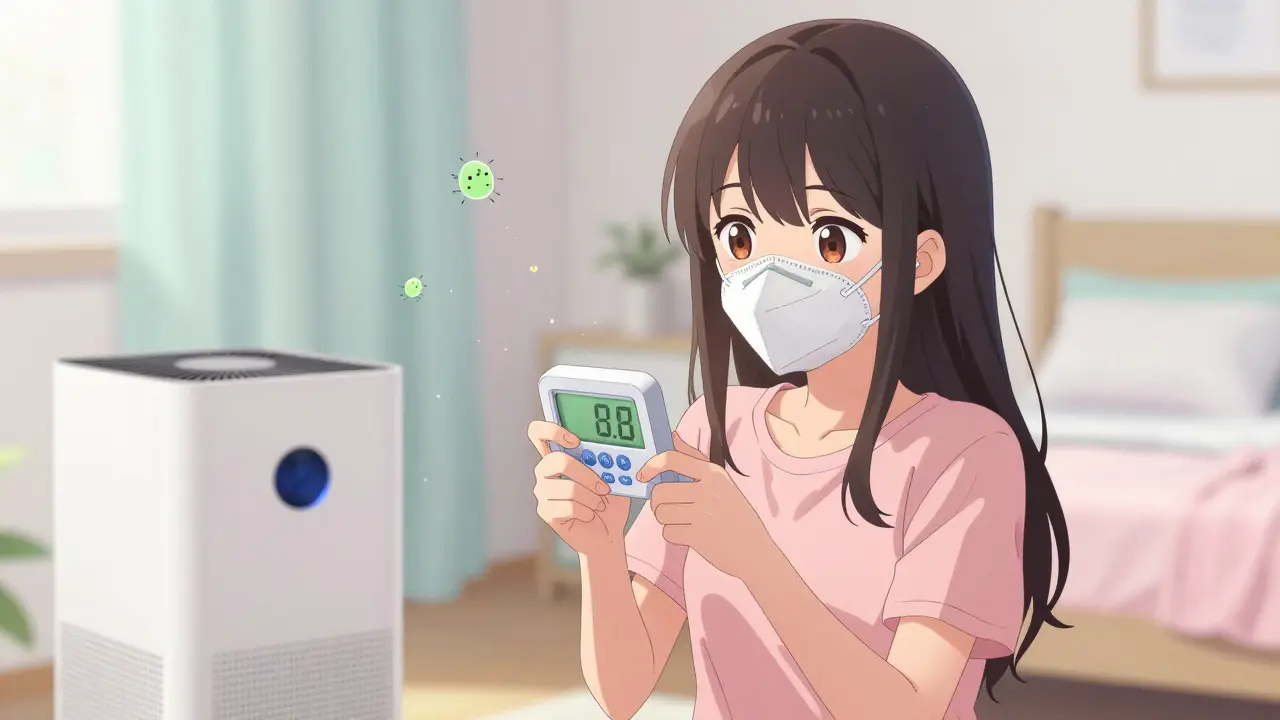
- Wear an N95 mask when doing yard work. Studies show it cuts pollen inhalation by 85%.
- Shower and change clothes right after coming inside. Pollen clings to hair and skin. Leaving it on your pajamas means you’re sleeping in allergens. One study found this simple step reduces allergen transfer to bedding by 70%.
- Use air conditioning with a clean filter. Don’t rely on open windows for cooling during peak season.
For pet allergens:
- If you have a cat, keep it out of the bedroom. Pet allergens settle on surfaces, but your bed is ground zero for exposure.
- Wash your pet weekly. Brushing them outside helps too. Studies show regular bathing reduces airborne Fel d 1 by 30-50%.
- Use a HEPA air purifier in the main living area. It won’t remove all allergens, but it helps reduce airborne levels by 50-60%.
People who follow these steps consistently report fewer symptoms, less medication use, and better sleep. One Reddit user tracked their peak flow for six months after making these changes - it jumped from 380 to 470 L/min. That’s not luck. That’s control.
Immunotherapy: The Only Treatment That Changes the Course of Allergic Asthma
Medications like inhalers and antihistamines treat symptoms. But they don’t change your immune system’s response. Immunotherapy does.
Immunotherapy - also called allergy shots or sublingual tablets - teaches your body to stop overreacting to allergens. It’s the only treatment that can reduce or even eliminate your need for daily asthma meds over time.
There are two main types:
- Subcutaneous Immunotherapy (SCIT): Regular injections under the skin. Starts with weekly shots of tiny allergen doses, gradually increasing over 4-6 months until you reach a maintenance dose. Then you get shots every 2-4 weeks for 3-5 years.
- Sublingual Immunotherapy (SLIT): Daily tablets or drops placed under the tongue. No needles. Easier to do at home. Common for grass and dust mite allergies.
How effective is it?
- A 2021 Cochrane review of over 12,000 patients found immunotherapy reduced asthma symptoms by 30-50% more than medication alone.
- For dust mite allergies, SLIT cut symptom scores by 35% - compared to just 15% with inhaled steroids alone.
- Long-term studies show 28% fewer medication needs after 10 years of treatment.
One powerful case: a 12-year-old with severe cat allergy had skin test wheals of 15mm and IgE levels of 120 kU/L. After three years of cat dander immunotherapy, their symptoms disappeared. Their IgE dropped to 15 kU/L. Challenge tests confirmed they were no longer allergic.
It’s not instant. Most people start seeing improvement after 12-18 months. But if you stick with it, the benefits last for years - even after stopping treatment.
Side effects? SCIT can cause local swelling or, rarely, anaphylaxis. That’s why shots are given in clinics. SLIT causes mild oral itching in about 78% of users during the first month - but that usually fades. Only 5-10% stop because of it.
Why Some People Don’t Get Better - Even With Treatment
Not everyone responds the same way. And not every asthma case labeled "allergic" actually is.
Some people have non-type 2 inflammation - meaning their asthma isn’t driven by IgE or eosinophils. If you’re on expensive biologics like omalizumab but see no improvement, this might be why. A 2023 study found over 30% of patients diagnosed with allergic asthma had this hidden form. They’re getting the wrong treatment.
Doctors now use biomarkers to check:
- Blood eosinophils >300 cells/µL
- FeNO (fractional exhaled nitric oxide) >25 ppb
- Specific IgE levels to allergens like Alternaria (>17.5 kU/L) or Ara h 8 (linked to birch-pollen food syndrome)
If these markers are low, immunotherapy or biologics won’t help. That’s why testing matters. Don’t assume your asthma is allergic just because you react to pollen or pets. Get tested properly.
Also, environmental factors make a difference. Air pollution - especially PM2.5 - damages the airway lining, making it easier for allergens to penetrate. One study showed PM2.5 exposure increases allergen penetration by 40-60% in just 24 hours. If you live near heavy traffic or in a city with poor air quality, avoiding allergens alone isn’t enough. You need cleaner air, too.

What’s New in Allergic Asthma Care (2024-2025)
Treatment is getting smarter.
- Fast-track immunotherapy: The FDA approved CAT-PAD, a peptide-based treatment for cat allergy that cuts the build-up phase from 6 months to just 8 weeks.
- Pollen-VLP vaccine: In Phase III trials, this vaccine needs only four doses a year and cuts symptoms by 60%.
- Air quality tech: The Allergen Insight nasal sensor (FDA breakthrough designation in 2023) detects allergens as low as 0.1 µg/m³ and alerts your phone. It’s like a weather app for allergens.
- AI tools: AsthmaIQ, launched in April 2024, uses your symptom logs, medication use, and local pollen forecasts to predict flare-ups with 92% accuracy.
- Genetic testing: Researchers are now using gene markers (like rs230548 on chromosome 17q21) to predict who will respond best to immunotherapy - with 85% accuracy.
These aren’t sci-fi. They’re real tools available now or coming soon. And they’re changing how we manage allergic asthma - from reactive to predictive.
When to See an Allergist
If you’ve been managing asthma with inhalers and antihistamines but still have flare-ups - especially during certain seasons or after exposure to pets or dust - it’s time to see an allergist. They can:
- Do skin prick or blood tests to confirm specific allergens
- Measure your IgE and eosinophil levels
- Recommend immunotherapy if you’re a candidate
- Help you design a personalized avoidance plan
Most insurance plans, including Medicare, cover immunotherapy. In the U.S., the copay for allergy shots is around $18.90 per visit. That’s less than a monthly inhaler refill.
And if you’re a parent of a child with asthma - don’t wait. Over 80% of kids with asthma have the allergic form. Early intervention with allergen avoidance and immunotherapy can change their life.
You don’t have to live with wheezing every spring. You don’t have to avoid your cat forever. You don’t have to keep refilling prescriptions that only mask the problem. Allergic asthma can be managed - not just treated. And the tools to do it are better than ever.
Can allergic asthma go away on its own?
Allergic asthma rarely disappears without intervention. While some children outgrow it, many carry it into adulthood. The immune system doesn’t just "forget" its reaction to allergens. Immunotherapy is the only treatment proven to retrain the immune system and lead to long-term remission - especially if started early and continued for 3-5 years.
Is immunotherapy safe for children?
Yes. Sublingual immunotherapy (SLIT) is approved for children as young as 5 for grass and dust mite allergies. Subcutaneous immunotherapy (SCIT) is used for children 6 and older. Both are considered safe when administered under medical supervision. Studies show children who start immunotherapy early have fewer asthma attacks, less need for inhalers, and better lung development over time.
Can I do allergen avoidance without spending a lot of money?
Absolutely. You don’t need expensive gadgets. Start with low-cost steps: wash bedding weekly in hot water, use pillowcases as temporary dust mite barriers until you can afford covers, keep windows closed during high pollen days, remove shoes at the door to keep allergens out, and use a fan to circulate air without bringing in outdoor pollen. These simple habits cut exposure significantly without a big investment.
Do air purifiers really help with allergic asthma?
Yes - but only if they have a true HEPA filter. Many cheap air purifiers just recirculate air without trapping particles. A HEPA filter captures 99.97% of particles 0.3 microns or larger - including pollen, dust mites, and pet dander. Place one in the bedroom and run it continuously. It won’t fix everything, but it reduces airborne allergens by 50-60%, which can mean fewer nighttime symptoms.
Why does my asthma get worse in the winter if I’m allergic to pollen?
Winter asthma flares are often caused by indoor allergens, not pollen. Cold, dry air irritates airways, but the real trigger is usually dust mites and mold that thrive in heated homes. Closed windows trap moisture and allergens. Heating systems stir up dust. If your symptoms worsen in winter, focus on dust mite control and indoor humidity - not pollen avoidance.
Can I take immunotherapy if I have other allergies?
Yes. Immunotherapy can target multiple allergens at once - like dust mites, grass, and cat dander - in a single treatment. Your allergist will design a customized mix based on your test results. Most people with multiple allergies benefit from combination immunotherapy, especially if their asthma is triggered by several sources.
Comments (8)
Darren McGuff
January 9, 2026 AT 10:08
Okay, I’ve been living with this for 12 years and let me tell you - the moment I got those AllerZip covers and started washing sheets in 140°F water, my peak flow went from ‘can’t climb stairs’ to ‘hiking in Colorado’ overnight. No joke. I didn’t believe it either until my wife found my old inhaler in a drawer last month and said, ‘Why is this still here?’
Alicia Hasö
January 11, 2026 AT 03:13
This is the kind of post that makes you feel seen. I used to think my asthma was just ‘bad luck’ - until I learned about Der p 1 and realized my pillow was basically a dust mite resort. I bought a dehumidifier, started showering after walks, and now I can actually sleep through the night. If you’re reading this and still using a regular pillowcase? Do yourself a favor. Change it. Your lungs will thank you.
Jeffrey Hu
January 12, 2026 AT 19:32
Everyone’s talking about HEPA filters like they’re magic, but you’re ignoring the real issue: indoor air quality is a joke in the U.S. The EPA says 98% of homes have at least one allergen above safe thresholds, and most people are still using cheap ‘air purifiers’ that are just fancy fans. And don’t get me started on SLIT - the FDA approved it for grass and dust mites, but not for mold? That’s regulatory laziness. You need to test for Alternaria-specific IgE, not just assume. Most allergists don’t even order the right panels. I’ve seen this too many times.
Meghan Hammack
January 14, 2026 AT 06:02
Hey - if you’re scared of spending money on all this, start small. Wash your sheets once a week. Take your shoes off at the door. Keep your bedroom door closed. Use a fan instead of opening windows. These things cost nothing and make a HUGE difference. I did this with my kid and she hasn’t needed her rescue inhaler since June. You don’t need a fancy sensor. You just need to be consistent.
Matthew Maxwell
January 15, 2026 AT 17:56
It’s not rocket science. If you’re still wheezing after all this advice, you’re either not following it or you’re lying to yourself. I’ve seen patients who swear they ‘clean their house’ but still have mold behind the fridge and a cat on the bed. Stop blaming the environment. Start taking responsibility. Immunotherapy isn’t a luxury - it’s the only thing that fixes the root cause. If you’re not doing it, you’re choosing to suffer.
Lindsey Wellmann
January 16, 2026 AT 08:11
MY ALLERGIST SAID I’M A LUCKY ONE 😭 I had a 15mm wheal on my skin test for cat dander and now, after 3 years of shots? I can pet my cat again and not cough for 3 hours. I cried. I actually cried. And yes, I still wear an N95 when I vacuum. No shame. My lungs are worth it. 🥹❤️ #ImmunotherapyIsMagic
tali murah
January 18, 2026 AT 02:51
Oh wow. So we’re just supposed to believe that 79% of U.S. homes have Fel d 1 at dangerous levels, but nobody’s suing the pet industry? And yet, every single person who owns a cat says ‘but my cat is hypoallergenic’ - as if biology is a marketing slogan. Also, ‘fast-track immunotherapy’? That’s cute. The real fast track is moving to a desert. Or buying a house in Alaska. Or just… never leaving your sealed bunker. The fact that we’re treating this like a lifestyle tweak instead of a public health crisis is terrifying.
Diana Stoyanova
January 19, 2026 AT 09:19
Let me tell you something deeper than allergens and IgE levels - allergic asthma isn’t just a physical thing. It’s grief. It’s the grief of losing the ability to walk through a forest without wheezing. Of not being able to hug your cousin’s dog. Of having to plan your life around pollen counts like it’s a military operation. I used to think I was weak because I cried when I had to give up my garden. But then I realized: my body was trying to protect me. It wasn’t broken - it was screaming. And immunotherapy? It didn’t just quiet my airways. It let me hear myself again. For the first time in 15 years, I don’t feel like a patient. I feel like a person. And that? That’s worth every shot, every HEPA filter, every hot wash. You’re not alone in this. I see you. I’ve been there. And you’re stronger than you think.