Bupropion Seizure Risk Calculator
This tool helps estimate seizure risk when taking bupropion based on FDA guidelines and clinical data from the article. Remember, this is a general estimate—not a medical diagnosis. Always consult your doctor before making any medication changes.
When you’re looking for an antidepressant that doesn’t wreck your sex life or make you gain weight, bupropion-sold as Wellbutrin, Zyban, or Aplenzin-often comes up as the go-to choice. It’s the third most prescribed antidepressant in the U.S., with nearly 18 million prescriptions filled in 2022. But behind its reputation for being "cleaner" than SSRIs like Prozac or Zoloft lies a set of risks that aren’t talked about enough: insomnia, anxiety, and a real, measurable rise in seizure threshold risk. If you’re considering bupropion-or already taking it-these three side effects aren’t just side notes. They’re the most common reasons people stop taking it.
Why Insomnia Hits Harder With Bupropion
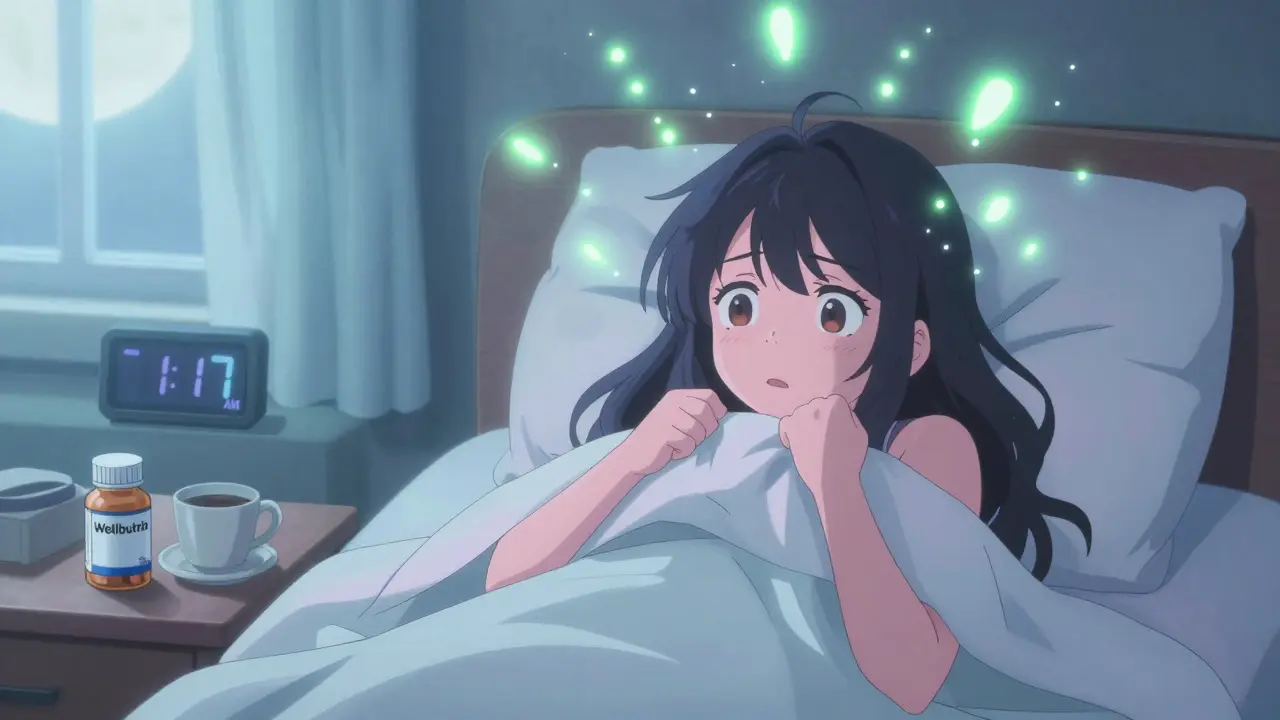
Most antidepressants make you sleepy. Bupropion does the opposite. Clinical trials show about 19% of people on bupropion develop insomnia, making it the third most common side effect after agitation and headaches. That’s nearly 1 in 5 people losing sleep because their brain is too wired to shut down. Unlike SSRIs, which boost serotonin and often cause drowsiness, bupropion increases dopamine and norepinephrine-two neurotransmitters linked to alertness and energy. That’s great if you’re tired all the time. Not so great if you’re trying to fall asleep at 11 p.m. after taking your last dose at 7 p.m. The fix? Timing matters. The Mayo Clinic recommends taking bupropion no later than 4 p.m. If you’re on the extended-release version (XL), that means no evening dosing at all. One patient on Reddit described it as "feeling like I’d had three espressos at midnight," even though she took her pill at 8 a.m. The problem isn’t always the dose-it’s the timing. In 68% of cases, moving the dose earlier improved sleep enough to keep people on the medication.Anxiety: The First Week Nightmare
It’s common to feel worse before you feel better with any antidepressant. But with bupropion, anxiety isn’t just a mild bump-it can feel like a full-blown panic attack. Around 20-25% of users report increased nervousness, agitation, or restlessness in the first 7-14 days. This isn’t just "feeling jittery." It’s the kind of anxiety that makes you check your door locks 10 times, avoid calls, or feel like your heart is going to burst. One GoodRx review said, "I had to stop after two weeks. The anxiety was worse than my depression." The good news? For most people, this doesn’t last. Studies show these symptoms usually fade within two weeks as the body adjusts. But if you’re prone to panic attacks or have a history of generalized anxiety disorder, this can be a dealbreaker. Some doctors will temporarily pair bupropion with a low-dose benzodiazepine like lorazepam for the first 10 days to help patients get through the rough patch. What you shouldn’t do: increase your dose during this time. More bupropion doesn’t mean faster relief-it just means more anxiety, more insomnia, and a higher chance of seizures.Seizure Risk: The Silent Danger
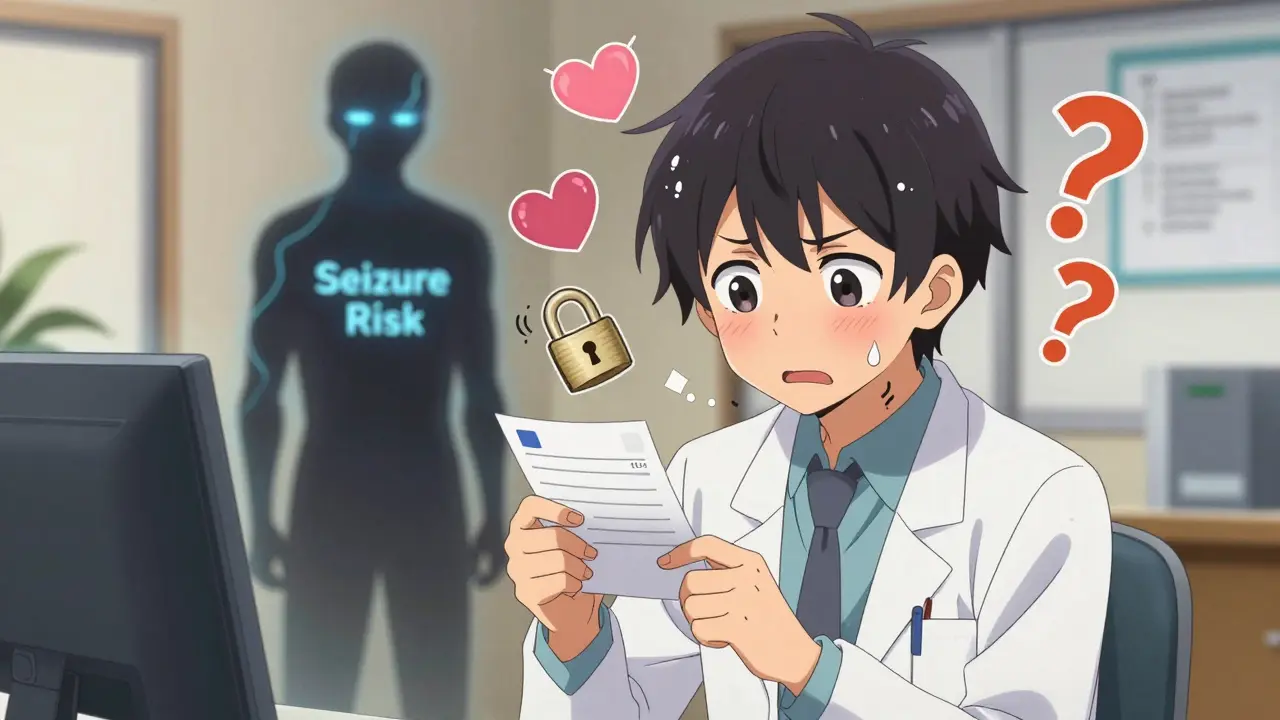
This is the one side effect that can change your life in seconds. Bupropion lowers your seizure threshold. That means your brain becomes more likely to have a sudden, uncontrolled electrical surge-what we call a seizure. At the recommended dose (up to 450 mg/day for SR, 400 mg/day for XL), the risk is low: about 0.4%. That’s 4 in 1,000 people. But compared to the general population’s risk of 0.01%, that’s 40 times higher. And if you go over the limit? The risk jumps to 2-5%. That’s not a typo. Five in 100 people could have a seizure if they take too much. What raises the risk even more?- History of seizures or head injury
- Eating disorders like anorexia or bulimia
- Severe liver disease
- Alcohol or drug withdrawal
- Taking other drugs that lower seizure threshold (like certain antipsychotics or stimulants)
How Bupropion Compares to Other Antidepressants
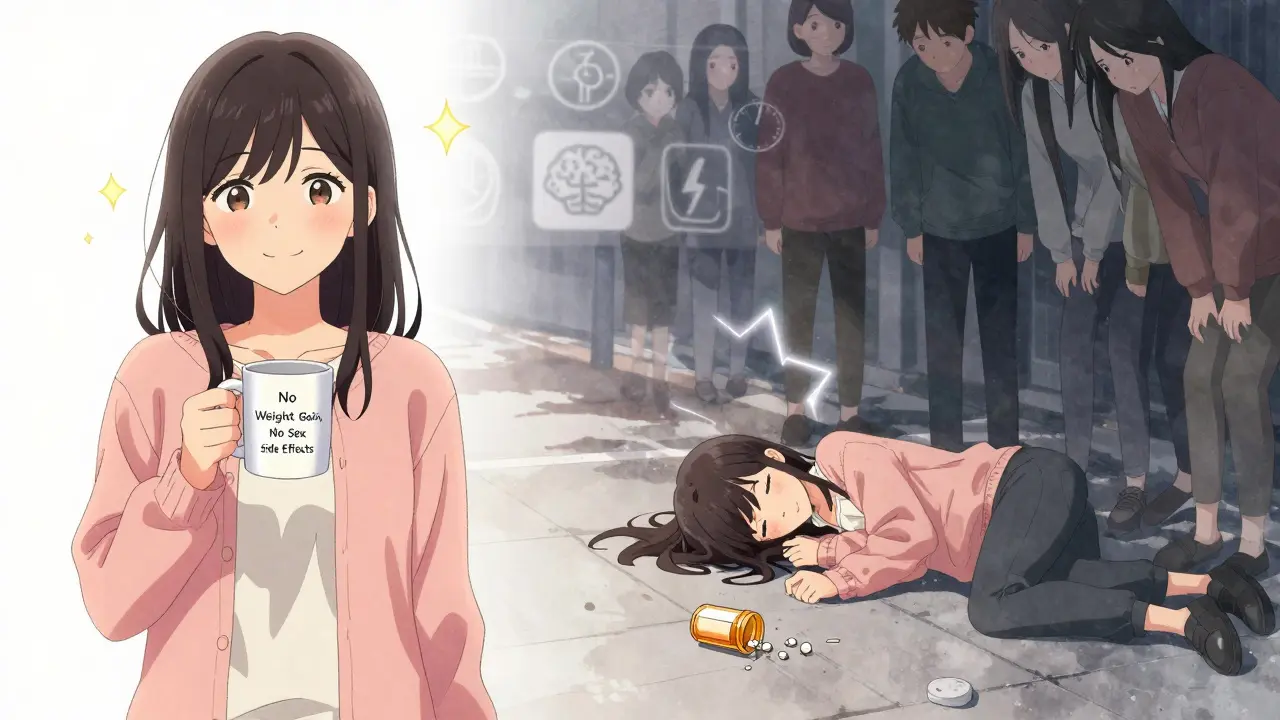
Bupropion’s biggest selling point is what it doesn’t do. Compared to SSRIs:| Side Effect | Bupropion | SSRIs (e.g., Zoloft, Prozac) |
|---|---|---|
| Sexual Dysfunction | 1-6% | 30-70% |
| Weight Gain | 23% lose weight | Up to 70% gain weight |
| Insomnia | 19% | 10-15% |
| Anxiety/Agitation | 20-25% | 10-20% |
| Seizure Risk | 0.4% (at max dose) | Negligible |
Who Should Avoid Bupropion Altogether?
You should not take bupropion if:- You’ve ever had a seizure, even once
- You have an eating disorder (anorexia or bulimia)
- You’re abruptly stopping alcohol or benzodiazepines
- You have liver disease
- You’re taking other medications that lower seizure threshold
- You’re on a high-dose stimulant for ADHD
What to Do If You’re Already Taking It
If you’re on bupropion and it’s working for your mood-but you’re struggling with sleep or anxiety-don’t quit cold turkey. Talk to your doctor. You might need to:- Switch from SR to XL (lower peak concentration)
- Move your dose to earlier in the day
- Add a short-term sleep aid like trazodone (not benzodiazepines long-term)
- Reduce your dose slightly (e.g., from 300 mg to 225 mg)
Real Stories, Real Consequences
On Reddit, a thread titled "Wellbutrin insomnia nightmare" has over 140 comments. One person wrote: "I was sleeping 3 hours a night. My boss thought I was on drugs. I wasn’t. I was on 300 mg of Wellbutrin SR. I cried every night. I quit after 3 weeks." Another said: "I was so anxious I couldn’t leave the house. My therapist said it was "normal." It wasn’t. I ended up in the ER thinking I was having a heart attack. It was anxiety. I stopped bupropion and felt like myself again in 4 days." And then there’s the case of the 28-year-old man who took 600 mg a day because he "wanted it to work faster." He had a seizure on his way to work. He survived. He now takes a different antidepressant. He says: "I thought I was being smart. I was just lucky I didn’t die." These aren’t outliers. They’re textbook examples of what happens when the risks aren’t taken seriously.Bottom Line: Is It Worth It?
Bupropion isn’t a magic pill. It’s a tool. And like any tool, it’s only safe when used correctly. It’s excellent for people who:- Can’t tolerate sexual side effects from SSRIs
- Want to avoid weight gain-or even lose weight
- Need help quitting smoking
- Have no history of seizures, eating disorders, or liver disease
- Can take their dose before 4 p.m.
- Struggle with sleep
- Have anxiety disorders
- Have ever had a seizure
- Drink heavily or use stimulants
- Take it too late in the day
Can bupropion cause seizures even at normal doses?
Yes. While the risk is low at recommended doses (about 0.4%), it’s still significantly higher than in people not taking antidepressants. People with a history of seizures, eating disorders, liver disease, or those withdrawing from alcohol or sedatives are at higher risk-even when taking the right amount. The 2023 FDA update emphasized that seizure risk isn’t just about overdose-it’s about individual vulnerability.
How long does bupropion-related insomnia last?
For most people, insomnia improves after 1-2 weeks as the body adjusts. But if it’s still bad after 3 weeks, it’s unlikely to get better on its own. Moving your dose earlier in the day helps in about 68% of cases. If that doesn’t work, your doctor may switch you to the extended-release version (XL) or suggest a low-dose sleep aid like trazodone.
Is bupropion safe if I have anxiety?
It depends. Bupropion can make anxiety worse in the first few weeks-sometimes severely. If you have panic disorder or severe generalized anxiety, it’s usually not the first choice. Some doctors will still prescribe it if you’ve tried other antidepressants and failed, but they’ll start low, go slow, and may add a short-term anti-anxiety medication. Never start bupropion if you’re currently in a high-anxiety state without medical supervision.
Can I drink alcohol while taking bupropion?
No. Alcohol lowers your seizure threshold and can interact dangerously with bupropion. Even moderate drinking increases your risk of seizures. If you’re on bupropion, it’s safest to avoid alcohol entirely. This is especially critical if you’re trying to quit drinking-sudden withdrawal combined with bupropion can trigger seizures.
What’s the safest way to stop taking bupropion?
Never stop abruptly. Tapering slowly over 1-2 weeks reduces the risk of withdrawal symptoms like mood swings, irritability, and headaches. If you’ve been on a high dose or have a seizure history, your doctor may recommend a longer taper. Stopping suddenly can also increase seizure risk in the days after discontinuation.
If you’re thinking about starting bupropion, ask your doctor for a full risk assessment. If you’re already on it and something feels off-especially with sleep, mood, or body movements-don’t wait. Talk to your provider. This medication can help, but only if you understand its risks.
Comments (9)
kumar kc
January 20, 2026 AT 19:08
Bupropion is a dangerous gamble for anyone with a pulse. If you can't sleep, don't take it. Simple.
Carolyn Rose Meszaros
January 21, 2026 AT 10:56
I took Wellbutrin for 6 months and honestly? The insomnia was brutal 🥲 I switched to trazodone at night and it saved my life. Also, no more 3am panic attacks. Big thumbs up for moving the dose earlier-this post nailed it 💪
Greg Robertson
January 21, 2026 AT 16:50
Thanks for laying this out so clearly. I’ve been on bupropion for a year and the anxiety spike in week two had me convinced I was losing my mind. Turns out, it’s just the drug adjusting. Took me a while to realize it wasn’t me-it was the chemistry. Still on it, but now I take it at 10 a.m. and sleep like a baby. 🙏
Jacob Cathro
January 22, 2026 AT 20:30
lol so bupropion = seizure roulette? yeah i’m sure the pharma bros didn’t know that when they marketed it as the "happy pill for lazy people who hate sex and gain weight." i mean, who cares if your brain fries once every 250 users? statistically irrelevant, right? 🤡
also, "avoid alcohol"? bro, i’m not gonna quit my friday beers just because some FDA doc wrote a paragraph in caps. i’ll just take my 300mg at 8am and chug a sixer at 10pm. it’s called balance.
also, why is no one talking about how 90% of people who say "it made me anxious" are just lazy and don’t want to deal with their feelings? maybe the anxiety was already there and the drug just held up a mirror. 🤔
also also-why do doctors still prescribe this like it’s vitamin c? someone get me a flowchart.
Manoj Kumar Billigunta
January 23, 2026 AT 01:47
If you're thinking about bupropion, talk to your doctor first-not Reddit. But if you're already on it and having trouble sleeping, try moving your dose to before noon. Many people don't realize timing matters more than dose. Also, if you've ever had a head injury or struggled with food, tell your doctor. These aren't just "side effects"-they're red flags. Your health isn't a trial and error game.
I've helped several friends switch from SSRIs to bupropion because of sexual side effects, but we always check their history first. No one should be surprised when their brain starts acting weird. Prevention beats regret.
Don't stop suddenly. Don't increase the dose to "make it work faster." Don't drink. These aren't rumors-they're warnings written in blood.
If you're feeling twitchy or spacey, even for a second-get checked. Seizures don't always look like movies. Sometimes they're just a blank stare for 5 seconds. That's still a seizure.
You're not weak for needing help. You're smart for asking questions.
sagar sanadi
January 23, 2026 AT 07:38
Oh wow, so the government lets Big Pharma sell a drug that can make you seize just because you don't want to gain weight? revolutionary. next they'll sell a pill that makes you fly if you don't like your job.
and why is no one talking about how this drug was originally designed for smoking cessation? so now we're using it to fix depression because the real solution is too hard? fix your life, not your neurotransmitters.
also, 0.4% seizure risk? that's just the ones they caught. what about the ones who had a "tiny blackout" and thought it was just stress? yeah right.
and the FDA update? sure, that came after 3 people died and a lawyer got rich. classic.
just take a walk. drink water. sleep. your brain doesn't need a chemical hack to feel okay.
clifford hoang
January 23, 2026 AT 14:43
EVERYTHING IS A CONTROL MECHANISM. Bupropion? It’s not about depression-it’s about population dampening. The insomnia? That’s the system keeping you awake so you can’t dream. The anxiety? That’s the algorithm training you to distrust your own mind.
Did you know the original bupropion trials were funded by a defense contractor? Coincidence? Nah. They needed a drug that made people hyper-alert but emotionally numb. Perfect for drones. Or office workers. Or you.
And the "seizure risk"? That’s just the body rejecting the synthetic neurotransmitter overload. Your brain is screaming. Are you listening?
Also, why is it always "don’t drink alcohol"? Because they know if you drink, you’ll question everything. Including the pill you’re taking.
Wake up. This isn’t medicine. It’s a behavioral modulator.
And if you think I’m crazy… good. That’s exactly what they want you to think.
Arlene Mathison
January 24, 2026 AT 00:56
I was skeptical about bupropion until it helped me quit smoking AND stop crying every morning. Yes, I had insomnia for two weeks-slept with a fan on and drank chamomile tea. Worth it. Now I take it at 8 a.m. and I’m energized, not wired. Don’t let fear stop you from trying-but DO listen to your body. If it’s screaming, pause. But don’t quit without a plan. You got this!
Emily Leigh
January 24, 2026 AT 23:54
Okay, but… why is the FDA’s black box warning about seizures and not suicide? That’s wild. Like, they’re basically saying: "Hey, we know this might make you want to die, but we’re way more worried you’ll have a seizure while driving."
Also, "weight loss" is a selling point? So now depression meds are just diet pills with a side of brain fireworks? I’m not mad, I’m just disappointed.
And can we talk about how the "real stories" section is basically a horror anthology? "I cried every night." "I thought I was having a heart attack." "I collapsed on my way to work."
Why is this still on the market? Why is it the third most prescribed? Who approved this? What were they thinking?!
Also-"no sexual side effects"? Cool. But now I can’t sleep, I’m paranoid, and I might die if I drink a beer. Trade-off? I don’t know. I just want to feel normal.