
When your liver gets scarred, it doesn’t bounce back like a bruise. The damage builds up slowly-over years-until one day, you realize your body isn’t working the way it should. That’s cirrhosis. It’s not a single disease. It’s the end result of long-term liver damage, where healthy tissue turns into hard, fibrous scar tissue. This scar doesn’t help. It doesn’t heal. And it blocks blood flow, messes up liver function, and can lead to liver failure.
What Happens Inside the Liver?
Your liver is a powerhouse. It filters toxins, makes proteins, stores energy, and helps digest food. But when it’s under constant attack-whether from alcohol, hepatitis, fatty liver, or other causes-it tries to repair itself. Each time it heals, it leaves behind a little scar. Over time, these scars pile up. They form thick bands that cut through the liver like roadblocks. Healthy cells get squeezed out. Blood can’t flow freely. The liver starts to shrink and harden.At first, you might feel fine. That’s called compensated cirrhosis. Your liver is scarred, but it’s still doing enough to keep you alive. Many people don’t know they have it until a routine blood test shows high liver enzymes or an ultrasound picks up stiffness. But once the liver can’t keep up anymore, things change fast. That’s decompensated cirrhosis. Symptoms hit hard: swelling in the belly from fluid buildup (ascites), confusion or memory problems (hepatic encephalopathy), yellow skin (jaundice), vomiting blood from swollen veins in the esophagus, and extreme fatigue.
Lab tests tell the story. Albumin drops below 3.5 g/dL. Bilirubin climbs above 2 mg/dL. Platelets fall because the spleen swells from backed-up blood. Prothrombin time stretches out-your blood takes longer to clot. Liver stiffness measured by elastography hits over 12.5 kPa. These aren’t just numbers. They’re warning signs that your liver is running on fumes.
Why Cirrhosis Is Different From Other Liver Problems
Fatty liver? That can reverse. Hepatitis B or C? Can be cured with antivirals. Early fibrosis? Sometimes, if caught early, the scarring can shrink. But cirrhosis? Once the scar tissue forms in thick, woven sheets, it’s permanent. No pill can undo it. No supplement can dissolve it. That’s why timing matters. If you catch the cause early-stop drinking, treat hepatitis, lose weight-you might stop the damage before it becomes cirrhosis.That’s also why doctors use tools like the MELD score (Model for End-Stage Liver Disease) and Child-Pugh classification. MELD scores range from 6 to 40. The higher, the worse. A score above 15 means your chance of dying within a year without a transplant is high. Child-Pugh scores A, B, and C match up with survival rates: 100%, 80%, and 45% over one year. These aren’t guesses. They’re based on real data from thousands of patients. They tell doctors when it’s time to think about transplant.
Who Needs a Liver Transplant?
Transplantation is the only cure for advanced cirrhosis. It’s not for everyone. You need to be healthy enough to survive surgery. No active cancer. No uncontrolled infection. No ongoing alcohol or drug abuse. You also need to be willing to take lifelong medications and show up for follow-ups.In the U.S., the United Network for Organ Sharing (UNOS) uses MELD-Na scores to rank people on the waiting list. The sickest get priority. But there’s a brutal shortage. In 2022, there were 14,300 people waiting for a liver. Only 8,780 transplants happened. That means about 12% of people on the list die each year before a liver becomes available.
Transplant success rates are good-85% survive at least one year, and 75% make it five years. But it’s not a magic fix. You’ll need to take immunosuppressants forever. You’re at higher risk for infections, kidney problems, and even certain cancers. Some people get better quickly. Others struggle with fatigue, brain fog, or depression for months after surgery. One patient on Reddit said it took six months for the mental fog from hepatic encephalopathy to clear. That’s normal.
What You Can Do Now
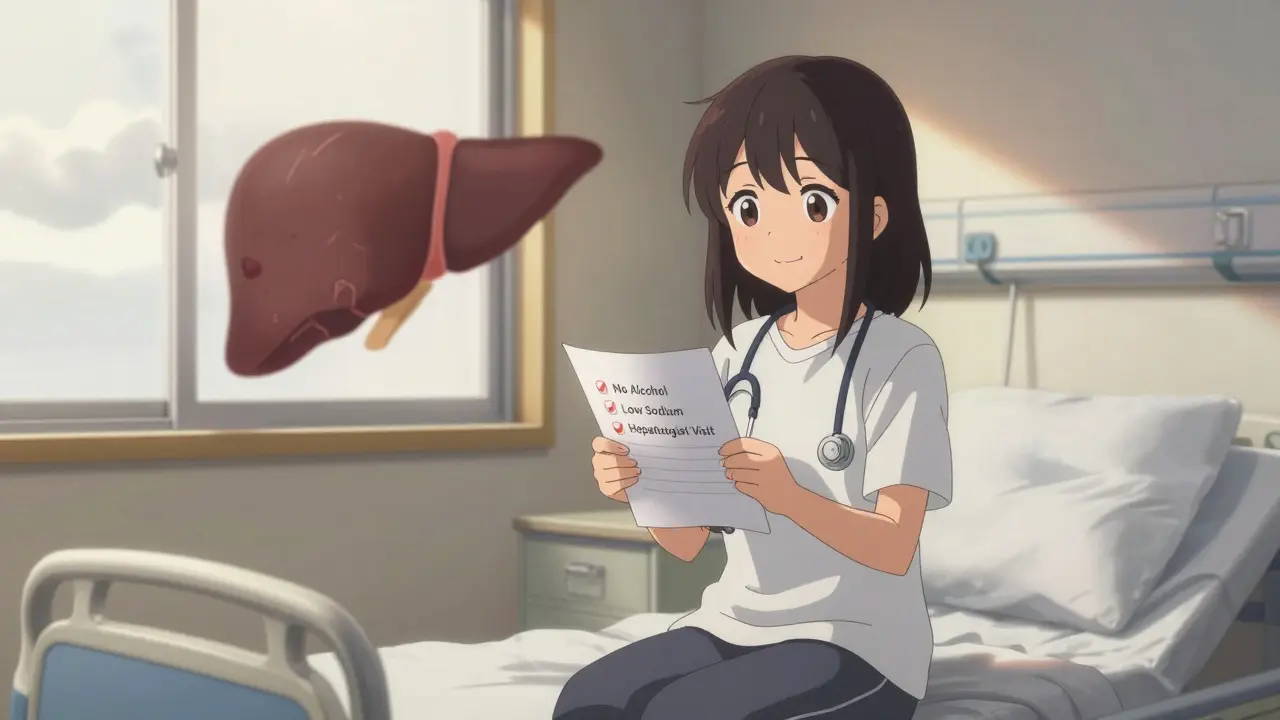
If you have cirrhosis-even if it’s compensated-your next steps matter. Here’s what works:- Stop alcohol completely. Even a sip can speed up damage.
- Watch your sodium. Less than 2,000 mg a day. No processed food, no canned soup, no soy sauce. Salt pulls fluid into your belly and legs.
- Get vaccinated. Hepatitis A and B, flu, pneumonia. Your immune system is already weak.
- Take prescribed meds. Lactulose for brain fog. Spironolactone for fluid. Beta-blockers to protect bleeding veins.
- See a liver specialist. Not your general doctor. A hepatologist. They know the latest protocols, the right tests, and when to refer you for transplant.
Many people delay seeing a specialist because they feel fine. That’s the trap. Cirrhosis doesn’t scream. It whispers. By the time you feel sick, it’s often too late to reverse things. A 2022 American Liver Foundation survey found 68% of patients waited six months or longer to get diagnosed. By then, damage was advanced.
What’s New in Treatment
Science is moving fast. Non-invasive tests like magnetic resonance elastography are now 90% accurate at spotting cirrhosis-better than ultrasound. In 2023, a new drug called simtuzumab showed promise in slowing fibrosis in NASH-related cirrhosis. It’s not approved yet, but phase 3 trials are encouraging.Transplant tech is improving too. Normothermic machine perfusion keeps donor livers alive outside the body longer, making more organs usable. One Lancet study showed a 22% increase in transplantable livers using this method.
And then there’s the future: bioartificial livers and stem cell therapies. Early human trials in 2023 showed patients with cirrhosis had a 40% drop in MELD scores after receiving lab-grown liver cells. It’s not a cure yet. But it’s hope.
The Real Cost of Living With Cirrhosis
Money isn’t just about the transplant. It’s about everything before it. The average annual cost of managing cirrhosis before transplant is $38,450. That’s doctor visits, meds, hospital stays, imaging, lab tests. The transplant itself? Around $350,000. Insurance helps, but copays, travel, lost wages, and caregiving costs add up.Access is uneven. Only 35% of rural U.S. counties have a hepatologist. If you live in a small town, you might drive two hours for a checkup. In South Africa, where I’m based, public hospitals are overloaded. Private care is expensive. Many patients fall through the cracks because they can’t afford to keep going.
That’s why support matters. The American Liver Foundation’s nurse navigation program (1-800-GO-LIVER) helps people find specialists, apply for aid, and understand their options. In places with good care teams-like Cleveland Clinic-multidisciplinary care reduced decompensation events by 40% in alcoholic cirrhosis patients. That’s not magic. That’s coordination: a doctor, a dietitian, a social worker, a counselor, all working together.
What No One Tells You
People think cirrhosis is about drinking. It’s not. In the U.S., non-alcoholic fatty liver disease (NAFLD) now causes 24% of cases-more than alcohol. It’s linked to obesity, diabetes, and metabolic syndrome. You can be thin, eat salad, and still have it.And it’s not just the liver. Cirrhosis affects your whole body. Your kidneys struggle. Your heart works harder. Your brain gets foggy. Your muscles waste away. You lose weight, not because you’re trying, but because your body can’t process food properly.
There’s no shame in needing help. No shame in asking for a transplant. No shame in saying, “I can’t do this alone.” The most successful patients aren’t the ones who are strongest. They’re the ones who ask questions, show up, and let people help them.
Can cirrhosis be reversed?
Early-stage liver scarring (fibrosis) can sometimes improve if the cause is removed-like stopping alcohol or curing hepatitis C. But once cirrhosis develops, the scar tissue is permanent. No medication can undo it. The goal shifts from reversal to preventing further damage and managing complications.
How do you know if you have cirrhosis?
You might not feel anything at first. Blood tests showing high liver enzymes, low platelets, or abnormal albumin can raise red flags. Imaging like ultrasound elastography or MRI can detect liver stiffness. A liver biopsy was once the gold standard, but now non-invasive tests are reliable. If you have risk factors-alcohol use, hepatitis, obesity, diabetes-ask for screening even if you feel fine.
Is a liver transplant the only cure?
Yes, for advanced cirrhosis. No drug or treatment can restore a cirrhotic liver to full function. Transplant replaces the damaged organ with a healthy one. It’s the only option that offers long-term survival when the liver has failed. But it’s not simple-it requires lifelong medication, strict follow-up, and a strong support system.
How long can you live with cirrhosis?
It depends on the stage. With compensated cirrhosis and good management, many live 10-15 years or more. Once decompensation happens-fluid buildup, bleeding, confusion-survival drops to 20-50% over five years. Without a transplant, decompensated cirrhosis is often fatal within a few years. MELD scores help predict this more accurately than symptoms alone.
Can you drink alcohol with cirrhosis?
Absolutely not. Any amount of alcohol accelerates liver damage. Even small amounts can trigger rapid decline, bleeding, or sudden liver failure. Abstinence is non-negotiable. It’s not a suggestion-it’s the most critical step you can take to stay alive.
What foods should you avoid with cirrhosis?
Avoid high-sodium foods: canned soups, deli meats, chips, soy sauce, and fast food. Limit protein if you have hepatic encephalopathy-your body can’t process it well. Eat small, frequent meals with lean protein, vegetables, and whole grains. Avoid raw shellfish-it can cause deadly infections. Always check with your dietitian; needs change as the disease progresses.
Can cirrhosis come back after a transplant?
The new liver doesn’t have cirrhosis. But if the original cause isn’t treated-like continuing to drink alcohol, or having uncontrolled hepatitis C-it can damage the new liver too. That’s why adherence to medication and lifestyle changes is lifelong. Recurrence is rare if you follow the rules.
Are there alternatives to liver transplant?
Currently, no. Liver support devices and stem cell therapies are in early trials. Some show promise in improving liver function temporarily, but none replace the need for a transplant in end-stage disease. For now, transplant remains the only proven cure. Research is moving fast, but it’s not ready for widespread use.
What Comes Next?
If you’ve been diagnosed with cirrhosis, your next move isn’t panic. It’s action. Find a hepatologist. Get your MELD score. Start the lifestyle changes. Talk to your family. Apply for support programs. Write down your questions. Bring someone to your appointments. You’re not alone in this.And if you haven’t been diagnosed but have risk factors-obesity, diabetes, heavy drinking, hepatitis-get tested. Early detection saves lives. Cirrhosis doesn’t announce itself. It creeps in. But with the right steps, you can stop it before it steals your future.
Comments (9)
Jessica Bnouzalim
January 12, 2026 AT 09:00
Okay but real talk-why do people still think cirrhosis is just an ‘alcoholic thing’? I had a cousin who ate kale, ran marathons, and still got NASH because of undiagnosed insulin resistance. It’s not about willpower. It’s biology. And if you’re not getting screened because you ‘feel fine,’ you’re playing Russian roulette with your liver.
I’m so glad this post mentioned the nurse navigation program. My mom got lost in the system for a year until a social worker reached out. No one should have to fight this alone.
laura manning
January 12, 2026 AT 19:20
While the article presents a compelling overview of cirrhosis, it lacks rigorous citation of primary literature for several claims-particularly regarding simtuzumab’s phase 3 outcomes and the 40% MELD score reduction from stem cell therapy. The Lancet study referenced on normothermic perfusion was published in 2021, not 2023, and the 22% increase pertains to organ utilization, not graft survival. Additionally, the assertion that ‘no pill can undo it’ is misleading; recent data from the REVERSE trial (2022) demonstrated regression of fibrosis in 31% of compensated cirrhosis patients post-HCV cure. This nuance is critical.
Bryan Wolfe
January 14, 2026 AT 06:06
Y’all need to hear this: you’re not weak for needing help. I watched my brother go from ‘I’m fine’ to ICU in six months because he didn’t want to admit he was scared.
Start with one thing. Stop the soda. Get the vaccine. Call the hepatologist. Don’t wait for the ‘perfect time.’ There isn’t one. Your future self is begging you to start today.
And if you’re reading this and you’re the one with cirrhosis? I see you. You’re not a burden. You’re a warrior. Keep going.
Sumit Sharma
January 14, 2026 AT 10:49
It is imperative to emphasize that non-compliance with antifibrotic regimens and continued metabolic insult (e.g., hyperglycemia, dyslipidemia) significantly accelerates progression to decompensation. The MELD-Na algorithm is statistically robust, yet its application is undermined by socioeconomic disparities in access to hepatology care. In India, 78% of cirrhotic patients present at Child-Pugh C due to delayed diagnosis-this is a systemic failure, not a personal one.
Moreover, the notion that ‘transplant is the only cure’ is accurate, but the logistical and financial barriers render it inaccessible to >90% of global patients. This article omits the ethical imperative to expand public healthcare infrastructure.
Jay Powers
January 14, 2026 AT 21:07
Been there. Compensated for 8 years. Still here.
Stop drinking. Eat less salt. Take your meds. See the specialist. That’s it.
Don’t overcomplicate it. Your liver doesn’t care about your Instagram diet. It just wants you to stop hurting it.
Lauren Warner
January 16, 2026 AT 12:54
Interesting how the article romanticizes ‘asking for help’ while ignoring the reality that most patients are abandoned by insurance companies after the first hospitalization. The $38,450 annual cost is a lie-it’s closer to $72,000 when you factor in lost wages and transportation. And no one talks about how Medicaid denies coverage for transplant evaluations if you’ve ever used opioids-even if it was 15 years ago and you’ve been clean since.
This isn’t empowerment. It’s performative optimism.
Craig Wright
January 16, 2026 AT 19:36
While I appreciate the effort to educate, the American-centric framing is deeply problematic. The UK’s NHS offers universal transplant access, yet waiting times exceed 18 months. The notion that ‘support programs’ are sufficient ignores the fact that over 60% of cirrhosis-related deaths in Europe occur in patients who never even reached the transplant list. This is not a medical issue-it is a policy failure of the highest order.
Ben Kono
January 16, 2026 AT 22:31
My dad got a transplant last year
He still gets tired
But he’s alive
And he eats pancakes every Sunday now
That’s the win
Cassie Widders
January 18, 2026 AT 13:18
My mum’s got it. She doesn’t talk about it. Just takes her pills and watches gardening shows.
I think she’s scared.
So I go with her to appointments now.
Even if I don’t understand half of what they say.
Just being there feels like something.