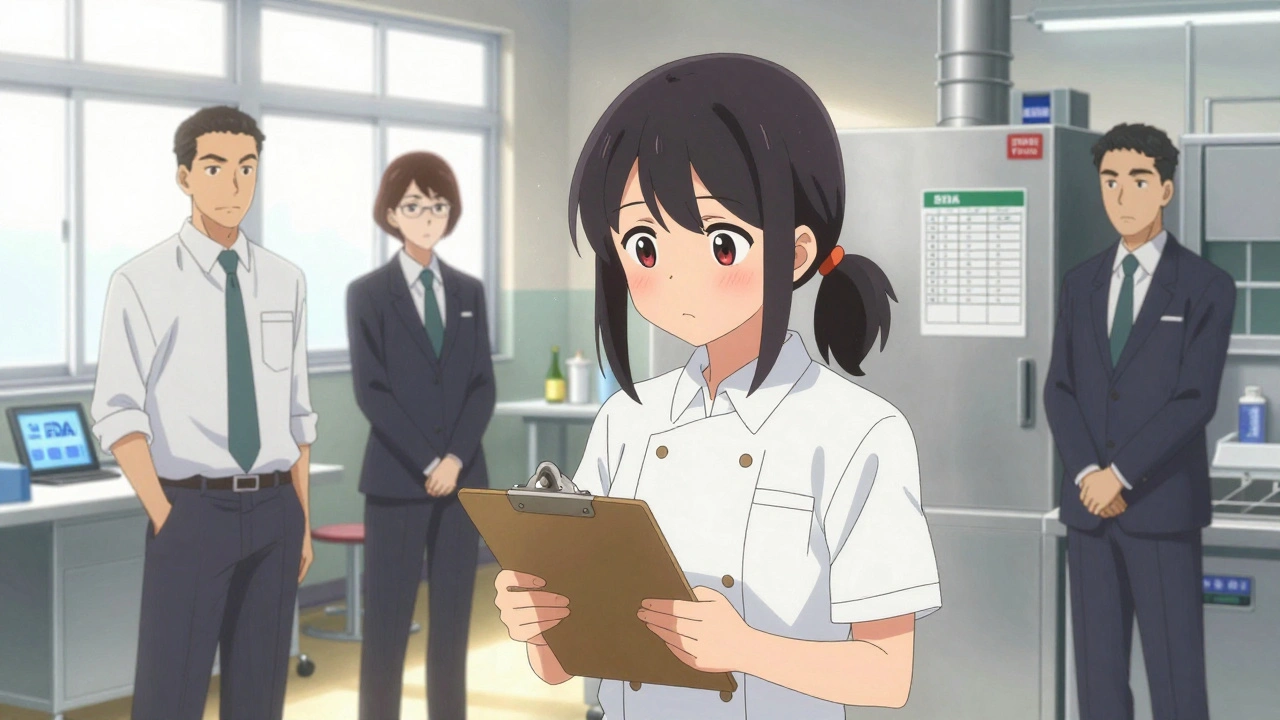
The U.S. Food and Drug Administration doesn’t just watch over food made in America. It watches over food made anywhere that ends up on American shelves. About 15% of everything we eat comes from overseas-fruits from Mexico, spices from India, seafood from Vietnam, supplements from China. And if you’re running a facility that ships food to the U.S., you’re now under a new kind of watch. No more warning calls. No more time to clean up, retrain staff, or hide problems. Starting in 2024, the FDA began conducting unannounced inspections at foreign food plants-just like they’ve always done in the U.S.
Why the Change? Ending the Double Standard
For years, foreign facilities got advance notice-sometimes weeks ahead-so they could arrange translators, clean the facility, and make sure the right people were on-site. Meanwhile, American plants got no warning at all. The FDA inspectors showed up when they wanted, checked the real conditions, and left. That wasn’t fair. And it wasn’t safe. In May 2024, FDA Commissioner Martin A. Makary made it clear: "We’re ending a double standard." If you’re making food for Americans, you’re held to the same standard as a plant in Ohio or California. No special treatment. No head start. If you’re not ready at 8 a.m. on a Tuesday, you’re not ready at all. The goal? Prevent foodborne illness before it hits U.S. soil. The FDA doesn’t want to find contaminated peanut butter or tainted spices after they’ve already been sold. They want to catch the problem at the source.Who Gets Inspected-and How They Pick You
Not every one of the 300,000 registered foreign food facilities gets inspected every year. The FDA doesn’t have enough inspectors for that. Instead, they use a risk-based system to decide who gets visited next. Three things matter most:- What you make-High-risk foods like raw seafood, sprouts, or infant formula get higher priority than canned beans or baked goods.
- How you make it-Processes that involve raw ingredients, multiple handling steps, or temperature-sensitive controls are riskier than sealed packaging or pasteurization.
- Your record-If your products have been denied entry into the U.S. before, or if you’ve had past violations, you’re on the list. The FDA tracks every refusal, every warning letter, every complaint.
What Happens During an Unannounced Inspection
You won’t know they’re coming. One day, you’ll see two FDA inspectors at your gate. They’ll show ID. They’ll ask to enter. And if you say no-you’ve already broken the law. Once inside, they’ll:- Walk through every part of your facility-production, storage, packaging, waste areas.
- Ask to see your records: sanitation logs, training files, supplier approvals, test results.
- Observe your workers in real time-no rehearsed routines, no "inspection mode".
- Take photos or videos if they suspect violations.
- Interview staff directly, without your managers present.

What Gets You in Trouble
It’s not just about dirty floors or expired ingredients. The FDA is looking for systemic failures. Here’s what triggers enforcement:- Delaying or denying access-Holding inspectors outside while you "call your lawyer" is illegal.
- Limiting observation-Blocking them from seeing a machine, a storage room, or a worker’s hands is a violation.
- Redacting records-Crossing out parts of logs, hiding batch numbers, or refusing to show electronic files counts as obstruction.
- Interrupting production-Telling workers to stop working so the inspectors can’t see what’s really happening? That’s a red flag.
- Refusing to allow photography-If an inspector wants to take a picture of a broken seal or a contaminated surface, you can’t say no.
How to Prepare-Without Warning
If you’ve been relying on advance notice to get ready, you’re behind. The new rule is simple: Be ready every day. Here’s what top-performing foreign facilities are doing now:- Keep records digital and always accessible-Cloud-based systems with real-time backups. No more paper files locked in a drawer.
- Hire bilingual QA staff-Not temporary translators. Full-time employees who understand FDA regulations and can explain procedures on the spot.
- Run monthly mock inspections-Have someone pretend to be an FDA inspector. No warning. Just show up with a clipboard and start asking questions.
- Train every employee-Not just managers. Cleaners, packers, machine operators-they all need to know what to do if an inspector walks in.
- Never accept help from the facility-The FDA now bans inspectors from accepting rides, meals, or lodging from the companies they inspect. That means you can’t "make it easier" by offering a taxi or a hotel. Don’t try.
The Real Challenge: Resources and Fairness
The FDA’s ambition is clear: become the global gold standard for food safety oversight. But they’re still stretched thin. With 300,000 foreign facilities and only a few hundred inspectors, that’s roughly one inspector for every 1,500 plants. That’s why risk-based targeting matters. A small family-run spice grinder in rural India has a different risk profile than a large seafood processor in Vietnam exporting to Walmart. The FDA knows this. They’re using data, not luck, to decide who gets checked. Still, critics argue the system isn’t fair. Small businesses struggle to afford the digital systems, bilingual staff, and constant training. Meanwhile, big companies with global compliance teams adapt quickly. The result? A two-tiered system-where only the well-funded can truly stay compliant. The FDA says they’re working on solutions: using third-party inspectors under FDA supervision, building AI tools to flag high-risk facilities, and expanding partnerships with foreign regulators. But for now, the burden falls on the facility.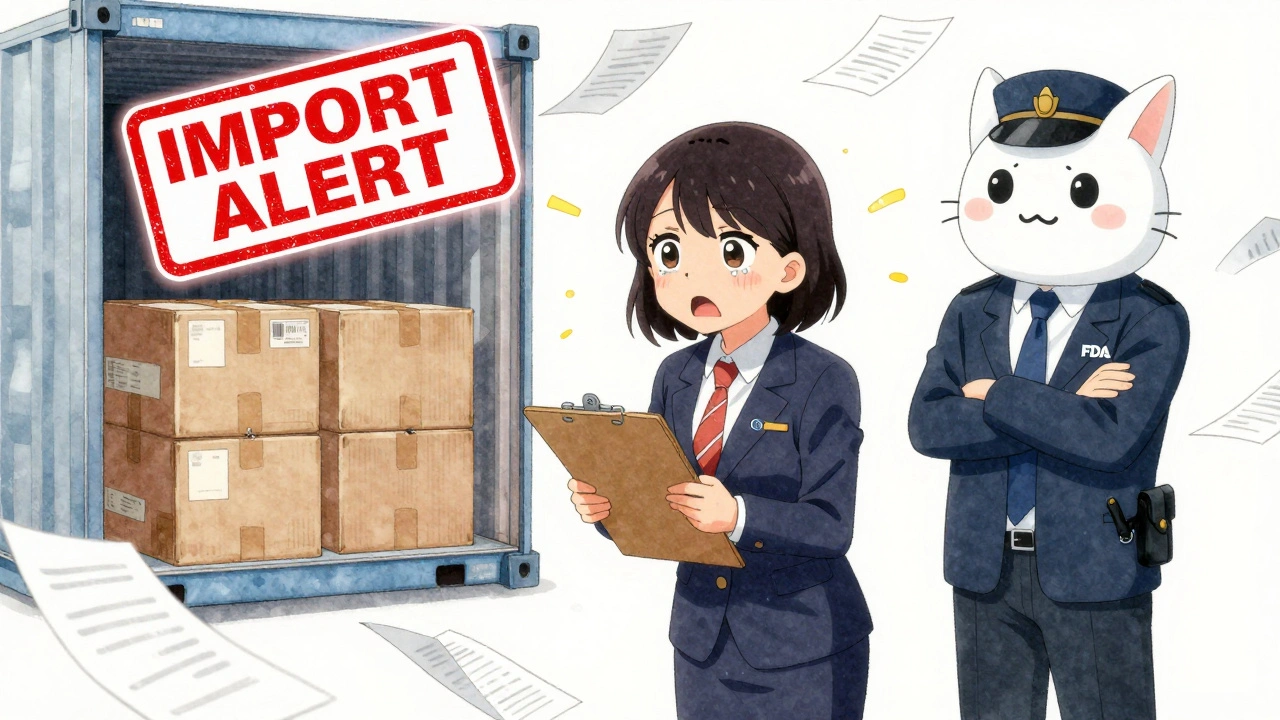
What Happens If You Fail?
If the FDA finds serious violations during an inspection, they can:- Issue a Form 483-A list of observed deficiencies. You get 15 days to respond.
- Issue a Warning Letter-A formal notice that you’re in violation of U.S. law.
- Refuse entry of your products-Your shipment gets turned away at the border.
- Place your facility on Import Alert-Your products are automatically detained without physical inspection.
- Refer your case to the DOJ-For criminal prosecution.
The Bigger Picture: Global Standards Are Rising
The FDA isn’t alone. The European Union, Japan, Canada, and Australia are all tightening their own foreign inspection rules. But the FDA’s shift to unannounced inspections has become a model. If you want to sell food to the U.S., you’re not just complying with local laws. You’re complying with the strictest, most unpredictable inspection regime in the world. And if you can pass FDA standards, you can probably pass any other country’s. This isn’t about punishment. It’s about protection. Every unannounced inspection is a chance to stop a contaminated product before it reaches a child’s lunchbox or an elderly person’s dinner plate.Final Thought: Compliance Isn’t a Project. It’s a Culture.
You can’t outsource food safety. You can’t hire a consultant to fix it for a month. Real compliance means building a culture where every person on the floor knows what to do, every record is accurate, and every process runs the same way-whether the FDA is there or not. The days of preparing for inspections are over. The new rule is simple: Be ready. Always.Do foreign food facilities still get advance notice from the FDA?
No. As of May 2024, the FDA stopped giving advance notice to foreign food facilities for inspections. This change aligns foreign inspections with U.S. domestic practices, where facilities are inspected without warning to ensure accurate, real-time compliance checks. Any notification you receive now is likely a scheduling confirmation for a voluntary meeting-not an inspection notice.
What happens if I refuse an FDA inspection?
Refusing an FDA inspection is a federal offense under the Federal Food, Drug, and Cosmetic Act. Your products will be automatically denied entry into the United States. The FDA can place your facility on Import Alert, blocking all future shipments. In serious cases, the U.S. Department of Justice may pursue criminal charges, leading to fines, asset forfeiture, or even debarment from exporting to the U.S. ever again.
Can I hire a translator during an unannounced inspection?
You can, but you must have one ready on-site at all times. The FDA does not provide or pay for translators. If you don’t have a qualified bilingual staff member available when inspectors arrive, you risk delays, miscommunication, and potential violations. Many successful facilities now employ permanent bilingual quality assurance personnel to handle inspections, audits, and daily compliance.
How often does the FDA inspect foreign facilities?
There’s no fixed schedule. Inspections are risk-based. High-risk facilities (like those producing raw seafood or infant formula) may be inspected every 1-2 years. Low-risk facilities might go 5-10 years between visits-or longer. The FDA aims to inspect all registered foreign facilities over time, but with 300,000 facilities and limited staff, prioritization is key. Your compliance history and product type determine how often you’re checked.
What records must I keep available for FDA inspections?
You must maintain current, accurate records of sanitation procedures, employee training, supplier approvals, hazard analysis (HACCP), corrective actions, and product testing. All records must be accessible in real time-no delays allowed. Digital systems with cloud backups are strongly recommended. Paper records are acceptable but must be immediately available. The FDA can request any document related to the safety and production of your food products.
Can the FDA inspect my facility without a warrant?
Yes. Under the Federal Food, Drug, and Cosmetic Act (21 U.S.C. § 374), the FDA has the legal authority to enter and inspect any facility that manufactures, processes, packs, or holds food for U.S. consumption-without a warrant. This applies to both domestic and foreign facilities. Refusing entry is a violation of federal law, regardless of location.
Comments (10)
ian septian
December 9, 2025 AT 19:55
This is long overdue. If you're selling food to Americans, you play by American rules. No more free passes.
William Umstattd
December 10, 2025 AT 19:48
It is absolutely unacceptable that foreign facilities were granted privileged treatment for over a decade while American producers were held to rigorous, unannounced standards. This is not merely policy-it is moral rectitude enforced by law. The FDA has restored justice to the food supply chain.
Sabrina Thurn
December 12, 2025 AT 09:19
The risk-based prioritization model is actually quite sophisticated-leveraging HACCP data, historical refusal rates, and process complexity to allocate limited inspector capacity. What’s often missed is how this aligns with ISO 22000 and Codex Alimentarius frameworks. The real win is systemic resilience, not just compliance. Facilities that treat this as a cultural shift-not a checklist-will thrive.
Simran Chettiar
December 13, 2025 AT 11:59
You know in India we have a saying that food is god and god should not be inspected but should be trusted but now the world is changing and the FDA is not god but they are like god of food safety and if you dont follow their rules then your food is not holy anymore and this is very sad because small farmers and spice makers cannot afford digital systems and translators and this is not fair to the poor who feed the rich with chili and turmeric and they are being punished for being poor
Sarah Gray
December 14, 2025 AT 09:31
If you can't afford to comply with U.S. food safety standards, you shouldn't be exporting. This isn't charity. It's science. And your 'small business' excuses are just lazy rationalizations for negligence.
Carina M
December 14, 2025 AT 20:50
The Federal Food, Drug, and Cosmetic Act, Title 21, Section 374, unequivocally grants the FDA statutory authority to conduct warrantless inspections of any facility involved in the production of food intended for human consumption within the United States. Non-compliance constitutes a federal offense. The notion that this is 'harsh' is a profound misunderstanding of public health imperatives.
Ajit Kumar Singh
December 15, 2025 AT 21:05
I am from India and I have seen factories where they clean only when they know inspector is coming and now they must clean every day and that is good but you know what is worse? The inspectors come and they do not understand our spices and they say the color is wrong or the smell is bad but in India we have been using this for 500 years and they think it is contaminated but it is just traditional and this is cultural imperialism not food safety
Lisa Whitesel
December 17, 2025 AT 20:42
The real problem isn't inspections. It's that the FDA still relies on human inspectors instead of AI-driven predictive analytics. You're wasting millions on travel and overtime while your data infrastructure is stuck in 2005. Fix the system, not the symptoms.
Larry Lieberman
December 19, 2025 AT 18:00
This is actually kind of awesome 🤯 Imagine if every factory in the world had to be this clean every day. No more hiding stuff. No more "oops, we forgot to sanitize". This is the future of food. 👏
Asset Finance Komrade
December 20, 2025 AT 08:55
One must question the epistemological foundations of regulatory hegemony. Is the FDA’s model truly superior, or merely dominant? The imposition of unannounced inspections upon sovereign nations-many of whom possess centuries-old food traditions-bears the hallmarks of neocolonial control disguised as public health. The global south pays the price for American efficiency.