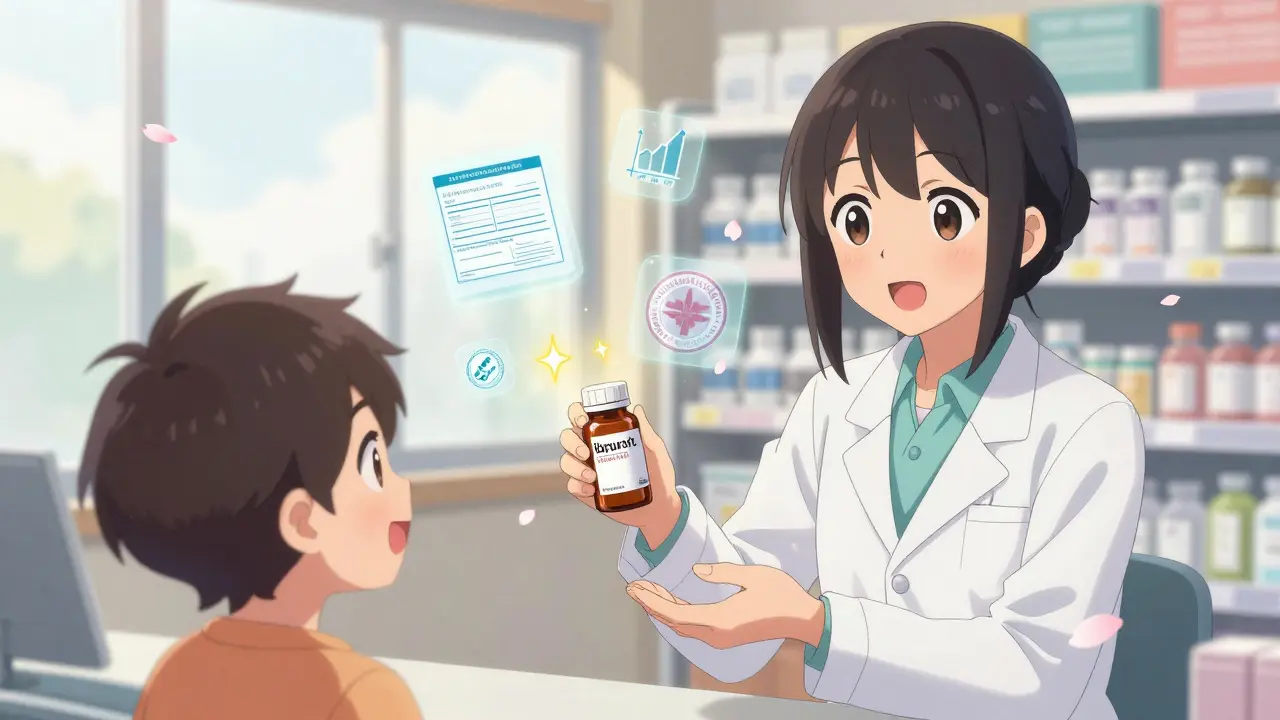
When you pick up a bottle of generic ibuprofen at your local pharmacy, you’re holding a product that traveled a long, complex road before it landed on that shelf. It didn’t just appear out of nowhere. Behind every generic drug is a carefully regulated, highly technical journey - starting with an ANDA and ending with a prescription filled at your neighborhood pharmacy. This isn’t just about saving money. It’s about how the system makes affordable medicine possible for millions.
What Exactly Is an ANDA?
ANDA stands for Abbreviated New Drug Application. It’s not a shortcut - it’s a smart, targeted path. Instead of redoing all the clinical trials that brand-name drug makers had to do, generic companies use the FDA’s existing safety and effectiveness data from the original drug, called the Reference Listed Drug (RLD). All they have to prove is that their version works the same way in the body. That’s called bioequivalence.
Think of it like this: if the brand-name drug is a perfectly tuned engine, the generic is a rebuilt version using the same blueprints. Same parts, same performance, but built by someone else at a fraction of the cost. The FDA requires that the generic has the same active ingredient, strength, dosage form, and route of administration. It also has to match the original in how quickly and completely it’s absorbed into the bloodstream. No guessing. No shortcuts. Just science.
And it works. As of 2023, nearly 90% of all prescriptions filled in the U.S. were for generic drugs. They cost, on average, 80-85% less than their brand-name equivalents. That’s not marketing hype - it’s regulatory fact. The savings? Over $1.67 trillion in the last decade alone.
The ANDA Submission: Paperwork That Saves Lives
Filing an ANDA isn’t like sending in a form online. It’s a massive, detailed package. Manufacturers must submit chemistry, manufacturing, and controls (CMC) data - every step of how the drug is made, from raw materials to final packaging. They need proof the facility meets FDA quality standards. They need bioequivalence study results, often from healthy volunteers who take both the brand and generic versions under controlled conditions.
Labeling must match the original too - same warnings, same instructions, same language. The only allowed differences are the name, logo, and inactive ingredients (like color or filler), which can’t affect how the drug works.
All of this is submitted electronically through the FDA’s Electronic Submissions Gateway. A standard ANDA takes about 30 months to review under current FDA timelines. But not all applications are created equal. If a drug is in short supply - like antibiotics or insulin - or if it’s the first generic version of a popular brand, the FDA fast-tracks it. In 2022, 112 first generics were approved, covering drugs worth $39 billion in annual sales.
Still, nearly 40% of initial ANDAs get rejected with a Complete Response Letter. Common reasons? Poorly designed bioequivalence studies, incomplete manufacturing details, or labeling mismatches. Many companies now schedule pre-ANDA meetings with the FDA to avoid these pitfalls. Those that do see 30% fewer major issues during review.
First-to-File: The Billion-Dollar Race
There’s a huge financial incentive to be the first company to file a complete ANDA for a brand-name drug whose patent is about to expire. That’s called a Paragraph IV certification. If you file it, and you’re the first, you get 180 days of exclusive marketing rights. No competition. That’s a golden window to capture market share before others catch up.
That’s why companies race to file. In 2022, six different generic manufacturers all filed ANDAs for apixaban - the generic version of Eliquis - the day after the patent expired. Only one would get the 180-day exclusivity. The rest had to wait, hoping to win on price or distribution. This kind of competition drives prices down fast.
But it’s risky. If the patent challenge fails, the company can be stuck with millions in development costs and no market. That’s why only the most confident or well-funded manufacturers go for it. Smaller companies often wait for the exclusivity period to end and compete on price.
Approval Doesn’t Mean Availability
Getting FDA approval is just the halfway point. Many manufacturers think they’re done when the letter arrives. They’re not.
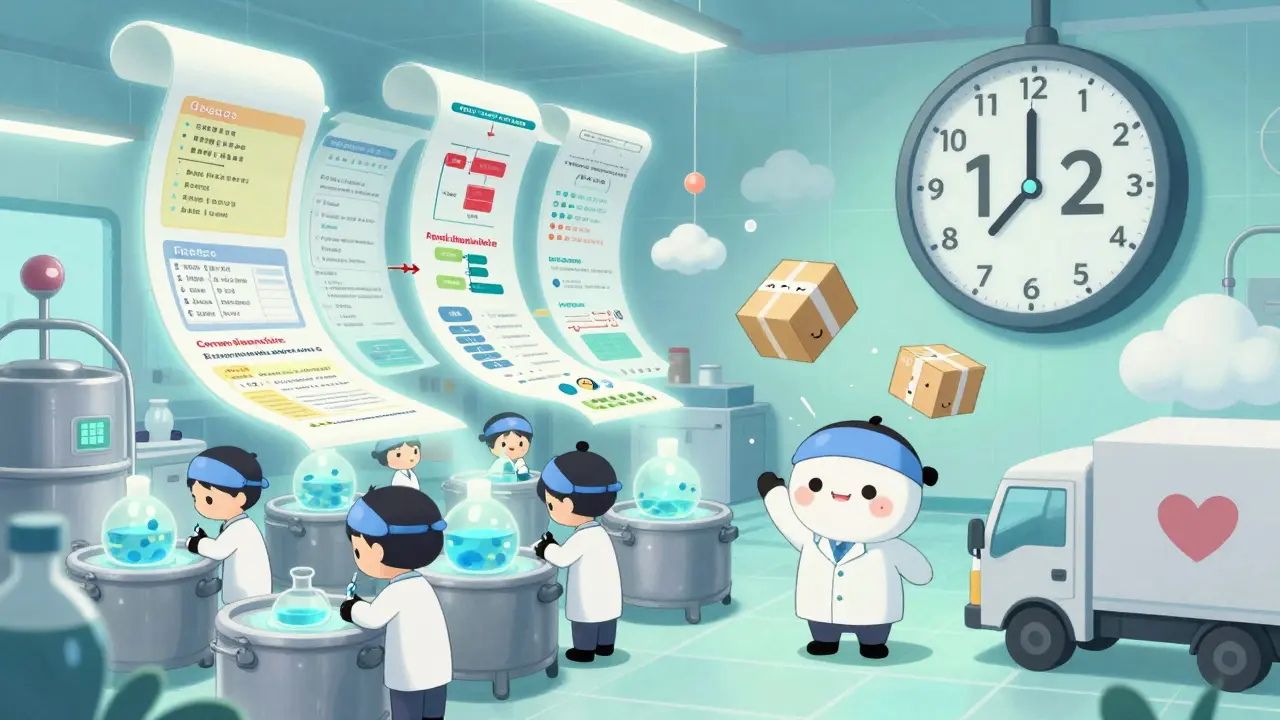
After approval, the real work begins: scaling up production. Moving from small test batches to full commercial volume takes 60 to 120 days. Facilities must prove they can make thousands of bottles daily without losing quality. One small error in mixing or packaging can mean a whole batch is destroyed.
Then comes the hardest part: getting pharmacies to stock it. That means convincing pharmacy benefit managers (PBMs) like Express Scripts, OptumRx, and CVS Health to include the generic on their preferred lists. PBMs control which drugs insurers will cover at the lowest cost. If your generic isn’t on Tier 1 - the preferred list - it won’t get prescribed much.
One Teva Pharmaceuticals executive said getting their generic EpiPen onto major PBM formularies took seven months after FDA approval. Why? Because PBMs demanded deeper discounts than expected - sometimes 20-30% below initial pricing. That’s the reality: even after you’ve passed every regulatory test, you still have to negotiate with middlemen who hold the keys to the pharmacy shelf.
From Wholesaler to Shelf
Once the PBM agrees, the drug moves to distribution. Most generics use the big three wholesalers: AmerisourceBergen, McKesson, and Cardinal Health. These companies supply over 90% of U.S. pharmacies. Getting your product into their systems takes another 15-30 days. Each warehouse must update its inventory codes, label the product correctly, and train staff to handle it.
Finally, the pharmacy gets the shipment. But even then, the drug isn’t automatically ready to be dispensed. Pharmacists need to update their computer systems. The drug’s NDC code, pricing, and insurance coverage must be loaded. Staff need to know how to answer patient questions. This usually takes 7-14 days.
On average, it takes 112 days from FDA approval to the first time a generic drug is dispensed at a retail pharmacy. For simple pills like metformin or lisinopril, it’s closer to 87 days. For complex products like inhalers or topical creams? Up to 145 days. That’s because these drugs require more testing, more manufacturing precision, and more negotiation with PBMs.
Why This System Matters
The ANDA process isn’t perfect. It’s slow, expensive, and full of legal traps. But it works. It’s why a 30-day supply of generic atorvastatin costs $4 instead of $200. It’s why diabetics can afford insulin. It’s why rural clinics can stock essential medicines without going bankrupt.
And the numbers don’t lie. In 2022, Americans filled over 6.3 billion generic prescriptions. The average price of a generic drug dropped 4.7% each year since 2015. The FDA approved 892 generic drugs that year - a 12% jump from 2021. The goal now? More complex generics. Inhalers, injectables, creams - the harder-to-make drugs that used to be too expensive to copy.
Future changes are coming. The FDA’s new Data Standards for Drug Applications, effective January 2024, will require all submissions to follow strict electronic formats. That will eventually speed things up, but it’s a hurdle for smaller manufacturers right now. AI is also starting to help model bioequivalence, potentially cutting development time by 25-30% in the next five years.
But the core idea remains the same: if a drug is safe and effective, why should patients pay more just because the brand name is on the bottle? The ANDA system lets competition do what it’s supposed to do - drive down prices without sacrificing quality.
What’s Next for Generic Drugs?
By 2028, experts predict that 93% of all prescriptions will be for generics. That’s up from 90% today. The savings could top $2.2 trillion over the next five years. But pressure is growing. Some generic manufacturers are struggling to stay profitable as prices keep falling. A few have shut down. Others are moving production overseas to cut costs - which raises new quality concerns.
The FDA is responding with tighter inspections of overseas plants and more focus on complex generics. The goal is simple: more affordable drugs, made safely, delivered reliably. And the ANDA process remains the backbone of that mission.
Next time you pick up a generic pill, remember: you’re not just saving money. You’re benefiting from a system designed to make medicine accessible - one carefully approved application at a time.
How long does it take for a generic drug to go from FDA approval to pharmacy shelf?
On average, it takes about 112 days from FDA approval to the first retail dispensing. But this varies widely. Simple pills like generic metformin can reach shelves in as little as 87 days. More complex drugs - like inhalers, injectables, or topical creams - can take up to 145 days due to longer manufacturing, distribution, and formulary negotiation times.
Why are generic drugs so much cheaper than brand-name drugs?
Generic drugs don’t need to repeat expensive clinical trials. Instead, they prove bioequivalence - meaning they work the same way in the body as the brand-name version. This cuts development costs from $2.6 billion for a new drug to just $2-5 million for a generic. Manufacturers also compete on price, which drives costs down further. The result? Generics typically cost 80-85% less than their brand-name counterparts.
What is a Paragraph IV certification, and why does it matter?
A Paragraph IV certification is a legal statement made by a generic manufacturer claiming that a brand-name drug’s patent is invalid or won’t be infringed. If the first company to file an ANDA with this certification is approved, they get 180 days of exclusive marketing rights - no competitors allowed. This creates a race to file, because during those 180 days, the company can capture the entire market before others enter. It’s a high-risk, high-reward strategy.
Do generic drugs work as well as brand-name drugs?
Yes. The FDA requires that generics have the same active ingredient, strength, dosage form, and bioequivalence as the brand-name drug. That means they’re absorbed into the body at the same rate and to the same extent. Over 90% of prescriptions in the U.S. are for generics, and studies consistently show they are just as safe and effective. The only differences are in inactive ingredients like color or filler - which don’t affect how the drug works.
Why do some generic drugs take longer to appear in pharmacies than others?
It depends on complexity and market access. Simple oral pills are easier and faster to manufacture and get approved. Complex products like inhalers, patches, or injectables require more rigorous testing and stricter manufacturing controls. Even after approval, getting them onto pharmacy formularies takes longer because PBMs demand deeper discounts and more evidence of safety. Distribution logistics also vary - some wholesalers take longer to add new products to their systems.
Can a generic drug be pulled from the market after approval?
Yes. The FDA can pull a generic drug if quality issues are found - like contamination, inconsistent potency, or manufacturing violations. This happened in 2018 with valsartan, a blood pressure medication, after a carcinogen was found in some batches. Even though the drug was approved, the FDA recalled it and required manufacturers to fix their processes before allowing sales to resume. Approval doesn’t mean permanent safety - ongoing monitoring is key.
Comments (14)
Jacob Milano
January 3, 2026 AT 07:31
Man, I never thought about how much goes into getting a $4 pill on the shelf. It’s not just science-it’s a whole ecosystem of paperwork, negotiations, and midnight manufacturing runs. The fact that someone’s sitting there arguing over whether a filler ingredient affects absorption? Wild. And yet, we just grab it like it’s candy.
Dee Humprey
January 4, 2026 AT 18:59
This is the quiet miracle of modern medicine. 🌟 No flashy ads, no celebrity endorsements-just rigorous science and stubborn bureaucracy working together to keep people alive. We take it for granted until we can’t afford the brand.
Peyton Feuer
January 5, 2026 AT 06:22
So the FDA approves it, then PBMs hold it hostage for deeper discounts? That’s insane. It’s like getting a passport approved, then the airline says ‘oh, you gotta pay extra to board.’
saurabh singh
January 5, 2026 AT 19:33
Bro in India, we see this daily. Some generics are lifesavers here-cheaper than chai. But sometimes the quality’s iffy. Still, better than nothing. Keep pushing for real standards, not just cost-cutting.
Jay Tejada
January 7, 2026 AT 09:45
180-day exclusivity? More like 180 days of corporate greed dressed up as ‘competition.’ Someone gets rich, everyone else waits. Classic.
Brendan F. Cochran
January 8, 2026 AT 02:29
Why do we even let foreign factories make our pills? This whole system is a joke. We used to make everything here. Now we’re trusting some dude in Bangalore to not mess up our insulin. #AmericaFirst
Shanna Sung
January 8, 2026 AT 13:04
They’re lying. The FDA knows generics are different. They just don’t want you to know the active ingredient is 98% identical, not 100%. That 2%? That’s where the side effects hide. I’ve seen it. My cousin went blind on generic lisinopril.
Enrique González
January 10, 2026 AT 04:16
I work in pharma logistics. Let me tell you-the real bottleneck isn’t the FDA. It’s the warehouse clerks who don’t update the NDC codes until Friday afternoon. One typo. One missed barcode. And your entire shipment sits in Chicago for three weeks. It’s not rocket science. It’s paperwork.
John Wilmerding
January 11, 2026 AT 20:12
It is worth noting that the bioequivalence threshold of 80–125% for AUC and Cmax is not arbitrary-it is grounded in statistical robustness and clinical relevance. The FDA’s guidance documents on this are exhaustive and evidence-based. One should not conflate cost reduction with compromised efficacy.
Jack Wernet
January 12, 2026 AT 08:40
As someone who grew up without insurance, I can tell you this system saved my life. I was on $600/month brand-name meds. Now I pay $12. That’s not a statistic-it’s dignity. The process is messy, but the outcome? Human.
Vikram Sujay
January 14, 2026 AT 02:01
One must consider the epistemological weight of the ANDA framework: it is not merely a regulatory mechanism, but a social contract between science, commerce, and public welfare. The reduction of cost without compromise on bioequivalence reflects a rare alignment of utilitarian ethics and institutional integrity.
jigisha Patel
January 15, 2026 AT 04:12
Let’s be real. 85% cheaper? That’s because they’re cutting corners. I’ve worked in labs. The inactive ingredients? Often substandard. And the bioequivalence studies? Sometimes done with 12 people. That’s not science. That’s a gamble. And we’re all the test subjects.
Aaron Mercado
January 15, 2026 AT 05:36
WHAT?!?! You mean the FDA doesn’t test every single pill?!?! And you’re telling me a $4 pill is just as good as the $200 one?!?! That’s a SCAM! A BIG, FAT, CORRUPT SCAM! I’ve read 37 articles on Reddit about this! They’re putting TALC in it! TALC! That’s what’s in baby powder! THEY’RE KILLING US!!
Siobhan Goggin
January 16, 2026 AT 17:27
So the real hero here isn’t the scientist or the CEO-it’s the warehouse worker who types the right NDC code on the first try. Thank you, unseen heroes.