
Have you ever opened your pill bottle and thought, ‘This isn’t the same pill’? You’re not alone. Every month, thousands of people in the U.S. and beyond get a generic medication that looks completely different from the last refill - different color, different shape, even different markings. It’s not a mistake. It’s legal. And it’s happening more often than you think.
Why Do Generic Pills Look Different?
Generic drugs are exact copies of brand-name medicines in terms of active ingredients, strength, and how they work in your body. But they don’t have to look the same. That’s because U.S. trademark laws require generic manufacturers to make their pills look different from the original brand-name version. Pfizer, for example, holds the trademark on the blue, diamond-shaped shape of Zoloft. So when a generic version of sertraline hits the market, it can’t be blue or diamond-shaped. It might be white and round, or green and oval. That’s not a flaw - it’s the law.Each generic manufacturer picks its own color, size, and shape. One company’s metformin might be a small white tablet. Another’s could be a larger pink oval. Both contain the same 500 mg of metformin hydrochloride. Both are approved by the FDA. But they look nothing alike.
Is It Safe?
Yes - if you’re taking the right medication. The FDA doesn’t require generic drugs to match brand-name pills in appearance, but they must prove they’re bioequivalent. That means the drug gets into your bloodstream at the same rate and to the same extent as the brand-name version. The active ingredient, dosage, and how it’s absorbed are all tested and verified.But here’s the catch: appearance changes don’t affect how the drug works. They only affect how you feel about it. A 2023 UCLA Health study found that 34% of patients stopped taking their medication after a simple color change. After a shape change? That number jumped to 66%. People didn’t stop because the drug stopped working. They stopped because they thought it was the wrong pill.
Patients with chronic conditions - high blood pressure, diabetes, depression - are especially vulnerable. One woman in Los Angeles had been taking potassium pills for years. She knew them by their bright orange, flat, circular shape. When she got white, capsule-shaped pills instead, she thought they were a different drug. She didn’t take them for three days. Her potassium levels dropped. She ended up in the ER.
What’s Legal? What’s Not?
It’s completely legal for generic manufacturers to change the appearance of their pills - even between batches. As long as the active ingredient, strength, and bioequivalence stay the same, the FDA approves it. What’s not allowed? Changing the active ingredient, lowering the dose, or using unsafe fillers. Those would be illegal.But here’s something many don’t realize: pharmacies don’t pick the manufacturer. Insurance companies do. They choose the cheapest generic option available each month. So your lisinopril might be white this month, peach next month, and then green the month after. The pharmacy doesn’t have control over this. The insurer does.
How Common Are These Changes?
More than 70% of all prescriptions in the U.S. are filled with generics. That means most people on long-term medication will face appearance changes. One patient reported nine different looks for the same medication over 15 years. A 2022 survey by the American Pharmacists Association found that 42% of patients had at least one appearance change in their regular meds within a year. And 28% of those patients were worried enough to consider stopping the drug.Reddit threads like r/pharmacy are full of stories: “My blood pressure pills turned from white to pink - I thought I was getting counterfeit meds.” “I took my antidepressant for six months, then the color changed. I thought it wasn’t working anymore.” These aren’t rare cases. They’re everyday realities.
Why Do Patients Lose Trust?
People associate color with effectiveness. Blue = calm. Red = strong. White = pure. When a pill changes color, it triggers a psychological alarm. “If it looks different, it must be different,” people think. That’s not science - it’s instinct. And in healthcare, instinct can be dangerous.Dr. Darrick Lee, a family medicine physician in Los Angeles, says patients often come in convinced their new pills are fake. “They’ve been told for years that brand-name drugs are better. When the generic looks different, they assume it’s inferior. We have to spend 10 minutes reassuring them it’s the same drug.”
And it’s not just patients. Pharmacists report that up to 30% of their daily calls are from people asking, “Is this the right medicine?” Many pharmacies now include a small note on the label: “Appearance may vary due to manufacturer change.” That’s new. In 2018, only 45% of pharmacies did this. Now, 78% do.
What Should You Do?
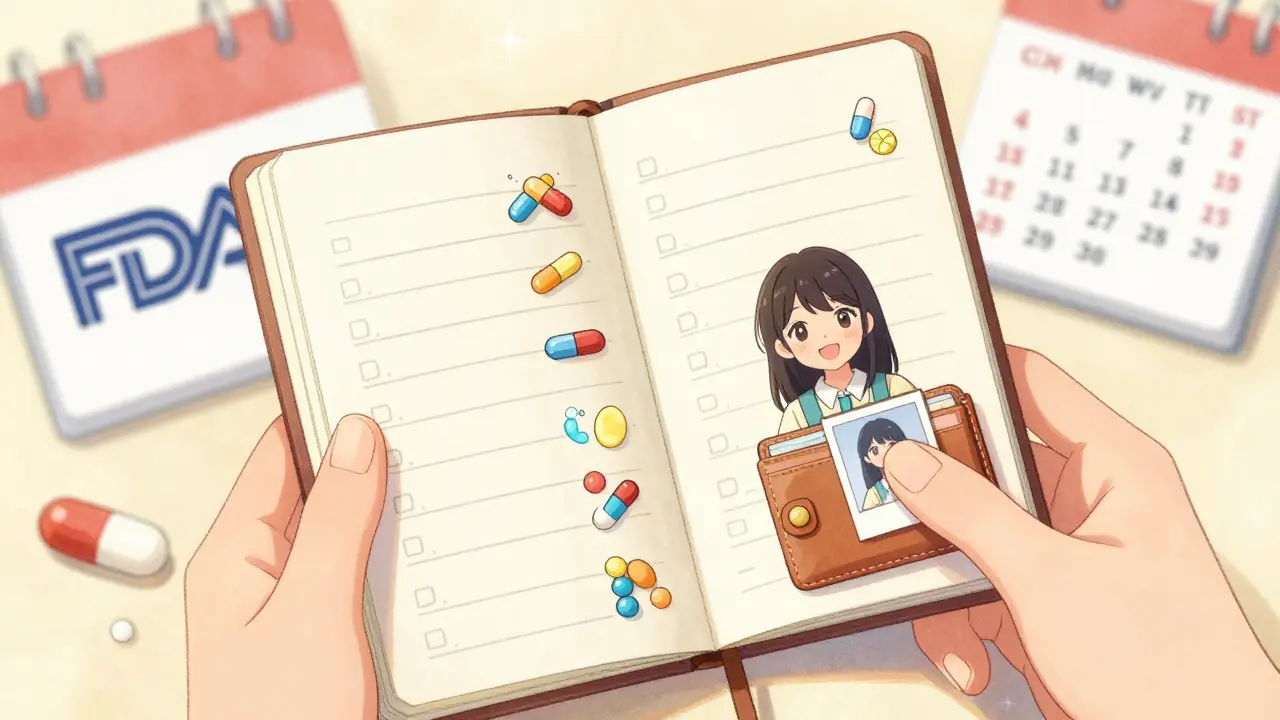
You don’t have to live in fear of changing pills. Here’s what works:- Keep a written list of every medication you take - including the name, dose, and what it looks like. Take it to every doctor visit.
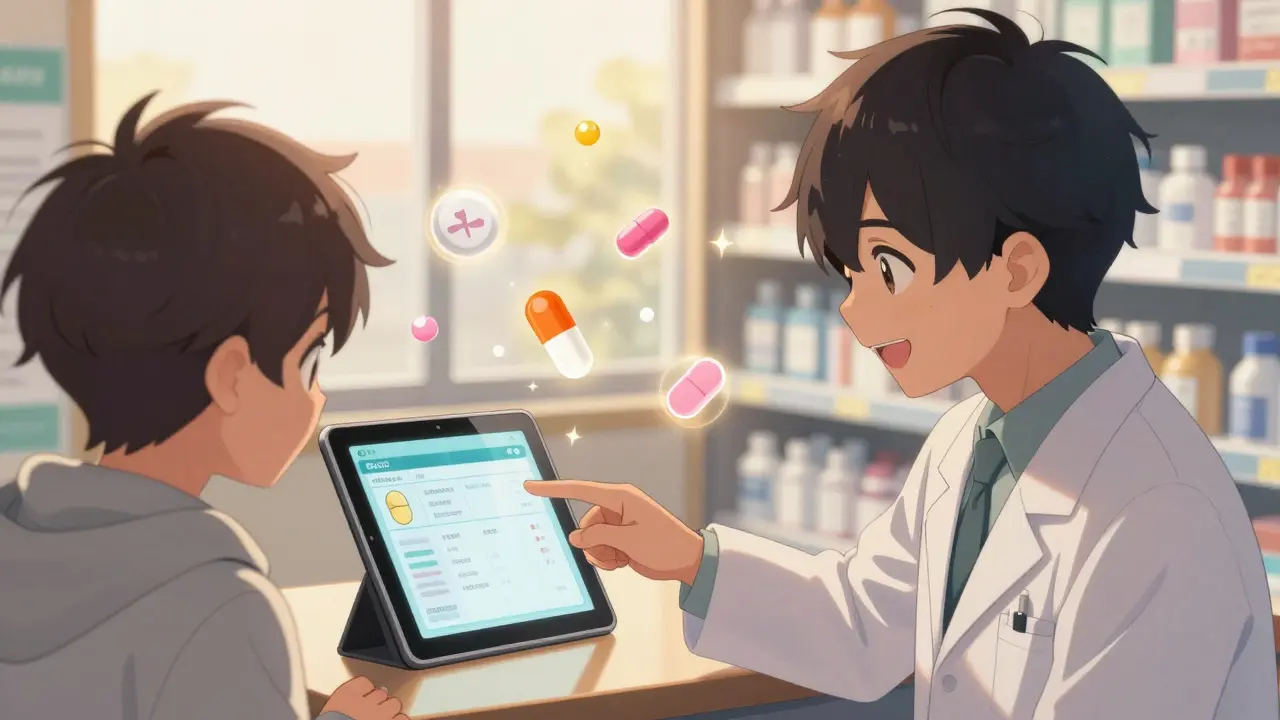
- Check the pill with your pharmacist when you get a refill. Ask: “Is this the same medicine I had last time?” They can check the imprint code and confirm it’s correct.
- Use the FDA’s online pill identifier at medscape.com/pillidentifier. Just enter the shape, color, and imprint code - it’ll tell you exactly what it is.
- Don’t stop taking it just because it looks different. Call your pharmacist first.
- Ask your doctor if you can request a specific generic manufacturer. Some insurers will allow it if you explain the confusion it causes.
What’s Changing on the Horizon?
The FDA knows this is a problem. In 2014, Drs. Uhl and Peters wrote in ACP Journals that “bioequivalent generic drugs that look like their brand-name counterparts enhance patient acceptance.” That’s a quiet way of saying: “We’re seeing patients stop taking meds because of looks - and we need to fix it.”The MODERN Labeling Act of 2020 gave the FDA more power to update generic drug labels quickly when new safety data emerges. And in September 2025, the FDA announced new rules requiring manufacturers to update labeling faster when new safety information is found. While these rules don’t yet force appearance standardization, they signal a shift in thinking.
Independent pharmacies are also stepping up. In 2020, only 32% had pill identification programs. By 2023, that number jumped to 63%. Some even give patients a printed photo of their pill - front and back - to keep in their wallet.
Bottom Line
Generic drugs save the U.S. healthcare system billions each year. They’re safe. They’re effective. But their changing looks are causing real harm - not because the drugs are bad, but because people don’t understand them. The system works. But it doesn’t talk to patients well enough.If you’re on a chronic medication, don’t assume the pill you got today is the same as yesterday. But don’t panic either. Check it. Know it. Ask. Your health depends on it.
Comments (14)
Donny Airlangga
January 7, 2026 AT 13:21
I used to panic every time my antidepressant changed color. Thought I was getting fake meds. Turned out it was just a different manufacturer. Took me six months to stop Googling ‘is this pill real?’ every time I filled a prescription.
Now I just check the imprint code. Life’s so much easier.
Thanks for the reminder to ask pharmacists - they’re the real heroes here.
Molly Silvernale
January 7, 2026 AT 19:02
Color is a language we all speak-even if we don’t know it. Blue whispers calm. Red screams urgency. White? Purity. When your anxiety med turns from blue to beige, your brain doesn’t care about bioequivalence-it screams TRAITOR.
And the FDA? They’re like, ‘Eh, same active ingredient.’
But your nervous system? It’s screaming in hieroglyphs.
Maybe we need pill tattoos. Or QR codes on the tablet. Or a little voice that says, ‘You’re safe. This is still you.’
Because medicine isn’t just chemistry. It’s ritual. It’s trust. And we’re breaking it with color codes.
Ken Porter
January 8, 2026 AT 23:15
Stop whining. It’s a pill. Not a wedding ring. If you can’t tell the difference between a white tablet and a green one, maybe you shouldn’t be managing your own meds.
Generic drugs save taxpayers billions. Quit being a drama queen because your serotonin pills changed shape.
Also, FDA’s got your back. You’re lucky you’re not in Europe-there, you’d get a different drug every week.
Annette Robinson
January 10, 2026 AT 00:47
My grandma had high blood pressure for 30 years. She never missed a dose. But when her pills turned from white to yellow, she stopped taking them for two weeks because she was sure they were ‘for someone else.’
We had to sit her down with the bottle, the old label, and the pharmacist’s note. She cried.
It’s not about the pill. It’s about the ritual of taking care of yourself. When that changes, it feels like losing a part of your routine.
Please, pharmacies-give us a photo. A note. Something.
We’re not lazy. We’re scared.
Luke Crump
January 11, 2026 AT 09:15
Let’s be real-this whole system is a cult. Brand-name drugs are the gods. Generics are the peasants. And we’re all just slaves to the color-coded gods of Big Pharma.
They don’t care if you stop taking your meds because your pill looks like a rock now. They just want you to keep buying.
And now they’re gonna ‘update labeling’? Please. That’s like putting a Band-Aid on a severed arm.
What we need is a pill revolution. Same look. Same damn shape. Let us know what we’re swallowing without having to become a forensic pharmacist.
Aubrey Mallory
January 12, 2026 AT 07:48
You’re not alone. I had a patient last week who refused to take her insulin because the pill was oval instead of round. She thought it was a placebo.
She didn’t know the difference between shape and substance.
That’s not ignorance-it’s systemic failure.
We need to stop treating patients like dumb machines. They’re humans. They need to feel safe. And right now, the system is making them feel unsafe on purpose.
Stop hiding behind ‘bioequivalent.’ Start being human.
Evan Smith
January 13, 2026 AT 15:11
So… my blood pressure pill went from white to pink. I thought I was getting a candy. Then I Googled it. Turns out it’s the same thing. Weird, right?
Why can’t they just make them all look the same? Like… one standard pill for each drug? No one cares if it’s Pfizer or Teva. They just want it to work.
Also, why do I have to be a detective just to take my meds? This is 2025. We have apps for everything. Can’t we have a pill ID app?
Lois Li
January 14, 2026 AT 16:37
My mom took her potassium pills for 12 years. Always orange. Flat. Circle. Then one day-white capsule. She didn’t take them for 4 days. Ended up in the hospital. We were so scared.
Now I print out a picture of each pill and tape it to the bottle. She doesn’t have to guess anymore.
It’s stupid it has to be this hard.
Pharmacies need to do this by default. No one should have to Google their medicine.
christy lianto
January 15, 2026 AT 16:03
Every time my antidepressant changes color, I feel like I’m being gaslit. Like the system is saying, ‘You didn’t really need this anyway.’
It’s not about the pill. It’s about control. You take this thing every day to stay alive-and then they change it without asking.
It’s not just inconvenient. It’s dehumanizing.
And yet, no one’s talking about it. Why? Because it’s cheaper to let people panic than to fix the label.
Enough. We deserve better.
swati Thounaojam
January 17, 2026 AT 08:51
in india, we dont have this problem. all generics look same. no color change. no shape change. only one brand per drug. simple.
why usa so complicated?
Manish Kumar
January 17, 2026 AT 17:22
Let’s go deeper. This isn’t just about pills. It’s about trust in institutions. We’ve been sold the myth that ‘brand = quality’ for decades. Now we’re being forced to swallow the truth: that quality is just chemistry. But our minds? They’re still stuck in the 1950s.
And the system doesn’t care because it profits from confusion.
Imagine if every medication came with a story. Not just the ingredients. But the journey. Who made it? Why does it look like that? What does it mean to you?
Maybe then we’d stop seeing pills as strangers and start seeing them as allies.
But no. We’d rather have a color code that makes you question your sanity.
Dave Old-Wolf
January 19, 2026 AT 07:19
My dad has diabetes. His metformin changed from white oval to blue round. He called the pharmacy three times. Thought he was being scammed.
They finally gave him a printout of the pill ID. He keeps it in his wallet now.
Simple fix. Why isn’t this standard?
Also, why do we even need different colors? Who decided that? Someone in marketing? Seriously?
Prakash Sharma
January 20, 2026 AT 07:08
USA is weak. In India, generics are cheap, consistent, and trusted. No one cares if it’s not branded. We know the science works.
Here, people treat medicine like a luxury brand. You want the logo. You want the color. You want the hype.
It’s pathetic. You’re paying for branding, not healing.
Fix the system. Stop letting corporations play with people’s lives because of trademark law.
Kristina Felixita
January 21, 2026 AT 16:06
My sister is a pharmacist in Oregon. She started giving patients little laminated cards with photos of their pills-front and back. She says it cuts confusion calls by 80%.
It’s not expensive. It’s not hard. It’s just kind.
Why isn’t this everywhere?
Why do we need to wait for a law to do the right thing?
Just… give people a picture. Please. They’re scared. And they shouldn’t have to beg for reassurance just to stay alive.