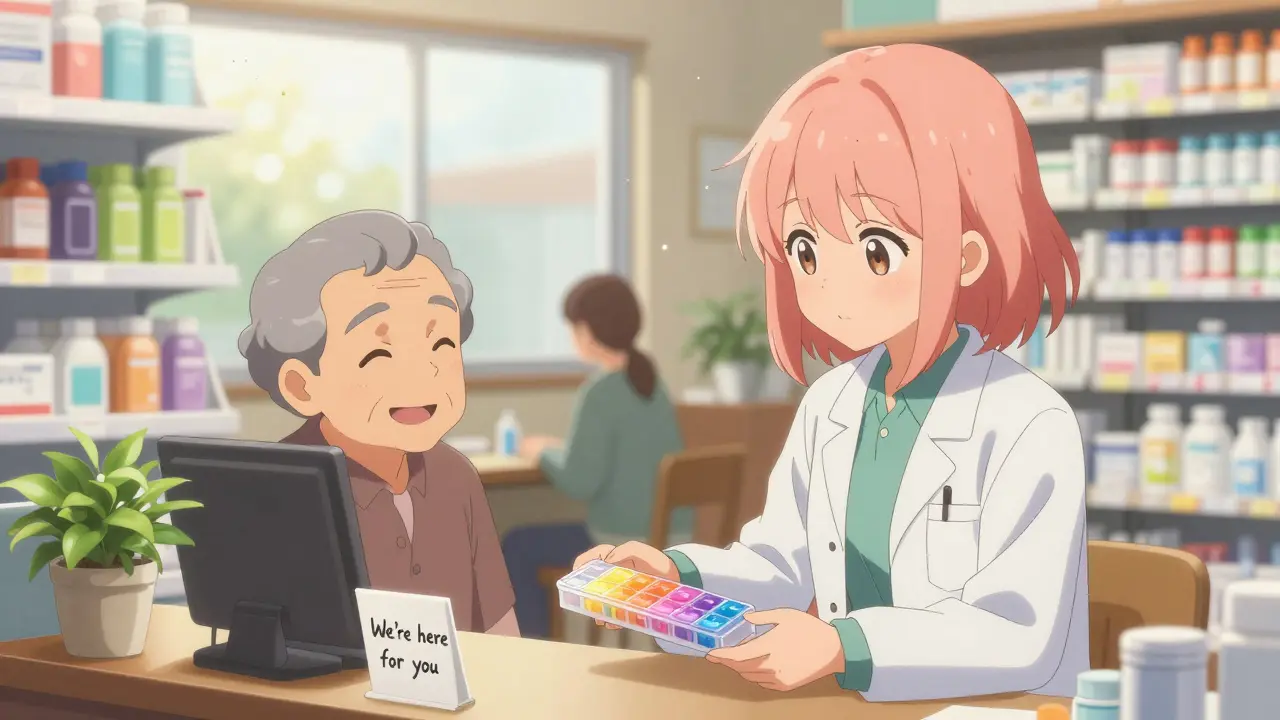
Every year, half of all people with chronic illnesses like diabetes, high blood pressure, or high cholesterol don’t take their medicines the way their doctors told them to. It’s not because they’re lazy or forgetful. It’s because the system isn’t built to help them. That’s where pharmacists come in-not just as people who hand out pills, but as active partners in keeping patients healthy.
Pharmacists Are the Most Accessible Health Professionals
You might see your doctor once every three months. Your pharmacist? You walk in every week, sometimes every few days. That’s the advantage pharmacists have: they’re there when you need them. In community pharmacies across the U.S., pharmacists interact with patients four to six times more often than physicians do. That means they’re the ones who notice when someone stops picking up their blood pressure pills. They’re the ones who see the empty space on the shelf where the statin should be. This isn’t guesswork. In the Veterans Affairs system, pharmacists tracked adherence in high-risk cardiac patients and found that those who received regular counseling had an 89.3% adherence rate-compared to just 73.9% in those who didn’t. That’s not a small difference. It’s the difference between staying out of the hospital and ending up in the ER with a heart attack.What Pharmacists Actually Do to Improve Adherence
It’s not enough to say, “Take your medicine.” Patients need to understand why, how, and what to do when things go wrong. Pharmacists use real tools to help:- Medication reconciliation: After a hospital stay, patients often come home with new prescriptions, changed doses, or discontinued drugs. Pharmacists review all medications-prescription, over-the-counter, even supplements-to make sure nothing conflicts and nothing’s missing.
- Medication synchronization: Instead of making five separate trips to refill five different drugs, pharmacists align refill dates so everything’s due at the same time. One study showed this cut pharmacy visits from five per month to two.
- Personalized counseling: A 20-minute conversation isn’t just about instructions. It’s about listening. Did the patient stop taking their pills because they cost $50 a month? Did they feel dizzy and think it was normal? Did their child forget to remind them? Pharmacists ask these questions and find solutions.
- Follow-up calls: Automated reminders help. But a real person calling to say, “I saw you didn’t refill your cholesterol med-can I help?” makes a difference. Twenty-three studies show refill reminder calls improve adherence.
- Depression screening: One in three patients with chronic illness also struggles with depression. It’s not a coincidence. When someone feels hopeless, they stop taking pills. Pharmacists use simple tools like the PHQ-2 to screen for depression and connect patients to support.
Real Stories, Real Impact
One patient in South Carolina stopped refilling her blood pressure medication. Her pharmacist noticed. Instead of sending another reminder, she sat down with her. Turns out, the copay had jumped to $50. The pharmacist helped her enroll in a patient assistance program. Eight months later, her blood pressure was under control. Another patient in Ohio had six different medications for diabetes, heart disease, and arthritis. He felt overwhelmed. His pharmacist created a simple color-coded pill box and scheduled a weekly check-in. Within three months, his adherence jumped from 42% to 88%. But it’s not always smooth. One Reddit user said a pharmacist kept calling about refills but never asked why he couldn’t afford the meds-just made him feel guilty. That’s the problem when training is inconsistent. Not every pharmacist does this well. But when they do, the results are life-changing.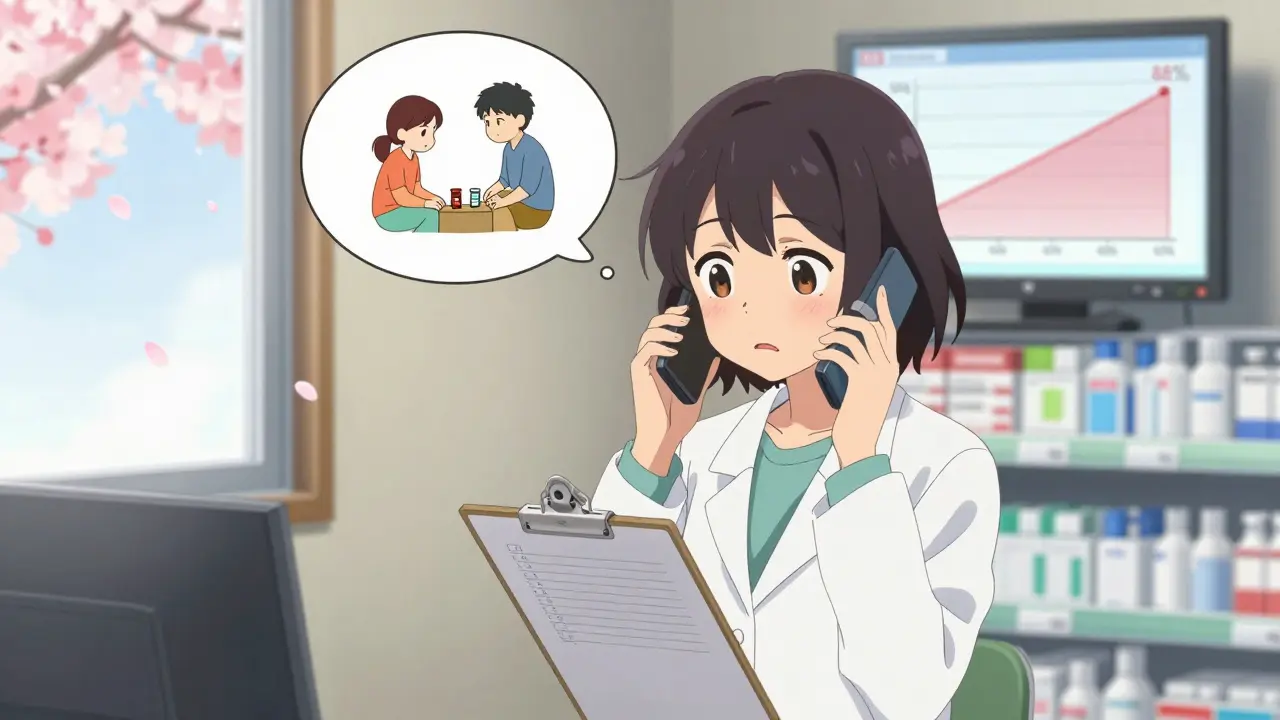
Why Pharmacists Outperform Other Approaches
There are apps, text reminders, and nurse-led programs. But none match the pharmacist’s unique mix of skills:- Medication expertise: Pharmacists know how drugs interact, how side effects really feel, and when a dose change is needed. They’re the only ones trained to spot a dangerous combo like warfarin and ibuprofen.
- Cost solutions: Sixty-eight percent of pharmacist-led interventions include help with affordability-finding generics, coupons, or free drug programs. No app can do that.
- Transition care: After a hospital stay, patients are most vulnerable. Pharmacists who follow up within 7-14 days reduce readmissions by up to 30%.
- Diabetes adherence improve by 4.0%
- Hypertension adherence jump by 6.3%
- Cholesterol adherence rise by 6.1%
The Cost of Not Acting
Medication non-adherence costs the U.S. healthcare system $300 billion a year. That’s more than the entire annual budget of the CDC. But here’s the twist: fixing it saves money. The same 2024 study found that pharmacist-led programs saved:- $109 per person with diabetes
- $122 per person with high blood pressure
- $75 per person with high cholesterol
Barriers to Wider Adoption
Despite the proof, many pharmacists still can’t offer these services. Why?- Reimbursement: Only 28 states in the U.S. pay pharmacists for medication therapy management (MTM) services. Without payment, many programs don’t survive.
- Time: Counseling takes 20-30 minutes per patient. Most community pharmacies are rushed. Pharmacist surveys show 63% say documentation eats up too much time.
- Training: Not all pharmacists are trained in motivational interviewing or depression screening. It takes 87 hours of certification to do it right.
The Future Is Integrated
The next big step? Blending human support with tech. Sixty-seven percent of pharmacist adherence programs now use app-based reminders alongside in-person counseling. That combo is 22% more effective than either alone. The CDC predicts that if these programs are widely adopted, they could prevent 23,000 premature deaths from heart disease by 2030. That’s not a guess. It’s based on data from over 1.2 million patients. The American College of Cardiology now calls pharmacist involvement a “key component” of hypertension care. The Veterans Affairs system has made it standard. And 92 of the Fortune 500 companies now include pharmacist adherence services in their employee health plans.What Patients Can Do
If you’re struggling to take your meds:- Ask your pharmacist to review all your medications-every pill, every supplement.
- Request medication synchronization so you don’t have to make five trips a month.
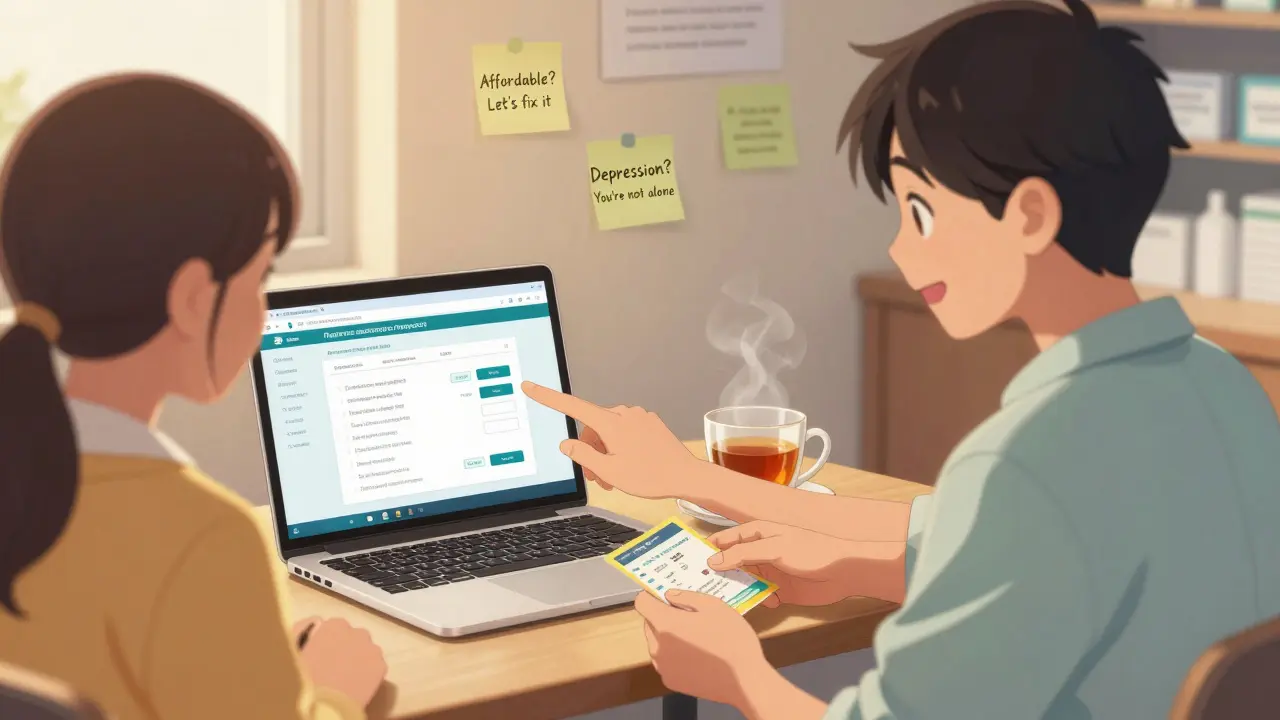
- Be honest if you can’t afford your drugs. They can help you find alternatives.
- Ask if they offer follow-up calls or in-person counseling.
What Systems Need to Change
For this to work for everyone, we need:- Payment reform: All states should reimburse pharmacists for MTM services.
- Training: Every pharmacy school should require certification in adherence counseling.
- Integration: Pharmacist data should be shared with EHRs so doctors know what’s happening.
Why do so many people stop taking their medications?
People stop taking meds for many reasons: cost is the biggest (68% of cases), followed by side effects, complicated schedules, forgetfulness, and feeling better so they think they don’t need it anymore. Some don’t understand why the medicine matters. Others feel embarrassed to admit they can’t afford it. Pharmacists help uncover the real reason behind missed doses.
Can’t an app or text reminder do the same thing?
Digital tools help with reminders, but they can’t solve cost problems, explain drug interactions, or screen for depression. A 2023 study found pharmacist-led programs are 18.7% more effective than app-only solutions. The best results come when apps are combined with human support-like a pharmacist calling to ask why you didn’t refill.
Do pharmacists really have the time for this?
In busy pharmacies, time is tight. But many are changing how they work. Pharmacy technicians now handle reminder calls. EHR templates cut documentation time by 35%. Some pharmacies reserve specific hours for counseling. It’s not easy, but when reimbursement improves and workflows adapt, pharmacists can-and do-make time.
How do I know if my pharmacist is helping me with adherence?
If they ask about side effects, check if you can afford your meds, offer to sync your refills, or call you after a missed refill, they’re likely doing it right. Ask directly: “Do you offer medication therapy management?” or “Can we review all my pills together?” If they say yes and take time to do it, that’s a good sign.
Is this only for older people with chronic illness?
No. While older adults with multiple conditions benefit most, younger people with mental health conditions, asthma, or even HIV are also helped. One study showed improved refill rates for antidepressants when pharmacists provided counseling. Adherence issues affect all ages and conditions-pharmacists can help anyone who takes long-term meds.