
When your doctor prescribes a medication and your insurance says no, it’s not just frustrating-it can be dangerous. You’re not alone. In 2024, about 6% of prior authorization requests for medications were denied upfront. But here’s the thing: 82% of those denials get reversed when you appeal. That means most people who give up are losing access to medicine they actually need. You don’t have to be one of them.
Understand Why It Was Denied
The first step isn’t to panic or call your doctor right away. It’s to read the denial letter. Not skim it. Read it. Insurance companies don’t send vague replies. They list the exact reason in black and white. Most denials fall into three buckets:- Incomplete paperwork (37% of cases): Missing forms, wrong IDs, or unclear patient details.
- Lack of medical necessity (48%): The insurer says your condition doesn’t meet their criteria for this drug.
- Not covered by plan (15%): The medication isn’t on their formulary at all.
Gather the Right Documentation
You can’t appeal with just your word. You need paper trails. Here’s what you absolutely need:- Full name, date of birth, member ID number (from your insurance card)
- Exact name of the medication and dosage
- Copy of the denial letter
- Medical records showing your diagnosis (ICD-10 code)
- Lab results, test reports, or specialist notes
- History of other medications you tried-and why they failed
- A letter from your doctor explaining why this drug is medically necessary
Follow the Insurer’s Exact Process
Every insurance company has its own rules. CVS/Caremark requires appeals to be faxed to 1-888-836-0730. UnitedHealthcare demands online submissions through their provider portal. Kaiser Permanente accepts mail or phone appeals. Get this wrong, and your appeal gets tossed-even if everything else is perfect. Check your member handbook or call member services. Ask: “What is the correct method and address for submitting a prior authorization appeal?” Write it down. Don’t rely on memory. Also note the deadline. Federal rules give you 180 days from the denial date to file. But don’t wait. Start within 30 days. The longer you wait, the more your health suffers.Write a Clear, Specific Appeal Letter
Your appeal letter isn’t a plea. It’s a clinical argument. Start with:- Your full name and ID
- Date of denial
- Medication name and dosage
- Exact reason for denial from the letter
Get Your Doctor Involved
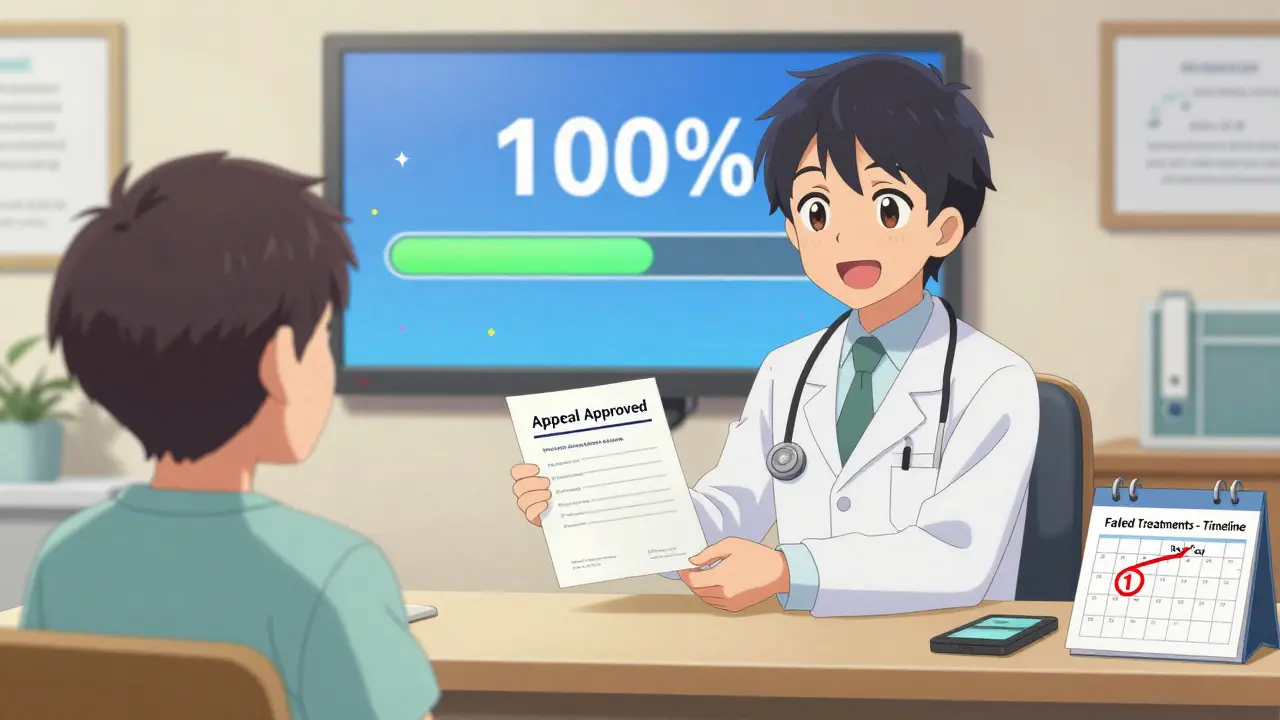
This is where most people fail. They assume the doctor will handle it. But doctors are overloaded. Only 1 in 3 will proactively submit a letter unless asked. Call your provider’s office. Say: “My medication was denied. I need you to write a letter supporting my appeal. Here’s the denial reason. Can you send it directly to the insurer?” Keck Medicine’s 2024 data shows appeals with direct physician input have a 32% higher success rate. Why? Because insurers listen to clinicians-not patients. If your doctor calls the insurer’s medical review team, that’s even better. Ask if they can do that. Many practices have a prior auth specialist on staff who handles these calls.Track Everything
Keep a log. Write down:- Date you submitted the appeal
- Method used (fax, online, mail)
- Confirmation number or receipt
- Who you spoke to at the insurer
- What they said
What If You Get Denied Again?
If your first appeal is rejected, you still have options. Most plans allow a second-level appeal. The rules are the same-more documentation, more clarity. But now, you can also request an external review. Federal law says you have 365 days from your final denial to ask for an outside review. That means a third party-someone not employed by your insurer-looks at your case. This step is powerful. According to the National Association of Insurance Commissioners, 68% of external reviews result in overturning the denial. Don’t skip this. Many people think “second denial = game over.” It’s not. In fact, 83.2% of all appeals get approved at some level. You just have to keep going.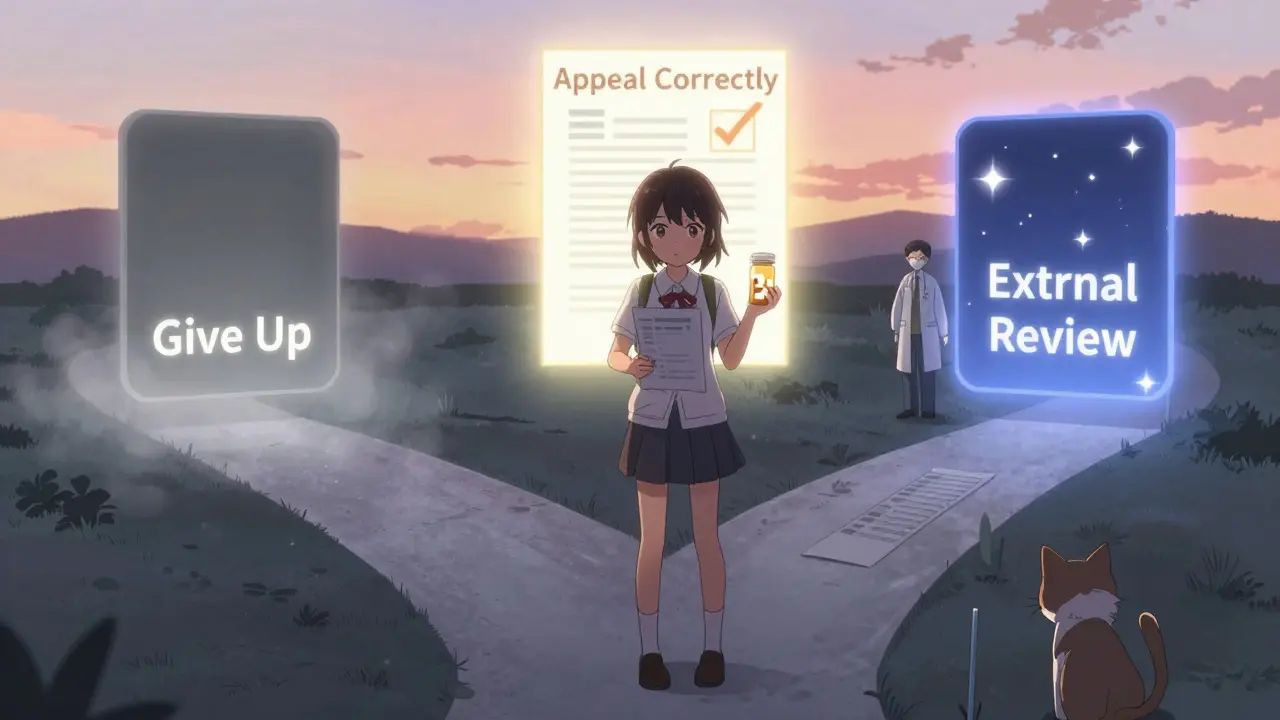
Common Mistakes That Cost People Their Medication
Here’s what goes wrong-and how to avoid it:- Not getting the denial letter: 28% of patients never receive it from self-insured employers. Call your insurer and demand a copy in writing.
- Using vague language: Saying “this drug helps me” isn’t enough. Say “this drug reduced my hospitalizations from 3 per year to 0 in 6 months.”
- Missing codes: If the denial mentions CPT 99213 or ICD-10 E11.9, include them in your letter. Insurers scan for these.
- Waiting too long: The 180-day deadline is real. Start day one.
- Not following submission rules: Faxing when they require online? Rejected. Mail when they require portal? Rejected.
Why This System Exists-and Why It’s Broken
Prior authorization was meant to stop unnecessary prescriptions. But today, it’s a cost-control machine. In 2024, physicians spent an average of 1-2 hours per week just managing prior auth requests. That’s 10-20 hours a month per doctor. Patients are the ones who pay the price: 79% of doctors say patients abandon treatment because of delays. Some end up in the ER. Others develop complications. The system is flawed. 41% of initial denials are due to simple administrative errors-wrong date, missing signature, typo in ID. These aren’t medical decisions. They’re clerical mistakes. That’s why appeals work so well. You’re not fighting science. You’re fighting bureaucracy.What’s Changing in 2025
Good news: Things are starting to shift. In 2024, Medicare Advantage plans had to cut their response time for prior auth requests from 14 days to 72 hours. That’s already reducing the number of appeals needed by 18%. Also, the CAQH Prior Authorization Clearinghouse is rolling out in 2025. It’s a standardized digital system meant to cut down paperwork errors by 27%. But until then, you still have to fight the system. And you can win.How long do I have to appeal a prior authorization denial?
You have 180 days from the date of the denial letter to file your appeal. This is a federal requirement under the Affordable Care Act. But don’t wait until the last minute. Start within 30 days. Delays in treatment can worsen your condition, and insurers often take longer than expected to respond.
Can I appeal if I’m on Medicare Advantage?
Yes. Medicare Advantage plans are required to follow the same appeal rules as private insurers. In fact, they have a higher appeal success rate-22% higher than commercial plans-according to KFF’s 2024 data. The process is similar: get the denial letter, gather medical records, submit with your doctor’s support, and track every step.
What if my doctor won’t help me with the appeal?
Call the office and ask to speak with the prior authorization coordinator or billing manager. Many practices have staff who handle these appeals. If your doctor refuses, ask for a referral to another provider who will support your case. You can also contact your insurer’s provider relations department-they often help connect patients with willing doctors.
Do I need to pay for an attorney to appeal?
No. Most appeals don’t require legal help. You can do it yourself with the right documentation and persistence. The only time you might need a lawyer is if you reach the external review stage and the insurer still denies you, or if you believe your rights were violated under ERISA. Free legal aid is available through patient advocacy groups like the Patient Advocate Foundation.
Can I switch insurers if I keep getting denied?
You can only switch during open enrollment or if you qualify for a special enrollment period (like losing other coverage or moving). You can’t change insurers just because you got denied. But you can appeal the denial, and you can ask your employer or Medicare plan if they offer alternative medications that are easier to get approved.
Comments (10)
Himanshu Singh
December 29, 2025 AT 08:21
omg this saved my life lol i got denied for my diabetes med and followed the steps-called my doc, sent the fax with all the lab results, and bam! approved in 9 days. i was ready to quit but ugh thanks for this guide 💪
Jasmine Yule
December 29, 2025 AT 14:21
I’m so tired of this broken system. I’ve been fighting for my lupus medication for 6 months. They denied it 3 times. I finally got it approved after the external review-68% success rate is REAL. But why do we have to fight just to get the medicine our doctors say we need? 😤
Sharleen Luciano
December 31, 2025 AT 10:15
Let’s be honest-most people who get denied don’t even know what an ICD-10 code is. You need a PhD in insurance bureaucracy to navigate this. I’ve seen patients cry in the waiting room because they couldn’t afford to wait 30 days for a reply. This isn’t healthcare. It’s a corporate obstacle course disguised as insurance.
And don’t get me started on the ‘alternative medication preferred’ line. That’s just code for ‘we don’t want to pay for the good stuff.’
Also, 82% reversal rate? That’s not because the system works. It’s because people like you finally stop being passive and start demanding what’s owed. Kudos to those who fight. The rest? They just die quietly.
Amy Cannon
December 31, 2025 AT 13:40
While I appreciate the comprehensive breakdown, I must emphasize that the structural inequities embedded within prior authorization protocols disproportionately affect low-income populations, particularly those without digital literacy or access to medical advocacy resources. The notion that ‘you just need to follow the steps’ presumes a level of socioeconomic privilege that is not universally present. Many individuals lack the time, bandwidth, or institutional support to compile seven separate documents, coordinate with overburdened clinicians, and navigate arcane insurer portals-all while managing debilitating illness. The 82% reversal statistic, while encouraging, obscures the fact that the burden of proof is placed entirely on the patient, not the insurer. This is not empowerment; it is institutionalized gaslighting under the guise of procedural rigor.
Furthermore, the reference to CAQH’s 2025 clearinghouse as ‘good news’ is, in my view, dangerously naive. Standardization without accountability merely automates bias. Until insurers are financially penalized for systemic denials, this will remain a predatory mechanism disguised as cost containment. I urge policymakers to shift the onus from patient perseverance to insurer transparency.
Alex Ronald
January 1, 2026 AT 06:03
Just wanted to add-when your doctor says they won’t help, ask for the ‘prior auth coordinator.’ Most clinics have one, even if they’re not on the front desk. I work in a small practice and we handle 15+ appeals a week. We’ve got templates. We know the fax numbers. We just need you to ask. Don’t say ‘can you write a letter?’ Say ‘I need a letter for my appeal under section 4.2(b) because the denial cited ‘lack of medical necessity’ and here’s the letter.’ That’s what gets it done.
Also, if you’re on Medicare Advantage, call their medical review line directly. Tell them you want to speak to the ‘clinical reviewer,’ not the customer service rep. That’s the person who actually reads the files. I’ve seen it turn denials around in 48 hours.
Henriette Barrows
January 3, 2026 AT 01:37
i cried reading this. my mom got denied for her chemo med last year and we almost gave up. we didn’t know about the external review. we found out by accident when we called a patient advocacy hotline. they walked us through it. we won. she’s still here. thank you for writing this. i’m printing it out for everyone i know who’s fighting the same battle.
you’re not alone. keep going.
Jim Rice
January 4, 2026 AT 05:08
82% reversal rate? That’s because people are lazy and don’t follow the rules. I’ve seen denials where patients didn’t even include their member ID. How is that the insurer’s fault? You think this system is broken? It’s just working exactly as designed-to filter out the people who can’t be bothered to do their homework.
Also, doctors are overworked. If you can’t get a letter from your doctor in 48 hours, maybe you’re not that sick. Just saying.
Teresa Rodriguez leon
January 4, 2026 AT 14:00
My husband died because they denied his insulin. I tried everything. They said ‘alternative available.’ But he was allergic to the alternatives. No one listened. I filed 7 appeals. Got no replies. They just ignored me. Now I have to live with this. And you’re all sitting here talking about ‘steps’ and ‘codes.’
Some of us didn’t get a second chance.
Duncan Careless
January 4, 2026 AT 20:43
As someone who’s handled prior auth appeals for a UK-based NHS patient support group, I can confirm the US system is uniquely brutal. Here, we have bureaucracy-but not this level of adversarial denial. The fact that patients must become medical detectives just to access basic care is a moral failure.
That said, your guide is spot-on. I’ve shared it with 30 families this month. One woman got her asthma inhaler approved after 8 months. She sent me a photo of her child breathing normally for the first time in a year.
Don’t give up. But please-don’t let this become normal.
Lisa Dore
January 6, 2026 AT 04:04
Just want to say-you’re not just fighting for medication. You’re fighting for dignity. And if you’ve made it this far, you’ve already won. Keep going. You’ve got people rooting for you. Even if they’re silent. Even if they’re scared. We see you.
And if you need someone to proofread your appeal letter? DM me. I’ve done this 17 times. I’ve got templates. I’ve got coffee. I’ve got time. You don’t have to do this alone.