
Getting a prescription filled shouldn’t mean paying three times more than you need to. If you’ve ever looked at your pharmacy receipt and thought, ‘Why is this so expensive?’, you’re not alone. The truth is, in most cases, there’s a generic version of your medicine that works just as well-and costs up to 85% less. But how do you know if one exists for your prescription? And more importantly, how do you make sure it’s safe to switch?
What Exactly Is a Generic Medication?
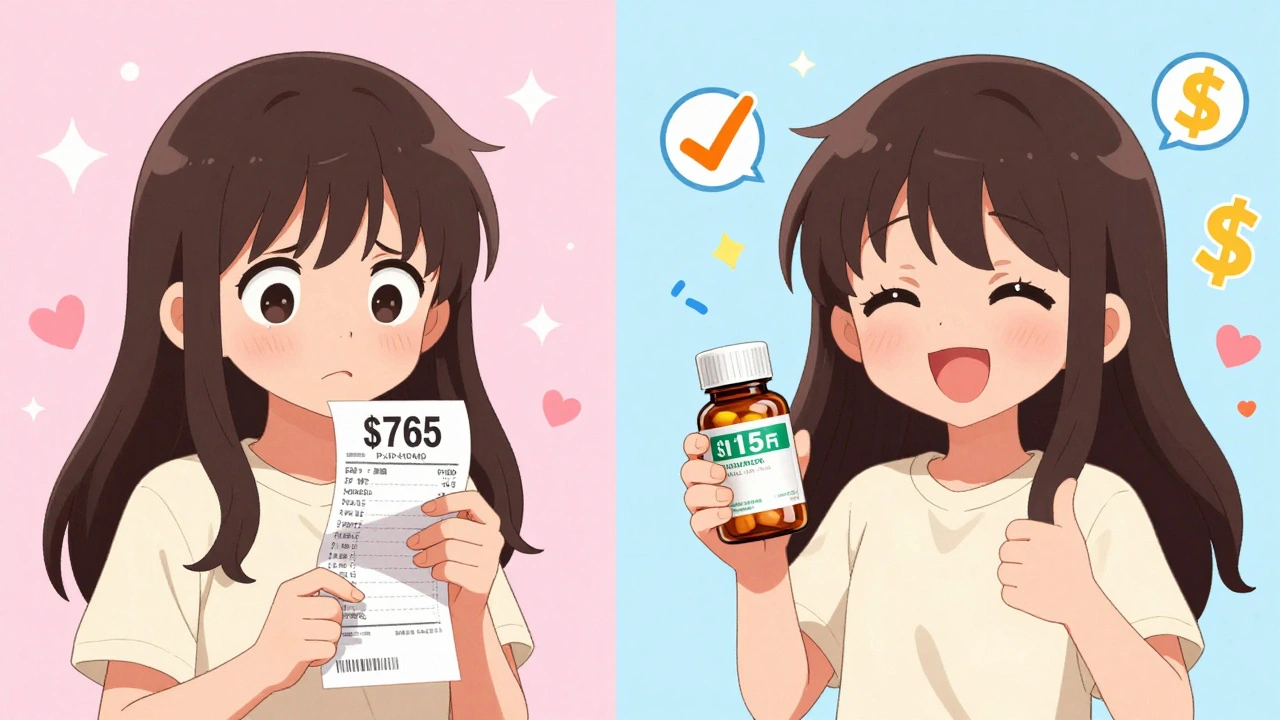
A generic medication is a copy of a brand-name drug that contains the same active ingredient, dose, strength, and way of being taken (like pill, injection, or cream). It’s not a ‘weaker’ version. It doesn’t have different effects. By law, the FDA requires generics to match the brand-name drug in how quickly and completely your body absorbs it-within 80% to 125% of the original. That’s called bioequivalence. If it passes that test, it’s approved.Most brand-name drugs have generics available after their patents expire. In the U.S., about 90% of all prescriptions are filled with generics. The average cost? Around $15. The same brand-name drug? Over $765. That’s not a typo. For people on fixed incomes, chronic conditions, or just trying to stretch their budget, this difference can mean the difference between sticking with treatment and skipping doses.
Why Don’t Pharmacists Always Offer Generics Automatically?
You’d think pharmacies would push generics by default. After all, they’re cheaper, just as effective, and most insurance plans encourage them. But here’s the catch: sometimes, the doctor writes “Dispense as Written” or “Do Not Substitute” on the prescription. That legally stops the pharmacist from swapping it out, even if a generic exists.Other times, the prescription is for a drug with a narrow therapeutic index-like warfarin, levothyroxine, or some epilepsy meds. These drugs need to stay in a very tight range in your bloodstream. Even tiny changes in how a generic is made can affect how your body responds. That doesn’t mean generics are unsafe-it means you need to be extra careful. If you’re on one of these, talk to your doctor before switching.
And then there’s the confusion. Many patients don’t know what “AB-rated” means. Or they assume if the pill looks different, it’s not the same. That’s not true. Generics can look different because of color, shape, or inactive ingredients-but the active ingredient is identical.
How to Check If a Generic Is Available for Your Prescription
There are four reliable ways to find out if a generic version exists for your prescription. Start with the easiest.- Ask your pharmacist-right when you drop off your prescription or pick it up. Pharmacists have real-time access to databases like First Databank and Medi-Span that tell them instantly if a generic is available and approved for substitution. A 2022 study in JAMA Internal Medicine found pharmacists correctly identify generics 98.7% of the time. Just say: “Is there a therapeutically equivalent generic available for this?” Not just “Do you have a cheaper version?” That wording matters.
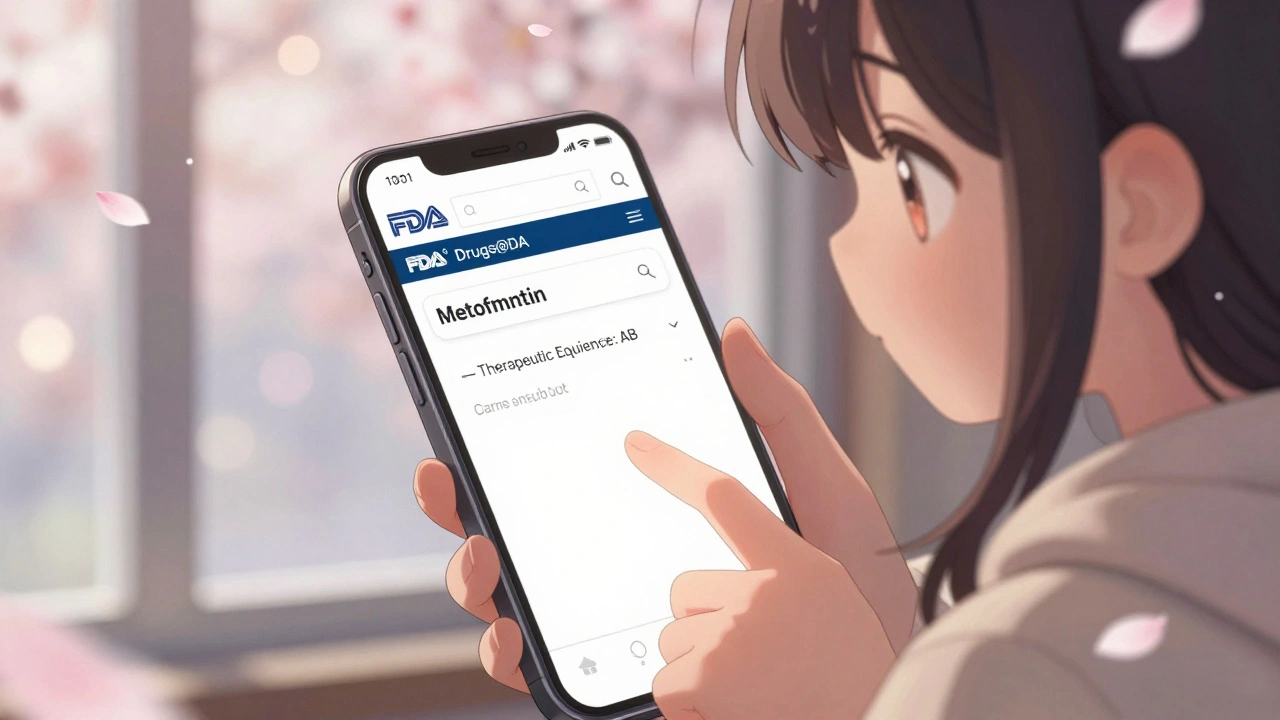
- Use the FDA’s Drugs@FDA database. Go to https://www.accessdata.fda.gov/scripts/cder/daf/ (you can do this on your phone). Type in your brand-name drug. Look for the “Therapeutic Equivalence Code.” If it says “AB,” that means it’s fully interchangeable. If it says “BX,” there are known issues with substitution. This is the gold standard. The FDA launched a simplified search tool in October 2023 just for patients-no medical jargon needed.
- Check your insurance formulary. If you’re on Medicare, Medicaid, or private insurance, your plan has a list of covered drugs. Log into your plan’s website (like Medicare Plan Finder) and search for your drug. It will show you what’s covered and whether a generic is preferred. Starting January 1, 2024, Medicare plans are required to show you real-time generic options at the point of prescribing.
- Use GoodRx or similar apps. GoodRx doesn’t tell you if a drug is therapeutically equivalent, but it shows you the lowest cash price for both brand and generic versions at nearby pharmacies. It’s great for price comparison, but don’t rely on it alone for safety. Always cross-check with the FDA or your pharmacist.
What the Orange Book Means for You
The FDA’s “Orange Book” is the official list of all approved drugs with their therapeutic equivalence ratings. You don’t need to read it. But you should know what the codes mean:- AB = The generic is approved as equivalent. Safe to substitute.
- BX = The generic has potential issues. Don’t switch without talking to your doctor.
- NA = Not rated. Usually because there’s not enough data. Common with complex drugs like inhalers or creams.
Some generics are AB-rated for one strength but not another. For example, a 10mg tablet might be AB, but the 20mg version is BX. Always check the exact dose you’re prescribed.
When Generics Might Not Be the Best Choice
There are exceptions. For drugs with a narrow therapeutic index-like warfarin (blood thinner), levothyroxine (thyroid), or phenytoin (seizure)-even small differences in how your body absorbs the drug can lead to serious side effects. In these cases, many doctors prefer you stick with the same brand or generic manufacturer over time. If you’ve been stable on a brand, switching to a new generic might require closer monitoring.Also, some complex drugs-like biologics (used for arthritis, cancer, or autoimmune diseases)-don’t have true generics. They have “biosimilars,” which are similar but not identical. These are newer, more expensive, and not always interchangeable. Check with your doctor if you’re unsure.
What to Do If Your Insurance Refuses to Cover the Generic
Sometimes, your plan will cover the brand-name drug but not the generic. That’s rare, but it happens. If you see this on your receipt, call your insurer. Ask why. Often, it’s an error. If they say the generic isn’t on their formulary, ask for a formulary exception. You can also ask your doctor to write a letter of medical necessity.Or, just pay cash. With GoodRx, you can often buy the generic for less than your insurance copay. In many cases, the cash price for a 30-day supply of a generic is under $10-even if your insurance copay is $25.
Common Mistakes People Make
- Assuming all generics are the same. Different manufacturers make the same generic. If you switch from one generic to another and feel different, tell your doctor. It’s not always the drug-it could be the fillers or how it’s made.
- Not checking for shortages. The ASHP Drug Shortages database shows over 280 active shortages as of late 2023. If your generic is out of stock, you might get the brand by default. Check before you go to the pharmacy.
- Confusing similar names. Zyrtec (allergy) vs. Zyprexa (antipsychotic). One letter off, totally different drugs. Always double-check the spelling on your prescription.
Real Stories: How Much Can You Save?
One Reddit user in South Carolina saved $1,200 a year just by switching from the brand-name version of metformin to the generic. Another in Texas switched from a $300/month brand-name blood pressure pill to a $12 generic-and didn’t notice any difference in how she felt. On TikTok, a nurse posted a video showing how to use the FDA’s tool to find generics. It got over 2 million views.But not everyone succeeds. Some Medicare patients were switched to generics without being told. One woman in Florida had her levothyroxine changed to a different generic without warning. Her TSH levels spiked. She ended up in the ER. That’s why communication matters.
What’s Changing in 2024 and Beyond
The Inflation Reduction Act is pushing for more transparency. By 2024, all Medicare plans must show you generic options before you pick up your prescription. By 2025, major electronic health record systems like Epic will start showing FDA therapeutic equivalence ratings directly in the doctor’s prescription screen. That means your doctor will see “AB-rated generic available” right when they write the script.More than 10,000 small-molecule generics are approved in the U.S. And by 2028, 73% of top-selling drugs will have generic versions. The big challenge now is biologics-only 38 biosimilars are approved so far. But for the rest? Generics are here, safe, and ready to save you money.
Frequently Asked Questions
Are generic medications as safe as brand-name drugs?
Yes. The FDA requires generics to meet the same strict standards as brand-name drugs for quality, purity, strength, and how they work in your body. They’re tested in the same labs, made in the same types of facilities, and inspected just as often. The only difference is the price.
Can I switch from a brand to a generic without telling my doctor?
For most medications, yes. But for drugs with a narrow therapeutic index-like warfarin, thyroid meds, or seizure drugs-it’s best to talk to your doctor first. Even small changes in absorption can affect your health. If you switch and feel different, call your doctor right away.
Why does my generic pill look different from the brand?
Because by law, generics can’t look exactly like the brand. The shape, color, or markings are different to avoid trademark issues. But the active ingredient, dose, and how your body uses it are the same. Don’t let the appearance fool you.
What if my pharmacy doesn’t have the generic in stock?
Ask them to order it. Most pharmacies can get a generic within 24-48 hours. If they say it’s not available, check another pharmacy or use GoodRx to find nearby stores that do. You can also ask your doctor if they can prescribe a different generic brand.
Is it true that some generics are made overseas?
Yes, many are. The FDA inspects all manufacturing facilities-whether in the U.S., India, China, or elsewhere-to make sure they meet the same safety and quality standards. There’s no evidence that generics made overseas are less safe. The FDA has been inspecting foreign plants for decades.
Next Steps: What to Do Today
If you’re on a prescription right now, take five minutes. Open your phone. Go to the FDA’s Drugs@FDA site. Type in your brand name. Look for the therapeutic equivalence code. If it says “AB,” you’re good to go. Then walk into your pharmacy and ask: “Is there an AB-rated generic available for this?”You could save hundreds-maybe thousands-this year. And you won’t have to sacrifice your health to do it.
Comments (14)
Ada Maklagina
December 5, 2025 AT 22:07
I switched my blood pressure med to generic last year. Saved $200 a month. No side effects. Life's good.
Stephanie Bodde
December 7, 2025 AT 04:04
This is SO important!! 🙌 I used to pay $300 for my thyroid med until I found the AB-rated generic. Now I pay $8. My doctor didn't even mention it. Don't be afraid to ask!
Jennifer Patrician
December 8, 2025 AT 00:53
Generics? Yeah right. The FDA's just another puppet of Big Pharma. You think they really test every pill from India? My cousin's nephew got seizures after switching. They cover it up with 'AB-rated' nonsense.
Ali Bradshaw
December 8, 2025 AT 01:58
I used to be skeptical too. Then I checked Drugs@FDA for my statin. AB-rated. Switched. Same results, 90% cheaper. Simple math. Why wouldn't you?
Lynette Myles
December 8, 2025 AT 02:50
BX-rated generics are dangerous. Don't switch without a doctor's approval. Period.
Jimmy Jude
December 8, 2025 AT 20:28
The real tragedy isn't the price of pills. It's that we've been conditioned to accept corporate medicine as inevitable. We've forgotten that healing should be a right, not a transaction. The system wants you dependent. Generics? Just a shiny distraction.
Rupa DasGupta
December 9, 2025 AT 12:57
I switched to generic metformin and my mood went to hell 😭 I swear it's the fillers. They put poison in it. My aunt in Delhi said the same thing. We need to boycott these!
Marvin Gordon
December 10, 2025 AT 00:50
This is the kind of info that actually changes lives. I've been telling my mom to check the FDA site for her meds since she started on Medicare. She's saved over $1,500 this year. Small steps, huge impact.
ashlie perry
December 10, 2025 AT 01:35
They say AB-rated but they're lying. I know someone who got a different generic every month and ended up in the hospital. They're just trying to get you hooked on cheaper poison so they can sell you more drugs later.
Stephanie Fiero
December 11, 2025 AT 12:15
I just found out my insulin is AB rated! I was so scared to switch but I did it and I feel the same! I was crying in the pharmacy aisle I was so happy! 💕
Laura Saye
December 13, 2025 AT 03:45
The bioequivalence parameters, while statistically valid, fail to account for the nuanced pharmacokinetic variance in individual phenotypes. The FDA's 80-125% window, though legally codified, represents a population-level approximation that may not reflect the homeostatic equilibrium of a given patient's metabolic architecture.
sean whitfield
December 15, 2025 AT 02:36
Oh wow. You mean the government doesn't just let Big Pharma print money? How novel. I guess I'll stop crying about my $400 pills now.
Philip Kristy Wijaya
December 16, 2025 AT 17:01
It is imperative that the patient, in conjunction with their licensed healthcare provider, undertakes a comprehensive assessment of the therapeutic equivalence profile prior to any substitution protocol. The integrity of pharmacological intervention must be preserved at all costs.
Norene Fulwiler
December 17, 2025 AT 04:03
I was the one who posted that TikTok video. 2 million views and still getting DMs from people saying they saved their life. You think it's about money? It's about dignity. No one should choose between food and their meds.