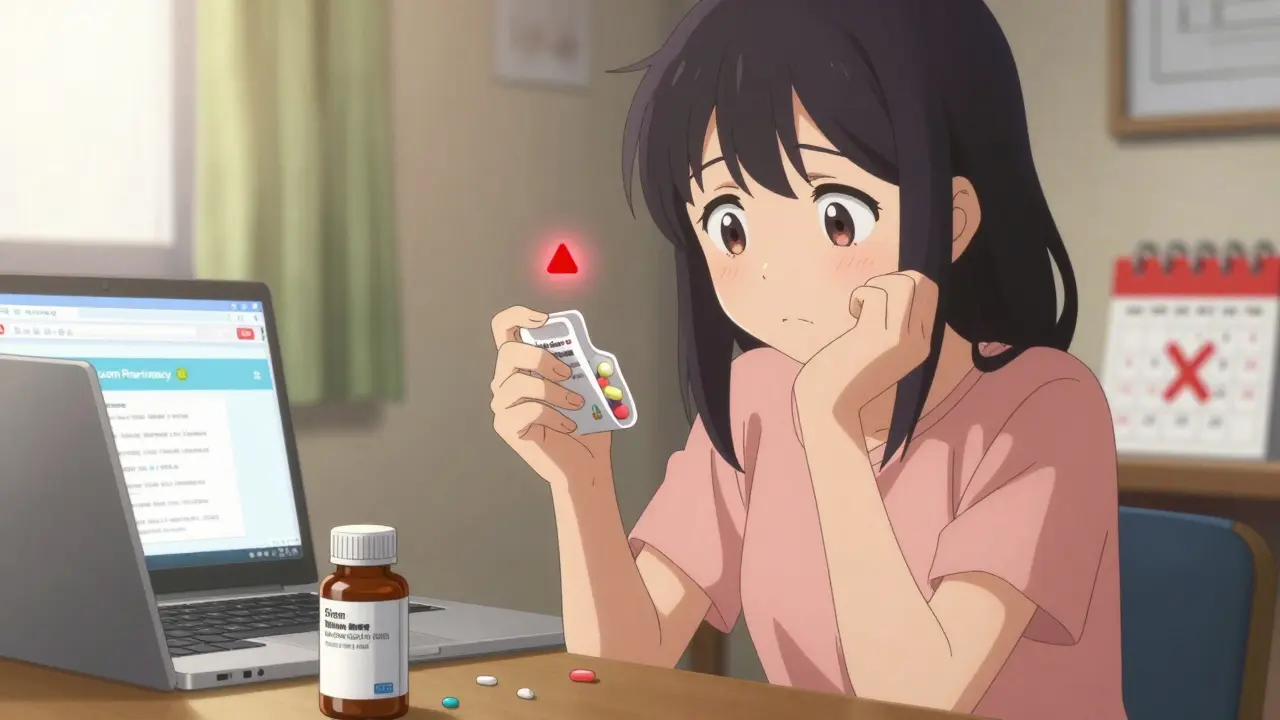
Buying medicine online feels easy-click, pay, wait, and it’s delivered. But what if the pill you just swallowed isn’t what it claims to be? Every year, counterfeit generics kill people, not because they’re strong, but because they’re empty. No active ingredient. No help. Just dangerous filler-like crushed drywall, chalk, or even rat poison. And the scammers are getting smarter. They copy packaging perfectly. They use real-looking websites. They even replicate the exact imprint on pills. If you’re buying generic meds online, you’re playing Russian roulette with your health.
What Exactly Are Counterfeit Generics?
Counterfeit generics aren’t just cheap copies. They’re illegal fakes designed to look exactly like real medication. The World Health Organization calls them “substandard and falsified medical products.” That means they could be missing the active ingredient entirely, contain too little or too much, or be mixed with toxic substances. These aren’t just bad products-they’re life-threatening.Take malaria pills in parts of Asia. More than half of the fake ones found there have zero medicine inside. In North America, the DEA seized over 134 million counterfeit pills between January 2023 and October 2024. Most of them contained fentanyl-a synthetic opioid so potent that just two milligrams can kill. People thought they were buying painkillers or Xanax. They got death instead.
Counterfeiters don’t just target expensive brand drugs. They go after the most commonly used generics: antibiotics like amoxicillin, blood pressure meds like lisinopril, diabetes drugs like metformin, and erectile dysfunction pills like sildenafil. Why? Because they’re bought in huge volumes. And people assume generics are safe because they’re cheap. That’s the trap.
How Do Fake Pills Get Sold Online?
You won’t find counterfeit meds on Amazon or Walmart’s site. They hide in plain sight on websites that look real. These sites use professional designs, fake testimonials, and even fake “pharmacist chat” features. Many copy the layout of legitimate pharmacies. One user on Reddit bought “Viagra” from a site that looked identical to a trusted pharmacy. The pills dissolved in water within seconds. Real Viagra takes over 20 minutes. That’s how he knew something was wrong.Here’s the scary part: 96% of online pharmacies operate illegally, according to the National Association of Boards of Pharmacy. Of those, 88% don’t even ask for a prescription. That’s a red flag bigger than a neon sign. Legitimate pharmacies are required by law to verify your prescription before shipping. If a site lets you buy pills without one, walk away.
These fake sites often use domains like .com, .net, or .xyz. They avoid the .pharmacy domain-that’s the only verified online pharmacy seal recognized by the FDA and NABP. If you don’t see it, you’re not buying from a real pharmacy.
What to Look For: Visual Clues You Can Check Right Now
You don’t need a lab to spot some red flags. Here’s what to compare when your new meds arrive:- Color and shape: Did your usual metformin tablet come in pale yellow? Now it’s white and round? That’s a warning.
- Imprinting: Look closely at the numbers or letters stamped on the pill. Are they blurry? Uneven? Real pills have crisp, clean imprints. Counterfeiters use cheap presses-even the DEA says fake fentanyl pills now use professional molds to copy real ones perfectly. But details still slip.
- Packaging: Check the font. Is the manufacturer’s name spelled right? Is the expiration date in the same format as your last bottle? Are there typos? Even small errors like “Sandoz” instead of “Sandoz” matter.
- Smell and texture: Some generics have a slight chemical smell. If yours smells like plastic or nothing at all, that’s odd. If the tablet crumbles easily or feels too light, it’s not right.
One woman in Florida bought her blood pressure pills online. They looked identical. But after a week, she felt dizzy and nauseous-side effects she’d never had before. She called her doctor. He asked her to send a photo. The lot number didn’t match the manufacturer’s records. It was fake.

How to Verify Your Medicine-Without a Lab
You can’t test pills at home with a kit. But you can do three things that give you real confidence:- Check the .pharmacy domain: Only pharmacies with this domain have been verified by the National Association of Boards of Pharmacy. Go to nabp.pharmacy and search for the site. If it’s not listed, don’t buy.
- Call the manufacturer: Pfizer, Novartis, Teva-they all track counterfeit reports. Find the number on their official website. Give them the lot number and expiration date. If they say, “We don’t recognize that batch,” it’s fake.
- Compare side-by-side: Keep your old bottle. When the new one arrives, lay them next to each other. Look at the label layout, barcode placement, font size, even the color of the ink. Real manufacturers are consistent. Fakes aren’t.
One man in Durban bought generic antibiotics online because they were 80% cheaper. He didn’t check anything. After two days, his fever didn’t break. He went to the clinic. The pharmacist noticed the pill color was off. They called the manufacturer. The batch was fake. He spent three weeks in the hospital.
What to Do If You Suspect a Fake
Don’t throw it away. Don’t take it again. Don’t just complain on a forum.- Stop using it immediately. Even one dose could harm you.
- Take a photo. Include the packaging, the pills, and the lot number.
- Contact your local health authority. In South Africa, report to the South African Health Products Regulatory Authority (SAHPRA). In the U.S., use the FDA’s MedWatch system. In Australia, contact the TGA. They need this data to track outbreaks.
- Report the website. Use the FTC’s complaint portal or your country’s consumer protection agency. Fake pharmacies often operate across borders. Your report helps shut them down.
Regulators don’t act on single complaints. But when 50 people report the same site, they investigate. Your report saves someone else’s life.
Why “Too Good to Be True” Is Always a Warning
If a generic version of a brand-name drug costs 90% less than your local pharmacy, it’s fake. Legitimate generics are cheaper-but not that cheap. The cost of manufacturing, testing, and shipping doesn’t drop that much. A 20% discount? Fine. 80%? That’s a trap.Scammers use emotional triggers: “Limited stock!” “Doctor-approved!” “No prescription needed!” These are all classic signs of fraud. Real pharmacies don’t rush you. They ask questions. They want to make sure you’re safe.
And here’s the truth: if you’re buying without a prescription, you’re already breaking the law. And you’re putting your health at risk. No discount is worth that.
What’s Being Done to Stop This?
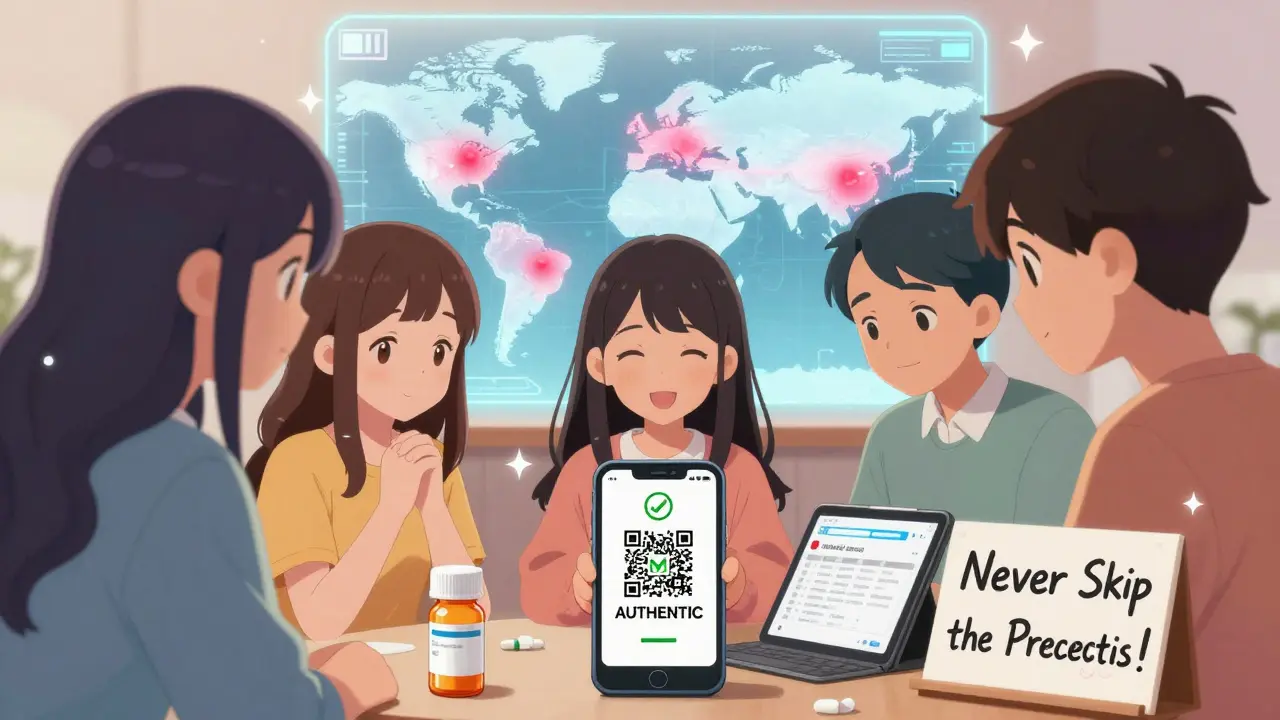
Governments and drug companies aren’t sitting still. The FDA now requires all prescription drugs to have track-and-trace systems with unique serial numbers by 2023. Pfizer and other big names are testing blockchain systems that let you scan a QR code and instantly see the drug’s journey from factory to your door. One app, MediGuard, scanned over a million pills in 2023 and caught 92.4% of fakes just by analyzing the packaging.The WHO’s Global Surveillance and Monitoring System has logged over 1,500 cases of fake drugs across 141 countries. That’s not just data-it’s a global alarm system. But technology alone won’t fix this. It needs people like you to pay attention.
Final Rule: Never Skip the Prescription
No matter how convincing the website looks, no matter how low the price, if you can buy prescription meds without a prescription, it’s illegal. And it’s dangerous.Counterfeiters don’t care if you live in Durban, Detroit, or Delhi. They sell to anyone who clicks “Buy Now.” The only real protection is knowledge, caution, and verification. If you’re unsure, go to your local pharmacy. Pay a little more. Sleep better. Your life isn’t a bargain bin.
How can I tell if my generic medicine is fake just by looking at it?
You can spot some signs without lab equipment: check the pill’s color, shape, and imprint. Compare it side-by-side with your last bottle. Look for blurry printing, misspelled names, or packaging that feels flimsy. Real generics are consistent-fakes aren’t. But remember: fake pills can look perfect. The absence of these signs doesn’t mean it’s real.
Is it safe to buy generic medicines from online pharmacies?
Only if the pharmacy is verified with the .pharmacy domain. That means it’s been checked by the National Association of Boards of Pharmacy for legal operation, licensed pharmacists on staff, and valid prescriptions required. Over 96% of online pharmacies are illegal. Don’t assume safety based on looks-check the domain.
What should I do if I think I took a counterfeit drug?
Stop taking it immediately. Take photos of the packaging and pills. Contact your doctor or pharmacist. Report it to your country’s health regulator-like SAHPRA in South Africa or the FDA in the U.S. Even if you feel fine, the drug may have caused hidden damage. Reporting helps authorities track and shut down these operations.
Can I trust websites that say they’re “certified” or “FDA-approved”?
No. Only the FDA approves drugs-not websites. Fake sites use fake seals and logos. The only verified online pharmacy label is .pharmacy. If a site claims FDA approval, check its domain. If it ends in .com or .net, it’s not legitimate. Always verify through the NABP’s official site.
Why are counterfeit generics so common now?
E-commerce has made it easy to reach global buyers. Counterfeiters use professional printing, copy real websites, and ship from hidden locations. The profit margin is huge-some fake pills cost less than 10 cents to make and sell for $5. With low risk and high reward, criminal networks target generics because they’re bought in bulk by people who can’t afford brand names.
Are there apps or tools that can help me verify my meds?
Yes. Apps like MediGuard use AI to scan QR codes or barcode images on packaging and compare them to verified databases. In 2023, it had a 92.4% accuracy rate. Some pharmaceutical companies also embed QR codes on their packaging that link directly to their authentication portal. But these tools aren’t foolproof. Always combine them with other checks like calling the manufacturer or checking the .pharmacy domain.
If you’re ever unsure about a medication, go to your local pharmacy. Talk to the pharmacist. They’ve seen fakes before. They know what to look for. It’s worth the extra few minutes-and the extra few rand-to be safe.