
It’s easy to assume that if you break out in hives after eating or taking a pill, it’s an allergy. But not all reactions are created equal. Food allergies and medication allergies might look similar on the surface-rashes, swelling, trouble breathing-but they’re different in how they happen, when they show up, and how they’re diagnosed. Mixing them up can lead to dangerous mistakes: avoiding life-saving antibiotics, or worse, eating something that could send you to the ER.
Timing Tells the Story
The clock is your first clue. Food allergies usually strike fast. If you eat peanuts and your lips swell within 10 minutes, that’s a classic IgE-mediated reaction. About 95% of food allergy symptoms appear within two hours-often within 20 minutes. That speed is because your immune system has already made antibodies against that food, and the moment it touches your system, it triggers a cascade.
Medication allergies? Not so predictable. Some reactions happen fast-like hives after an IV antibiotic-but others take days. A rash from amoxicillin might not show up until three or four days after you started the pill. That’s not a food allergy pattern. That’s a T-cell response, where your immune system slowly wakes up to the drug. Delayed reactions like DRESS syndrome or Stevens-Johnson can take weeks. If your symptoms show up after a weekend away from the medicine, it’s probably not food.
Symptoms: Where It Hurts
Food allergies love the mouth, gut, and skin. Oral allergy syndrome-itchy lips, tingling tongue-is common with raw fruits and nuts. Vomiting and diarrhea show up in over half of pediatric food reactions. Hives? They’re everywhere in food allergies, appearing in nearly 9 out of 10 cases.
Medication allergies also cause hives, but they’re more likely to bring systemic symptoms. Fever, swollen lymph nodes, joint pain-those are red flags for drug reactions. A rash from a medication often looks like flat, red spots spread across the torso and limbs, not just localized hives. Respiratory symptoms like wheezing happen in both, but in medication allergies, they’re more often tied to systemic inflammation, not just a local reaction.
Here’s a key difference: food allergies rarely cause fever. If you’re running a temperature after eating shrimp, something else is going on-maybe a food poisoning bug, not an allergy.
How the Body Reacts: IgE vs. T-Cells
Most food allergies (90%) are IgE-driven. That means your body makes specific antibodies that latch onto the food protein and trigger histamine release-hence the rapid swelling, itching, or anaphylaxis.
Medication allergies are messier. About 80% of immediate drug reactions are IgE-based, like penicillin hives. But the other 20%? That’s T-cell mediated. These reactions don’t involve antibodies at all. Instead, immune cells slowly recognize the drug as foreign, then attack. That’s why rashes from sulfa drugs or anticonvulsants take days to appear. These reactions can be severe-DRESS, toxic epidermal necrolysis-but they’re not IgE-mediated, so skin tests won’t catch them.
This matters because testing for food allergies is straightforward: skin prick or blood IgE tests. But for many drugs, those tests don’t exist. Penicillin skin testing works well-99% negative predictive value-but for drugs like ibuprofen or vancomycin, there’s no reliable blood or skin test. Diagnosis often comes down to history and, when safe, a controlled challenge.
Testing: What Works and What Doesn’t
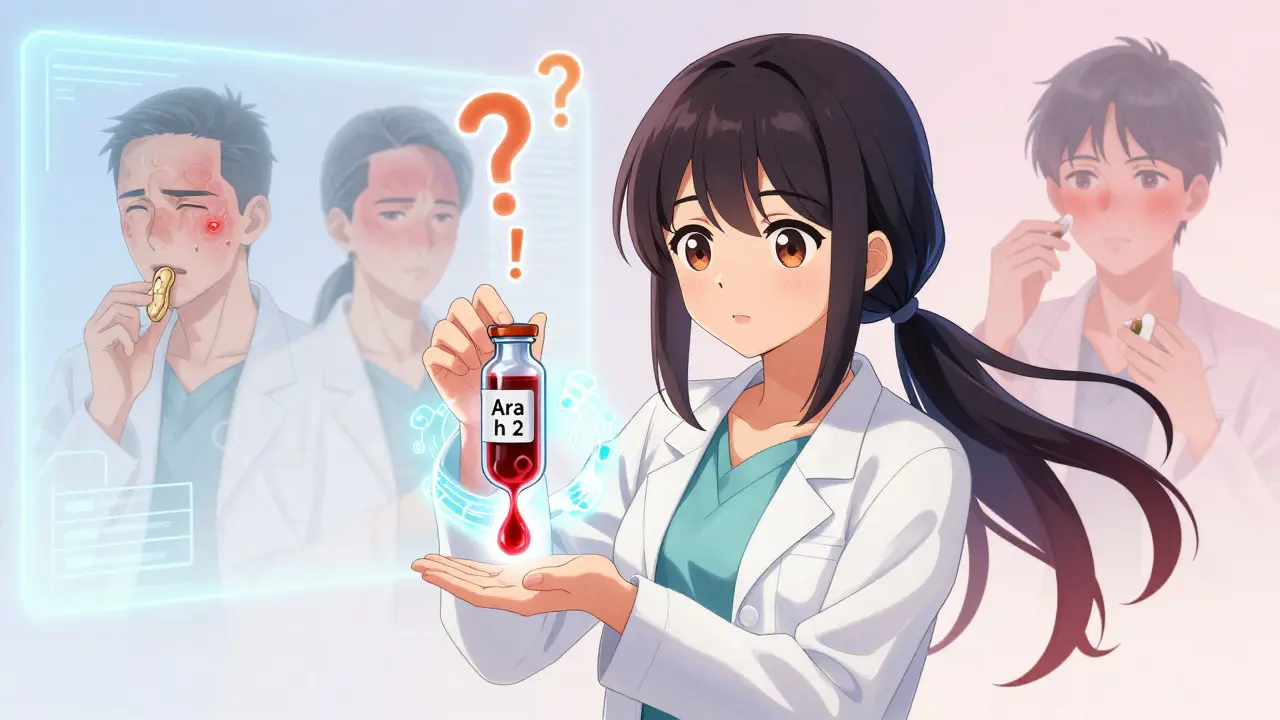
For food allergies, the gold standard is the oral food challenge. You eat small, increasing amounts of the suspected food under medical supervision. If you react, you know for sure. Skin tests and IgE blood tests are good screening tools, but they can give false positives-especially with pollen-related foods like apples or carrots. Component-resolved diagnostics (CRD) help here. Testing for specific peanut proteins like Ara h 2 tells you if it’s a true peanut allergy or just cross-reactivity with birch pollen.
For medications, testing is harder. Penicillin allergy testing is well-established: skin test first, then oral challenge if negative. But for most other drugs, doctors rely on history and elimination. A 2022 study found that 90% of people who say they’re allergic to penicillin turn out not to be when tested. That’s huge. People avoid all penicillin-type drugs for years, then get stuck with more expensive, less effective antibiotics-and higher risk of C. diff infections.
For delayed reactions, lymphocyte transformation tests exist, but they’re not widely available. Drug provocation testing is the most accurate, but it’s risky. Only done in specialized allergy centers, not your local clinic.
False Allergies Are Common-And Dangerous
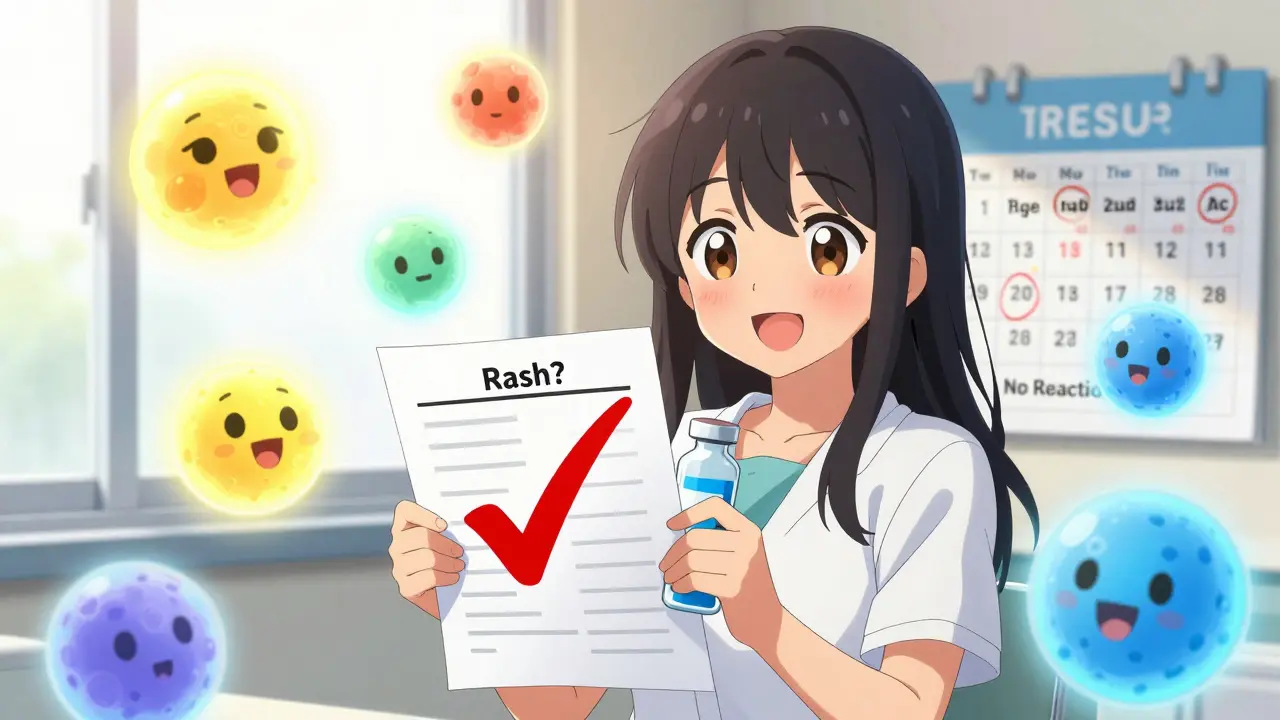
Too many people think they’re allergic because they got sick after taking a pill. But often, it’s not the drug. Maybe they had the flu. Maybe the pill had a filler like lactose, and they’re intolerant, not allergic. Or maybe the rash came from a virus, not the antibiotic.
One case from 2022 involved a woman who avoided all NSAIDs for 10 years after a rash. Turns out, the pill’s filler contained lactose. She had lactose intolerance, not a drug allergy. She could’ve taken ibuprofen safely the whole time.
On the flip side, people with real food allergies often dismiss early symptoms as indigestion. A 2023 survey found that 22% of food-allergic patients ignored early signs-itchy throat, mild nausea-until they had a full-blown anaphylactic episode. That delay can be deadly. Epinephrine works best when given fast.
Real-Life Confusion: What Patients Say
Online forums are full of stories. One mom on Reddit spent two years thinking her son’s hives were from antibiotics. Turns out, it was milk. Another person avoided shellfish for years after vomiting once-only to find out it was food poisoning, not an allergy.
And it’s not just patients. Doctors are rushed. The average time spent documenting a medication allergy in a medical record? Just 90 seconds. That’s not enough to untangle a complex history. That’s why mislabeling is so common.
What You Should Do
If you think you have a food or medication allergy, don’t guess. See an allergist. Keep a detailed log: what you ate or took, when, and exactly what happened-down to the minute. Note if you were sick with a virus at the time. Was the reaction the same every time? Did it happen with different brands of the same drug?
For food: if you react every time you eat peanuts, that’s a red flag. If you only react to raw apples but not cooked ones, that’s likely pollen cross-reactivity.
For medication: if you got a rash after one antibiotic but took another without issue, it’s probably not a class-wide allergy. Don’t assume all penicillins are off-limits just because one made you itch.
Ask about testing. Especially for penicillin. It’s safe, accurate, and can change your life. If you’ve been avoiding antibiotics for decades, you might be at higher risk for harder-to-treat infections.
Why Getting It Right Matters
Getting a food allergy wrong can kill you. About 150-200 people die each year in the U.S. from food-induced anaphylaxis, often because they didn’t recognize the signs or didn’t carry epinephrine.
Getting a medication allergy wrong costs lives too-just differently. Mislabeling penicillin allergies leads to the use of broader-spectrum antibiotics. Those drugs are 30% more expensive and cause 25% more cases of C. diff, a deadly gut infection. Hospitals that implement allergy delabeling programs cut unnecessary antibiotic use by 25%.
Accurate diagnosis isn’t just about avoiding the trigger. It’s about keeping you safe, healthy, and able to get the care you need.
What’s New in Allergy Testing
In 2023, the FDA approved a new blood test for penicillin allergy that’s 98% accurate at ruling out true allergies. That’s huge. It’s now easier than ever to confirm or rule out what you thought you knew.
For food allergies, component testing is becoming more common. It can tell you if you’re allergic to the protein in peanuts or just reacting to something similar in birch pollen. That means you might be able to eat peanut butter but not raw peanuts.
Research is moving toward personalized risk scores-using genetics and immune markers to predict who’s likely to react to a drug before they even take it. That’s still in development, but it’s coming.
Bottom Line
Food allergies are fast, repeatable, and often tied to the mouth and gut. Medication allergies can be slow, systemic, and unpredictable. Both can be deadly-but only if you don’t know which one you have.
Don’t rely on memory or internet guesses. If you’ve had a reaction, see an allergist. Get tested. Keep records. Ask questions. The right diagnosis doesn’t just prevent a rash-it can save your life, or at least keep you from being stuck with the wrong antibiotics for the rest of your life.
Comments (15)
Cassie Henriques
December 15, 2025 AT 19:24
So if I got a rash after amoxicillin but it showed up 4 days later, that’s T-cell mediated? No IgE involvement? That’s wild. I thought all drug reactions were ‘allergies’ in the classic sense. This explains why my PCP just told me to ‘avoid all penicillins’ without testing. No wonder people get mislabeled.
Raj Kumar
December 16, 2025 AT 04:58
bro i had this happen last year. thought i was allergic to ibuprofen cuz i got a rash. turned out it was the dye in the generic brand. switched to the no-dye version and nada. so many people think it’s the drug when it’s just the filler. dumb. but also common. lol
Christina Bischof
December 16, 2025 AT 10:27
i once ignored a tingly throat after eating almonds and ended up in the er. never again. epinephrine saves lives. period.
Michelle M
December 17, 2025 AT 21:52
It’s funny how we treat our bodies like black boxes-when something bad happens, we just label it ‘allergy’ and move on. But the body’s not trying to trick us. It’s trying to tell us something. Maybe it’s not the food. Maybe it’s the stress. Maybe it’s the sleep deprivation. Maybe it’s the fact that we’ve been eating the same processed crap for a decade. We need to stop seeing reactions as enemies and start seeing them as signals. The immune system doesn’t lie. It just needs us to listen. And maybe, just maybe, the answer isn’t avoidance-it’s understanding.
Lisa Davies
December 19, 2025 AT 08:02
OMG YES. I avoided shellfish for 8 years because I threw up once on vacation. Turns out? Food poisoning from a bad oyster. I just ate shrimp last week. No issues. 🙌
John Brown
December 20, 2025 AT 07:34
My cousin got misdiagnosed with a penicillin allergy at 5. Now she’s 28 and gets C. diff every time she needs antibiotics. Last year, she got tested. Turns out-she’s not allergic. They gave her amoxicillin for a UTI. She’s been fine since. Why don’t more doctors do this? It’s like we’re scared of correcting old records.
Melissa Taylor
December 22, 2025 AT 03:14
My daughter had hives after eating peanut butter. We went to the allergist. Turns out, she’s allergic to Ara h 2-the real peanut protein. But she’s fine with roasted peanuts because they’re processed differently. She eats peanut butter now, just not raw peanuts. Component testing changed our lives. If you think you’re allergic, get tested properly. Don’t guess.
Nupur Vimal
December 22, 2025 AT 20:02
People are so dumb they think a rash means allergy. I had a rash after taking a pill and it was just heat. My mom said I was lazy. I didn’t even take the pill. I just sat in the sun. But now everyone thinks I’m allergic to everything. Stupid.
RONALD Randolph
December 23, 2025 AT 14:24
Why are we letting untrained people self-diagnose allergies? This is why America’s healthcare is a joke. You get a rash? Go to a board-certified allergist-not Reddit. If you don’t have the credentials, you don’t get to decide what’s in your bloodstream. This isn’t a TikTok trend. People die from this. Stop being lazy.
Benjamin Glover
December 25, 2025 AT 06:11
Utterly unscientific. The notion that delayed rashes are ‘T-cell mediated’ is overblown. Most are viral exanthems misattributed to drugs. The real issue? Overdiagnosis. We’ve pathologized normal immune variability. The ‘allergy industrial complex’ profits from fear.
Sai Nguyen
December 27, 2025 AT 01:06
Indians don't get real food allergies. We eat spice and survive. You Americans are weak. If you get a rash from peanuts, you're just not used to real food. Grow up.
Mike Nordby
December 29, 2025 AT 00:52
There’s a critical gap in public education here. Primary care providers are often the first point of contact, yet they receive minimal training in allergy differentiation. The 90-second documentation time cited is not an oversight-it’s a systemic failure. We need mandatory continuing education modules for allergen documentation, integrated into EHRs with decision-support prompts. Without structural change, mislabeling will persist.
Jake Sinatra
December 30, 2025 AT 21:42
This is exactly why we need more allergy specialists in rural clinics. I live in a town of 12,000. The nearest allergist is 90 minutes away. People avoid medications because they can’t get tested. We need telehealth allergy consults. And insurance needs to cover them. This isn’t a luxury-it’s a public health issue.
John Samuel
January 1, 2026 AT 06:43
The elegance of immunology lies in its duality: the lightning strike of IgE versus the slow-burning ember of T-cell responses. One is a siren; the other, a whisper. Yet we treat them both with the same blunt instrument: avoidance. We must evolve beyond the ‘allergy = forbidden’ paradigm. Precision immunology isn’t the future-it’s the now. And for those who’ve lived in fear of penicillin for decades? There’s redemption in a simple blood test. Don’t let outdated labels dictate your survival.
Jocelyn Lachapelle
January 1, 2026 AT 08:23
My son had a rash after amoxicillin. We thought it was an allergy. Turns out he had roseola. The rash was from the virus, not the drug. We didn’t know until we saw the pediatric infectious disease doc. Always check for viruses first. Don’t jump to allergies. So many kids get mislabeled. It breaks my heart.