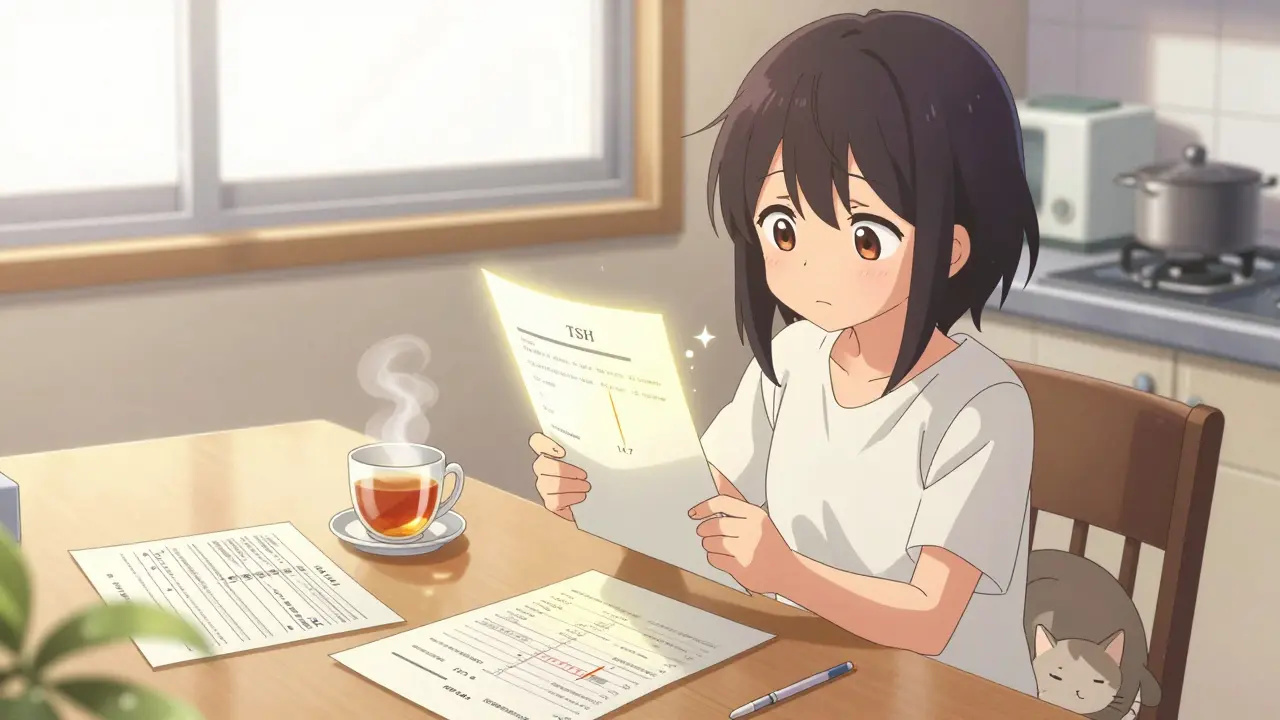
When your insurance denies a brand-name medication because a generic version is available, but that generic makes you feel worse or doesn’t work at all, you’re not alone. Thousands of people face this every year-especially those managing conditions like epilepsy, thyroid disease, or chronic pain. The system assumes all generics are interchangeable, but for some patients, that’s simply not true. This isn’t about wanting the expensive option. It’s about survival.
Why Generics Sometimes Fail
Generic drugs are required by the FDA to deliver 80% to 125% of the active ingredient found in the brand-name version. That sounds precise, but it’s actually a wide window. For medications with a narrow therapeutic index-like levothyroxine, warfarin, or phenytoin-tiny differences in absorption can mean the difference between control and crisis. A patient on Synthroid might see their TSH level jump from 2.1 to 14.7 after switching to a generic. That’s not a fluke. That’s a medical emergency.Even more troubling? Inactive ingredients. Fillers, dyes, and binders in generics vary between manufacturers. One patient might tolerate a generic levetiracetam fine, while another develops severe anxiety, hallucinations, or seizures. The FDA doesn’t test these additives for clinical impact. But your body does.
How the Appeal Process Actually Works
Most denials come with a code like DA2000: "Generic available." That’s not a medical decision-it’s a cost-control rule. But you have rights. The appeals process has clear steps, and they’re the same whether you’re on Medicare, Medicaid, or a private plan.First, you get an Explanation of Benefits (EOB). It should say why you were denied. If it just says "generic available," that’s not enough. You need to respond with evidence. The clock starts ticking: 180 days for commercial plans, 60 days for Medicare. Don’t wait.
Your appeal must include:
- Lab results showing therapeutic failure (e.g., TSH, INR, drug levels)
- Medication logs with dates, symptoms, and side effects
- A detailed letter from your doctor explaining why the brand is medically necessary
That last one is critical. A vague note saying "I think the generic isn’t working" won’t cut it. Your doctor needs to cite specific data: "Patient experienced three breakthrough seizures on generic levetiracetam. Trough levels dropped below 5 mcg/mL. Switched back to Keppra; levels normalized within 72 hours. FDA labeling confirms brand-specific bioavailability for SCN1A mutation patients." That’s what gets approved.
Success Rates Don’t Lie
Here’s the truth: 42% of initial appeals are denied. But 67% of external reviews overturn those denials when you have solid documentation. That’s not luck-it’s the system working as designed.Medicare Part D patients have a 58% success rate at the first appeal level. In states like California and New York, where formulary exception rules are stronger, success jumps to 63%. But in states without those protections? Only 41% get through.
And the type of medication matters. For antiepileptics? Approval rates hit 78%. For antidepressants? Only 45%. Why? Because seizures are objective. Mood changes are harder to prove. That’s why labs, logs, and physician notes are your best weapons.
What Doctors Need to Know
Your doctor isn’t trained to write appeals. But they’re the key. Many don’t realize how specific the documentation needs to be. The Crohn’s & Colitis Foundation recommends a 30-minute appointment just for appeal prep. Bring your symptom timeline. Bring your lab reports. Bring your pharmacy records.Doctors who use standardized templates-like those from the American Medical Association-see approval rates of 82%. Those who just scribble "patient prefers brand-name"? Only 37% approval. It’s not about being pushy. It’s about being precise.
Some insurers demand you try three generics before considering the brand. That’s illegal in 28 states if you’ve already documented failure. Know your state’s rules. Ask your pharmacist. Call your state insurance department.
Real Stories, Real Results
One Reddit user, u/ThyroidWarrior, shared how their TSH spiked from 2.1 to 14.7 after switching generics. They attached lab reports and cited the 2019 Endocrine Society guidelines. Approval came in 11 days.Another, u/PainPatient, was denied brand-name gabapentin after three seizures on the generic. The insurer said "no clinical evidence." They appealed with EEG reports, seizure diaries, and a neurologist’s letter. Approved on second try.
And then there’s the case from Australia: a child with a rare SCN1A mutation had neuropsychiatric side effects from generic levetiracetam. Their doctors used functional MRI data showing abnormal brain activation. The insurer approved the brand. That’s not science fiction. That’s real medicine.
Tools That Actually Help
You don’t have to do this alone. GoodRx’s Appeal Assistant helped over 147,000 people in 2023, with a 68% success rate. It walks you through each step, generates a doctor-friendly letter template, and even tells you what codes to reference. The Patient Advocate Foundation offers free case managers who’ve handled over 12,000 appeals. Their success rate? 92% satisfaction.OptumRx and Accredo, two major pharmacy benefit managers, now offer dedicated appeal support for their clients. Their approved rate? 73%-compared to 51% for patients who go it alone.
What’s Changing in 2026
The system is evolving. CMS now requires insurers to process appeals for anti-seizure drugs within 72 hours. The FDA is drafting new guidance on individualized bioequivalence. And 19 states have passed "right to try brand" laws-meaning after two documented failures, insurers must approve the original medication.But the biggest shift? The 2024 Consolidated Appropriations Act is pushing insurers to use real-time benefit tools. That means your doctor can check coverage before writing a prescription. No more surprises. No more delays.
What to Do Right Now
If you’ve been denied:- Get your EOB. Look for the denial code.
- Collect your lab results and symptom logs from the past 30 days.
- Call your doctor. Ask for a letter that includes: specific diagnosis, medication history, lab values, and clinical reasoning.
- Submit your appeal within the deadline. Don’t wait.
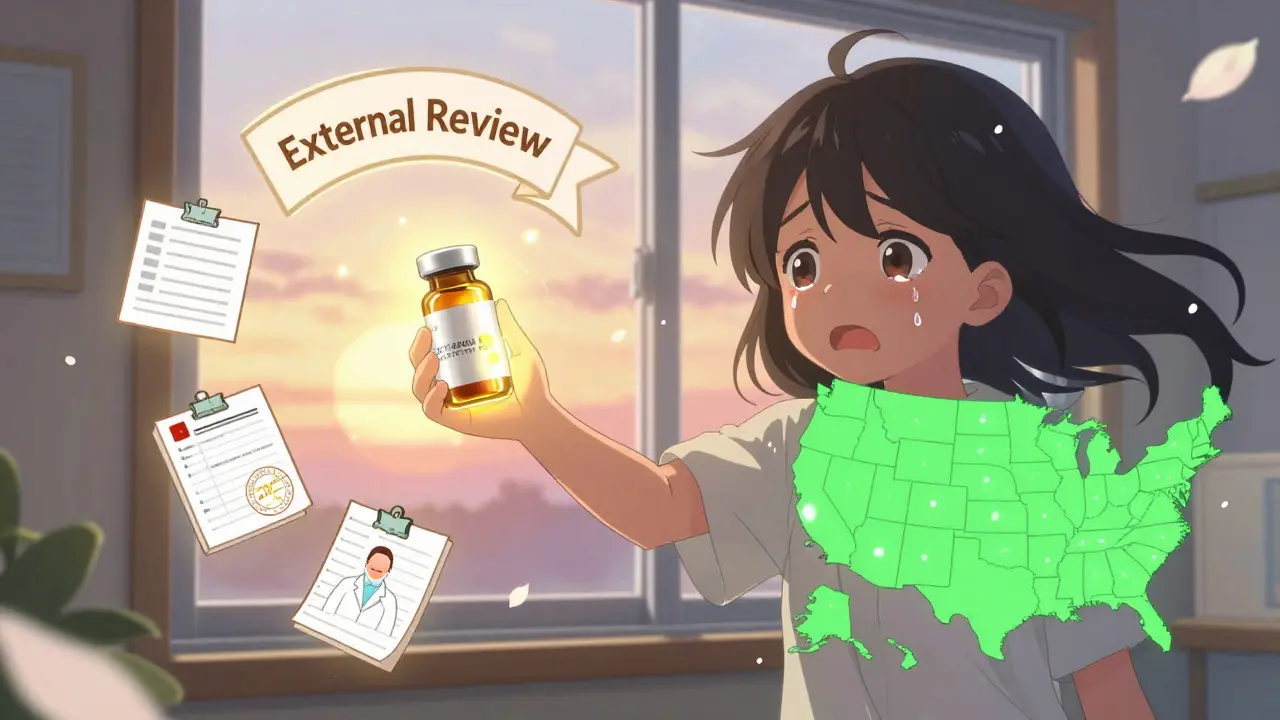
- If denied again, request an external review. That’s where the real chance lies.
You’re not asking for special treatment. You’re asking for care that works. And the system, when properly used, is built to give it to you.
What if my insurance says the generic is "just as good"?
Insurance companies often use the phrase "therapeutically equivalent" to justify denials. But that’s a regulatory term, not a clinical one. The FDA allows a 20% variability in absorption. For drugs like levothyroxine or warfarin, that’s enough to cause dangerous fluctuations. Your doctor must document how your body responded-through lab tests, symptom logs, and clinical history. That’s what overrides their assumption.
Do I need to try multiple generics before appealing?
Some insurers require you to try two or three generics before approving the brand. But 28 states now prohibit this if you’ve already documented failure. Check your state’s rules. Even if your plan demands it, you can still appeal based on your personal history. One documented adverse reaction or therapeutic failure is enough to trigger a medical exception.
Can I appeal if I’ve never taken the brand before?
Yes. If your doctor has determined the brand is medically necessary based on your condition, family history, or similar cases, you can appeal. For example, if you have a known metabolic disorder that affects drug absorption, or if a close relative had a severe reaction to a generic, that’s valid clinical reasoning. The goal is to prevent harm-not to punish you for not trying something first.
How long does an appeal take?
Internal reviews take 14-21 days for commercial plans. External reviews take 30-45 days. But if your condition is urgent-like uncontrolled seizures, heart failure, or thyroid storm-you can request an expedited review. Medicare and many private plans must respond within 72 hours for life-threatening situations. Always ask for expedited processing if your health is at risk.
What if my appeal is denied again?
If your internal appeal is denied, you have the right to an external review by an independent third party. This is your strongest chance. Insurance companies often reverse denials at this stage when presented with clear medical evidence. For Medicare patients, you can continue to the Office of Medicare Hearings and Appeals and beyond. Keep going. The success rate for external reviews is 67% when documentation is thorough.
Comments (12)
Khaya Street
February 23, 2026 AT 17:25
Look, I get it - generics save money. But when your thyroid levels go from stable to 'I can't get out of bed' overnight, it's not about being lazy. It's about survival. I've been through this twice. The first time, I lost three months of work. The second time, I had to appeal with lab reports and a neurologist's letter. Took 11 days. They approved it. Don't let them gaslight you into thinking it's all in your head.
Christina VanOsdol
February 25, 2026 AT 06:51
OMG YES!! 😭 I switched generics and started having NIGHTMARES. Like, full-on hallucinations. My pharmacist said 'it's probably just stress' - BULLSHIT. I had to fight for 6 weeks. Attached EEGs. Seizure logs. My neuro said 'this isn't a preference, it's a neurological emergency.' They finally approved Keppra. FDA doesn't test fillers??!! 🤯 That's wild. Also, GoodRx's tool? LIFE SAVER. 🙌
Alfred Noble
February 26, 2026 AT 00:54
Been there. Done that. The real kicker? Doctors aren't trained for this. I had to literally teach my PCP how to write the letter. Gave them a template from the AMA. Boom - approval on first try. Also, if your doc says 'patient prefers brand' - that's a denial waiting to happen. Be specific. Lab numbers. Timing. Symptoms. It's not pushy - it's professional. And yeah, external review is where you win. 67% success rate? That's not luck. That's data.
Matthew Brooker
February 28, 2026 AT 00:35
You're not alone. Seriously. This system is broken, but it's not unbeatable. I used to think appeals were a waste of time - until my sister almost had a seizure on generic levetiracetam. We followed the steps. Lab reports. Doctor's letter. Submitted on day 1. Got approved in 9 days. The key? Don't wait. Don't hope. Act. And if your doctor says 'I don't know how to write this' - tell them to call the AMA. They have templates. Use them. You're not asking for special treatment. You're asking to not die.
Emily Wolff
March 1, 2026 AT 05:20
The FDA’s 80-125% window is absurd. You wouldn’t let a surgeon operate with ±20% precision. Why accept it for your brain?
Lou Suito
March 3, 2026 AT 01:42
Everyone's acting like this is new. It's not. I've been fighting this since 2012. The real issue? Insurance companies don't care about your body. They care about their profit margins. And doctors? Most are too busy to care. You think the AMA template helps? It's a Band-Aid. The system is designed to make you give up. But you didn't. So good for you. Now go fight the next one.
Joseph Cantu
March 3, 2026 AT 02:49
They're lying. All of them. The FDA? In the pocket of Big Pharma. The insurers? Just waiting for you to break. That 'therapeutic equivalence' label? A scam. They know some generics cause psychosis. They just don't want to admit it. Why? Because if they did, they'd have to pay for the real meds. And that'd cost too much. So they let people suffer. It's not incompetence. It's malice. And if you think this is an isolated issue - you're naive. This is how they control us. One pill at a time.
Lisandra Lautert
March 5, 2026 AT 02:37
My sister's case: generic levothyroxine → TSH 14.7 → hospitalization. Doctor wrote: 'Patient prefers brand.' Denied. I rewrote it: 'TSH increased from 2.1 to 14.7 within 14 days post-switch. Trough levels below therapeutic threshold. Reversion to brand normalized TSH in 72 hours. FDA acknowledges bioavailability variability in narrow-index drugs.' Approved next day. Precision matters. Always.
Cory L
March 5, 2026 AT 12:37
Let me tell you something - this isn't about money. It's about dignity. I used to feel like a burden for asking for the brand. Then I realized: I'm not asking for luxury. I'm asking for my body to work. That's not entitlement. That's basic human right. And if your doctor doesn't get that? Find one who does. There are thousands of us out here. We're not crazy. We're just trying to survive. And yeah - external review? That's your secret weapon. Use it.
Bhaskar Anand
March 6, 2026 AT 09:00
India has 100% generic system. No one complains. Why? Because we trust science. Your body adjusts. You are weak. In India, we don't cry over pills. We take them. Your system is broken because you are too soft. No one in Mumbai is on brand-name levothyroxine. Why? Because generics work. You need discipline. Not paperwork.
William James
March 7, 2026 AT 10:55
I used to think this was just about drugs. Then I met a kid with SCN1A mutation who couldn't tolerate generic levetiracetam. His mom said, 'He doesn't just have seizures - he has panic attacks every time he takes it.' That's when it hit me. This isn't about bioequivalence. It's about human variation. We treat people like numbers. But your body isn't a spreadsheet. It's a living, breathing miracle. And if the system doesn't see that? Then we have to scream louder.
David McKie
March 7, 2026 AT 11:57
Let me tell you what really happened in 2020. I was denied. I appealed. I got a letter from a 'medical reviewer' who said, 'The patient's symptoms are subjective.' I laughed. Then I cried. I had a seizure in the parking lot of the pharmacy. My wife filmed it. Sent it to the insurer. They reversed it. Not because of data. Because of video. The system doesn't care about science. It cares about proof that's undeniable. So film your seizures. Record your panic attacks. Document everything. Because if you don't - they'll bury you under bureaucracy.