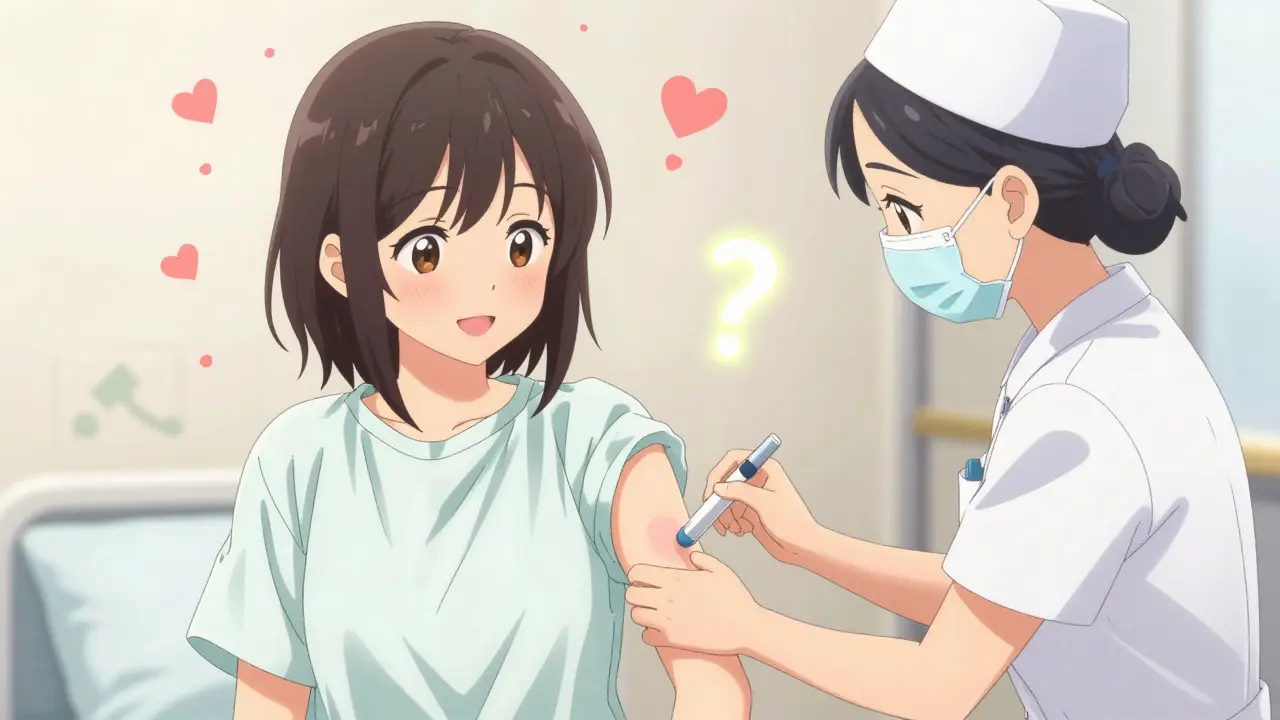
More than 10% of people in the U.S. say they’re allergic to penicillin. But here’s the truth: penicillin allergy is often misdiagnosed. In fact, up to 95% of those who think they’re allergic don’t actually have a real allergy. This misunderstanding isn’t just a small mistake-it puts lives at risk and makes infections harder to treat.
Why So Many People Think They’re Allergic (But Aren’t)
People often label themselves as allergic to penicillin after getting a rash as a child, feeling sick after taking it, or hearing a family member had a reaction. But many of these reactions weren’t allergies at all. A stomachache, headache, or mild rash could be a side effect-not an immune response. Even a rash that showed up days after taking the drug might not be penicillin-related. Studies show that most people who report a penicillin allergy never got tested to confirm it. The problem? Once you’re labeled allergic, that label sticks. Doctors avoid penicillin and its cousins, even when they’re the best, safest, and cheapest option. Instead, they reach for stronger, broader antibiotics. These drugs don’t just cost more-they increase your risk of dangerous infections like C. difficile and MRSA. A 2019 study found that patients with a penicillin allergy label had 50% higher rates of MRSA and 35% higher rates of C. difficile than those without the label.What a Real Penicillin Allergy Looks Like
True penicillin allergies are immune system reactions. They come in two main types: immediate and delayed. Immediate reactions happen within an hour. These are the dangerous ones. Symptoms include swelling of the lips, tongue, or throat; trouble breathing; hives; a sudden drop in blood pressure; or passing out. This is anaphylaxis-and it’s life-threatening. If you’ve ever had this, you need to be evaluated by an allergist. Never ignore it. Delayed reactions show up hours or days later. The most common is a flat, red rash that spreads over the body. It usually appears 3 to 5 days after starting the drug. While uncomfortable, this type is rarely life-threatening. But some delayed reactions are serious: Stevens-Johnson Syndrome, Toxic Epidermal Necrolysis, or DRESS syndrome. These affect the skin, liver, or blood and require emergency care.Testing Is Safe-and Life-Changing
If you think you’re allergic, getting tested can change everything. The standard test starts with skin prick and intradermal tests using penicillin components. If those are negative, you’ll get a small oral dose of amoxicillin-usually 250 mg-and be watched for an hour. If nothing happens, you’re not allergic. The results? Over 90% of people who get tested can safely take penicillin again. That means doctors can use the right antibiotic, not just any antibiotic. For someone needing surgery, this could mean avoiding a dangerous alternative like vancomycin and using cefazolin instead-reducing the chance of surgical infections. Even if you had a reaction years ago, you might be fine now. About 80% of people who had an IgE-mediated reaction lose their sensitivity after 10 years without exposure. That means if you were told you were allergic as a kid, you may no longer be.
Who Needs Testing-and Who Doesn’t
Not everyone needs a full test. Doctors use risk categories to decide what to do:- Low-risk: You had a mild rash more than 5 years ago, only had itching, or had stomach upset. You can often take first-generation cephalosporins like cefazolin without testing.
- Moderate-risk: You had hives, swelling, or trouble breathing within the last 5 years. You need skin testing and an oral challenge before taking any penicillin-type drug.
- High-risk: You had anaphylaxis, Stevens-Johnson Syndrome, or organ damage from penicillin. You should avoid all beta-lactam antibiotics and be referred to an allergist immediately.
What to Do If You Have a Real Allergy
If you’ve been confirmed as truly allergic, take steps to stay safe:- Always tell every doctor, dentist, nurse, and pharmacist you see.
- Ask for your allergy to be added to your medical records and pharmacy profile.
- Consider wearing a medical alert bracelet. In an emergency, it could save your life.
- Keep a list of safe antibiotics on hand-like macrolides (azithromycin) or fluoroquinolones (levofloxacin)-so you can remind providers if needed.
How to Get Tested
Testing isn’t always easy to find. Many primary care doctors don’t offer it. But you don’t need to wait for a specialist. Ask your doctor for a referral to an allergist or immunologist. Some hospitals now have penicillin allergy clinics specifically for this purpose. If you’re in a hospital setting, ask if they have a de-labeling program. Many now have nurses trained to do oral challenges under supervision. You might be able to get tested before surgery or during a hospital stay. Don’t wait for symptoms to return. If you’ve been avoiding penicillin for years, you’re likely missing out on the best treatment for common infections like strep throat, ear infections, or pneumonia.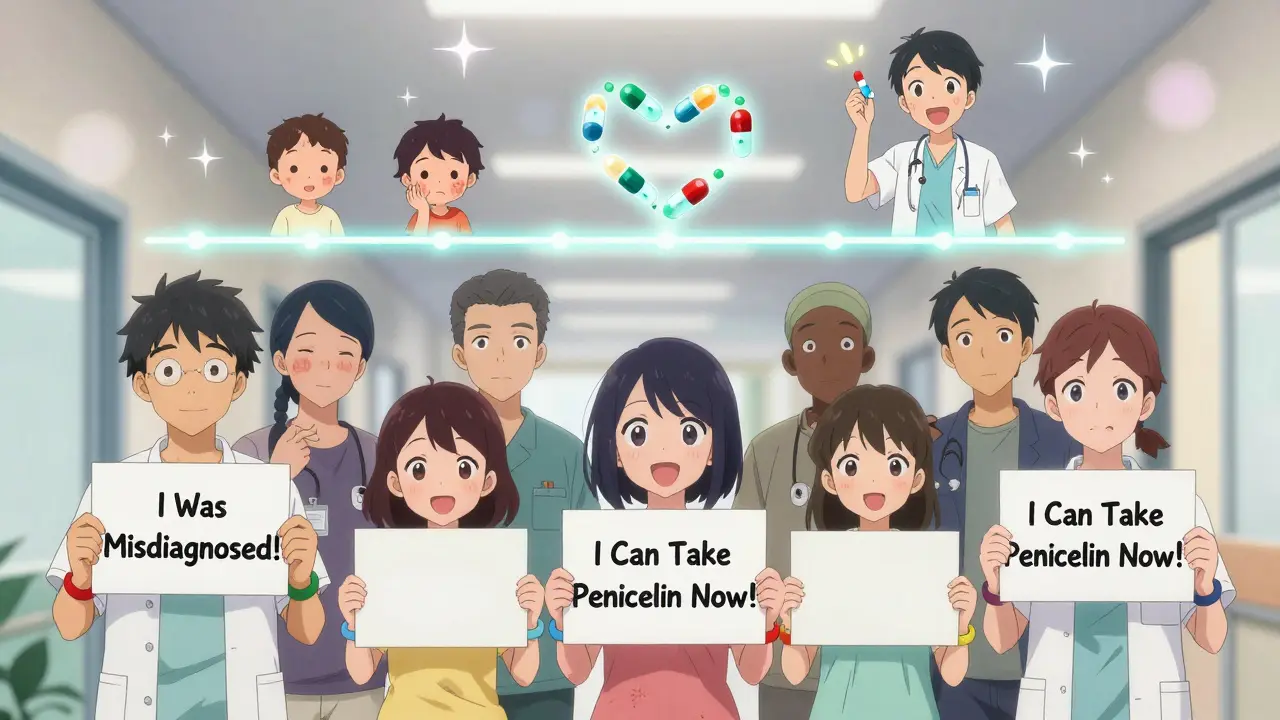
The Bigger Picture: Why This Matters for Everyone
Mislabeling penicillin allergies doesn’t just hurt individuals-it hurts public health. Every time a doctor uses a broad-spectrum antibiotic because they think a patient is allergic, they contribute to antibiotic resistance. That’s how superbugs like MRSA and drug-resistant tuberculosis spread. The CDC estimates that fixing penicillin mislabeling could save the U.S. healthcare system $1.2 billion a year. It reduces hospital stays, lowers infection rates, and cuts drug costs. In orthopedic surgery alone, studies show that for every 112 patients tested, one surgical infection is prevented. By 2025, half of U.S. hospitals are expected to have formal penicillin allergy assessment programs. The goal? To remove incorrect allergy labels from 80-90% of patients who don’t need them.Final Advice: Don’t Live with a Label You Don’t Need
If you’ve been told you’re allergic to penicillin, ask yourself: Did I ever get tested? Was the reaction confirmed? Was it recent? If the answer is no, or if it happened more than 5 years ago, you may be carrying around a dangerous myth. Talk to your doctor. Ask about testing. Get it done. Penicillin is one of the safest, most effective antibiotics ever made. You don’t have to give it up forever just because you had a rash once. With the right test, you might be able to take it again-and get better faster, safer, and cheaper.Can I outgrow a penicillin allergy?
Yes, many people do. About 80% of those with a true IgE-mediated penicillin allergy lose their sensitivity after 10 years without exposure. Even delayed reactions like rashes often fade within 1-2 years. If you were labeled allergic as a child, it’s very likely you can safely take penicillin now-after proper testing.
Is a penicillin skin test painful?
It’s minimally uncomfortable, like a tiny pinprick. The skin test involves a small prick or injection just under the skin, and it’s done in a controlled setting with emergency supplies on hand. Most people feel nothing more than a slight sting. The test takes less than 30 minutes, and if it’s negative, you’ll usually follow up with an oral challenge.
Can I take other antibiotics if I’m allergic to penicillin?
It depends. If you have a true IgE-mediated allergy, you should avoid all penicillin-type drugs and some cephalosporins. But many third- and fourth-generation cephalosporins, carbapenems, and non-beta-lactam antibiotics like azithromycin, doxycycline, or levofloxacin are safe. Always get tested before assuming you can’t take something. Most people labeled allergic can safely take at least one alternative.
What if I had a reaction but never saw a doctor?
If you had a rash, stomach upset, or headache after taking penicillin but never got evaluated, you’re likely not allergic. Many common side effects are mistaken for allergies. If you’re planning surgery or need antibiotics, ask your doctor about a formal allergy evaluation. You might be able to remove the label and access better treatment options.
Are penicillin allergies hereditary?
No, penicillin allergies are not inherited. Just because your parent or sibling is allergic doesn’t mean you will be. Allergies develop when your immune system mistakenly reacts to the drug-it’s not passed down like eye color. Don’t assume you’re allergic just because someone in your family is.
Can I get tested if I’m pregnant?
Yes, testing is safe during pregnancy. If you’re allergic and need antibiotics for a UTI, strep throat, or other infection, using the wrong drug can harm both you and your baby. Penicillin is often the safest choice during pregnancy. Skin testing and oral challenges are performed with care and are considered low-risk for pregnant women.
What should I do if I have a reaction after testing?
If you develop hives, swelling, trouble breathing, dizziness, or a rapid heartbeat during testing, stop immediately. Medical staff will have epinephrine, antihistamines, and oxygen ready. This is why testing is always done in a clinic or hospital with emergency equipment. Never attempt an oral challenge at home.
Will my insurance cover penicillin allergy testing?
Most insurance plans cover allergy testing if it’s medically necessary. If your doctor recommends it because you need antibiotics for surgery or an infection, it’s typically approved. Call your insurer beforehand to confirm, but don’t let cost stop you-testing can save money long-term by avoiding expensive, risky alternatives.
Next Steps: What to Do Today
If you’ve ever been told you’re allergic to penicillin:- Check your medical records. Is the allergy clearly documented? Is it based on a test or just a guess?
- Ask your doctor: “Could I have been mislabeled?”
- If you’ve had no reaction in 5+ years, request a referral for allergy testing.
- If you’re scheduled for surgery, ask if the hospital has a penicillin de-labeling program.
- If you’re unsure, don’t assume-you can find out.
Comments (15)
Emily P
December 20, 2025 AT 15:00
I never realized how many people just assume they’re allergic because they got a rash as a kid. I had a mild rash after amoxicillin at 7-I’ve avoided all penicillins ever since. But reading this, I wonder if I was just sensitive, not allergic. Maybe it’s time to get tested.
Alisa Silvia Bila
December 20, 2025 AT 16:29
This is such an important topic. So many people carry around outdated labels that put them at greater risk. Testing should be routine, not rare.
Kinnaird Lynsey
December 21, 2025 AT 04:13
Interesting. I’ve always thought ‘penicillin allergy’ was just a medical myth, but I didn’t know the stats were this high. Still, I’d want to be tested in a controlled environment-just to be safe.
Matt Davies
December 21, 2025 AT 14:35
Penicillin’s the OG antibiotic-kinda sad we’ve been scared off it like it’s a vampire. Imagine if we treated insulin the same way because someone had a bad reaction once. We’d be in worse shape.
benchidelle rivera
December 21, 2025 AT 18:26
As a nurse who’s seen patients suffer from MRSA because they were mislabeled, I can’t stress this enough: get tested. It’s not just about you-it’s about community health. Hospitals need to make this easier.
Jedidiah Massey
December 22, 2025 AT 12:16
Let’s be real-this is a perfect example of how the medical-industrial complex profits from overprescribing broad-spectrum antibiotics. Pharma doesn’t want you on cheap penicillin. They want you on expensive, patent-protected alternatives. 😏
Mike Rengifo
December 24, 2025 AT 11:02
I got hives once after amoxicillin. Thought I was allergic. Turned out it was a virus. Never got tested. Still avoid penicillin. Maybe I’m just being dumb.
mary lizardo
December 25, 2025 AT 07:38
This article is dangerously oversimplified. Not every rash is a side effect. Not every delayed reaction is benign. The risk of anaphylaxis is not to be trifled with, and blanket reassurances like '95% are misdiagnosed' are irresponsible without context.
Anna Sedervay
December 25, 2025 AT 10:04
While the data presented is statistically compelling, one must consider the epistemological limitations of retrospective self-reporting in allergy diagnosis. The absence of IgE confirmation does not equate to immunological non-reactivity, particularly in cases of T-cell-mediated hypersensitivity. One cannot casually dismiss clinical histories without molecular validation. 🧬
mark shortus
December 26, 2025 AT 14:52
I had a full-blown anaphylactic reaction at 14. Swelling, collapse, EpiPen, ICU. I’m NOT one of the 95%. I’m one of the 5%. And now you want me to ‘get tested’ like it’s a coffee tasting? This isn’t a myth-it’s trauma. This article feels like a slap in the face.
Marsha Jentzsch
December 27, 2025 AT 11:36
OMG I’m so mad right now. I had a rash when I was 8, and now I can’t get dental work done because of this stupid label. My dentist won’t even talk to me unless I get tested. And now I find out I probably never had an allergy?! This is insane. I’ve been scared for 20 years for nothing?? 😭
benchidelle rivera
December 27, 2025 AT 21:41
To the person who had anaphylaxis: I hear you. Your experience is valid, and you should never be pressured to rechallenge without expert supervision. This article isn’t saying your fear is wrong-it’s saying most people don’t need to live in fear. You’re not the problem. The system is.
Meenakshi Jaiswal
December 29, 2025 AT 08:10
In India, many people avoid penicillin because their doctor told them to-no testing, no explanation. I’ve seen patients die from resistant infections because they couldn’t get the right drug. This is a global issue, not just American. Testing programs need to reach rural clinics too.
Chris porto
December 31, 2025 AT 02:50
It’s funny how we treat medicine like it’s all-or-nothing. Either you’re allergic or you’re fine. But biology doesn’t work that way. Maybe we’re just bad at measuring what’s really going on in the body. Testing isn’t just about safety-it’s about humility.
bhushan telavane
December 31, 2025 AT 16:45
Bro, I thought I was allergic because my mom said so. Turned out she was allergic to sulfa, not penicillin. I took amoxicillin last year for a tooth infection. Felt fine. Now I’m thinking-why did I waste 15 years being scared?