
Personalized Dose Estimator
How Your Body Processes Medications
Understanding pharmacokinetics helps explain why you might need a different dose than someone else. Your age, kidney function, and liver health affect how drugs are absorbed, distributed, metabolized, and excreted from your body.
Personalized Dose Assessment
Disclaimer: This calculator provides general information based on pharmacokinetic principles. It is not intended to replace professional medical advice, diagnosis, or treatment. Always consult with your healthcare provider before making any changes to your medication regimen.
Have you ever taken a pill and wondered why it worked for your friend but gave you a headache? Or why your grandma needs a lower dose of the same medicine you take? It’s not luck or coincidence. It’s pharmacokinetics-the science of how your body moves, changes, and gets rid of drugs. Understanding this isn’t just for doctors. It’s the key to knowing why side effects happen, why some meds don’t work for you, and how to stay safe when taking multiple pills.
What Happens When You Swallow a Pill?
Pharmacokinetics breaks down into four simple steps: Absorption, Distribution, Metabolism, and Excretion-known as ADME. This isn’t theory. It’s what happens every time you take medicine, whether it’s aspirin, blood pressure pills, or antibiotics.Absorption is how the drug gets into your bloodstream. If you take a pill by mouth, it travels through your stomach and intestines. Only about 40-60% of most oral drugs actually make it into your blood. Why? Because your liver starts breaking it down before it even circulates. This is called first-pass metabolism. Some drugs, like nitroglycerin, are given under the tongue so they skip the liver and hit your bloodstream faster. IV drugs? They go straight in-100% bioavailability. No guesswork.
But absorption isn’t just about the route. Your stomach acid, how fast your gut moves, even what you ate last-these all matter. For example, weak acids like ibuprofen absorb better in an acidic stomach. If you’re on acid-reducing meds, your body might not absorb them as well. And then there’s P-glycoprotein, a protein in your gut that acts like a bouncer, kicking certain drugs back out. That’s why digoxin, a heart drug, can become less effective if you’re also taking St. John’s wort.
Where Does the Drug Go After It Enters Your Blood?
Once in your blood, the drug starts distributing. It doesn’t just hang out in your veins. It travels to tissues, organs, even your brain. How far it goes depends on its chemical makeup. Some drugs stay mostly in the blood. Others slip into fat, muscle, or bone. That’s measured by something called volume of distribution (Vd).Take warfarin, a blood thinner. About 98% of it sticks to proteins in your blood. Only 2% is free to work. That’s why even tiny changes in protein levels-like from liver disease or malnutrition-can make it too strong or too weak. If your albumin drops, more free warfarin floats around. That’s when bleeding risks spike.
Other drugs, like antidepressants, love fat tissue. That’s why people with higher body fat may hold onto these drugs longer. It’s not about weight alone-it’s about how the drug behaves. This is why two people on the same dose can have wildly different outcomes.
Your Liver: The Drug Transformer
This is where things get personal. Metabolism mostly happens in your liver, using enzymes called Cytochrome P450 (CYP). There are dozens of these, but CYP3A4 handles about half of all prescription drugs. It turns fat-soluble drugs into water-soluble ones so your kidneys can flush them out.But here’s the catch: your CYP enzymes aren’t the same as your neighbor’s. Genetics play a huge role. About 3-10% of white people are poor metabolizers of CYP2D6. That means codeine, which needs to be turned into morphine by this enzyme, does nothing for them. Meanwhile, ultra-rapid metabolizers turn it into morphine too fast-and risk overdose.
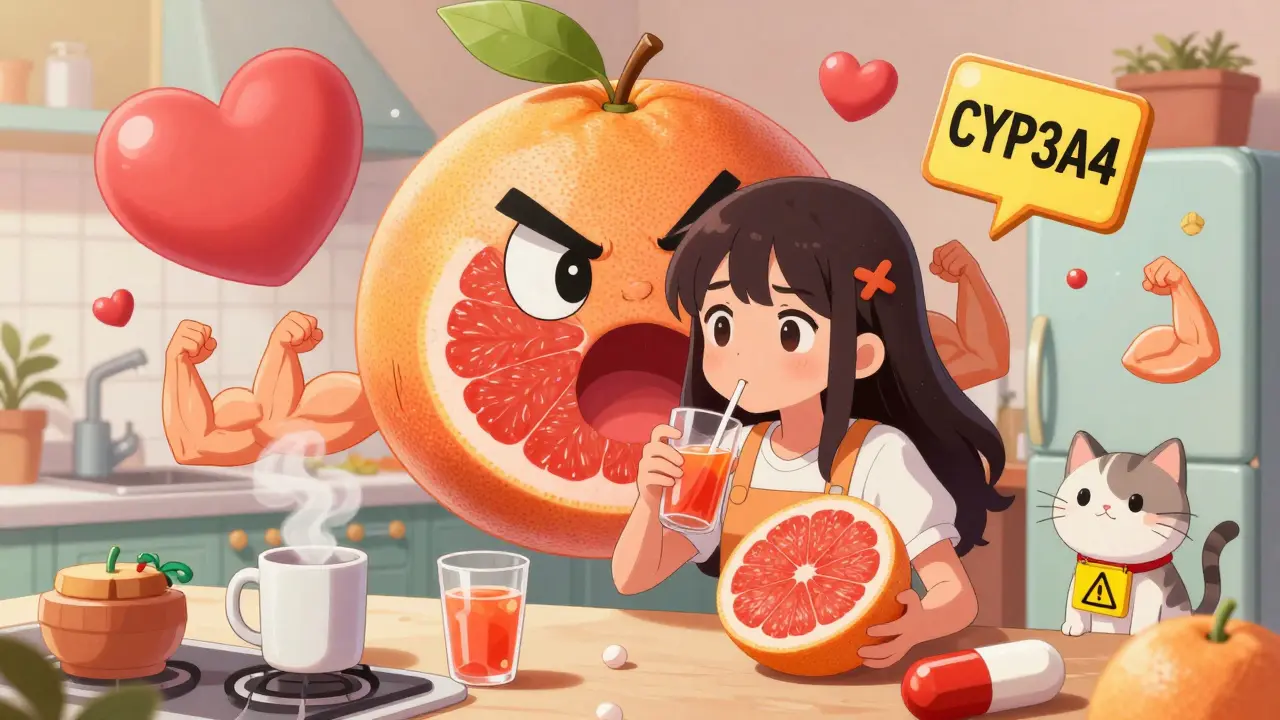
And it’s not just genes. Grapefruit juice? It blocks CYP3A4. So if you’re on simvastatin for cholesterol, drinking grapefruit juice can spike your drug levels by 10 times. That’s not a myth. That’s why some patients end up in the hospital with muscle damage. Same with clarithromycin, a common antibiotic. It does the same thing. Combine it with statins? Rhabdomyolysis risk jumps from 0.04% to 0.5%.
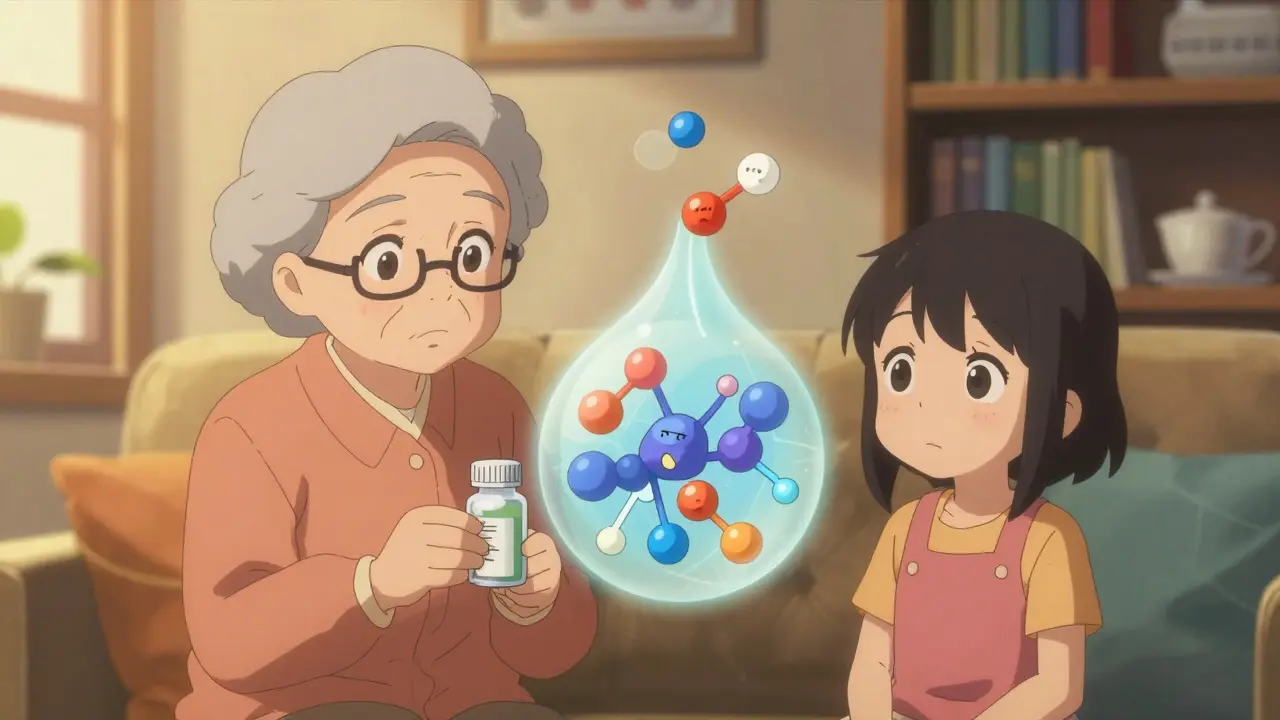
How Your Body Gets Rid of Drugs
The final step is excretion. Most drugs leave through your kidneys. Your kidneys filter blood at a rate called glomerular filtration rate (GFR). Normal is 90-120 mL/min. But if you’re over 65, or have kidney disease, that number drops. A GFR below 15 means your kidneys are barely working. If you’re still getting a normal dose of a drug like vancomycin or metformin? You’re at serious risk of toxicity.That’s why pharmacists check creatinine levels before prescribing. A 78-year-old patient in Durban once developed kidney failure after taking vancomycin because her dose wasn’t adjusted for her low creatinine clearance. Her serum creatinine jumped from 1.2 to 3.4 mg/dL in days. That’s not rare. It’s predictable. And preventable.
Some drugs also leave through bile, then stool. But kidneys handle about 80% of the workload. That’s why dehydration, diuretics, or chronic kidney disease can turn a safe dose into a dangerous one.
Why Side Effects Aren’t Random
Side effects aren’t accidents. They’re direct results of pharmacokinetics. When drug levels go too high, you get toxicity. Too low? The drug doesn’t work. The gap between effective and toxic is often narrow.Take phenytoin, used for seizures. At 10-20 mcg/mL, it works. Above 20 mcg/mL? 30% of patients develop tremors, dizziness, or even coma. Below 10? Seizures return. That’s why therapeutic drug monitoring (TDM) exists. Blood tests check levels. But here’s the problem: 22% of hospital labs draw blood at the wrong time. Trough levels must be taken right before the next dose. Get it wrong? The number’s useless.
Metabolites-what your body turns the drug into-can cause side effects too. Diazepam, a common anxiety pill, breaks down into desmethyldiazepam. That metabolite lasts up to 100 hours. In older adults with slower metabolism, it builds up. That’s why elderly patients on diazepam often feel groggy for days. It’s not the original drug. It’s the leftover piece.
Age, Genetics, and Other Hidden Factors
You’re not a statistic. You’re a person with a unique body. And pharmacokinetics proves it.People over 65 are three times more likely to have bad reactions to drugs. Why? Their livers process drugs 30-50% slower. Their kidneys clear them 30-40% slower. That’s not aging-it’s biology. Yet, many prescriptions still use the same doses for young and old.
Genetics matter more than ever. About 28 drugs now require genetic testing before use. Abacavir, an HIV drug, can cause a deadly allergic reaction in people with the HLA-B*5701 gene. Screening cuts that risk by 90%. Clopidogrel, a heart drug, doesn’t work well in people with CYP2C19 mutations. Testing prevents stent clots.
Even your gut bacteria play a role. New research shows 15-20% of oral drugs are changed by microbes in your intestines. That’s why two people on the same antibiotics can have totally different side effects-diarrhea, yeast infections, even mood changes. It’s not just the drug. It’s your microbiome.
What You Can Do
You don’t need a PhD to protect yourself. Here’s what works:- Always tell your doctor or pharmacist about every pill, supplement, and herb you take-even turmeric or garlic.
- Ask: “Could this interact with my other meds?” Especially if you’re on more than three drugs.
- If you’re over 65 or have kidney/liver issues, ask if your dose needs adjusting.
- Don’t drink grapefruit juice if you’re on statins, blood pressure meds, or immunosuppressants.
- If you feel weird after starting a new drug-dizziness, nausea, rash-don’t ignore it. Call your provider.
Pharmacokinetics isn’t magic. It’s math. It’s biology. It’s personal. And when you understand it, you stop being a passive pill-taker. You become an informed partner in your own care.
What’s Next in Drug Safety?
The future is personalized. AI tools like DoseMeRx now predict the right dose for vancomycin based on your weight, age, kidney function, and even your genes. The FDA cleared it in 2021. It cuts dosing errors by 62%.Global initiatives like EMA’s PK4All aim to build shared databases for rare diseases, where traditional dosing doesn’t work. And the NIH just poured $185 million into studying pharmacokinetics in non-Caucasian, older, and female populations-because 85% of past research was done on young white men.
By 2030, experts predict adverse drug reactions could drop from 6.7% to under 2% of all medication uses. That’s 1 million fewer ER visits a year in the U.S. alone. It’s not fantasy. It’s the next step in medicine.
What does pharmacokinetics mean in simple terms?
Pharmacokinetics means how your body handles a drug: how it gets in (absorption), where it goes (distribution), how it’s changed (metabolism), and how it leaves (excretion). Think of it as the drug’s journey through your body.
Why do some people have worse side effects than others on the same drug?
Because everyone’s body processes drugs differently. Genetics affect how fast your liver breaks down medicine. Kidney and liver health change how quickly it’s cleared. Age, diet, other meds, and even gut bacteria all play a role. Two people can take the same pill, but one gets side effects because their body holds onto it longer.
Can food or drinks affect how my medicine works?
Yes. Grapefruit juice blocks liver enzymes and can make drugs like statins or blood pressure meds too strong. Dairy can bind to antibiotics like tetracycline and stop them from being absorbed. High-fat meals can slow or speed up absorption of some pills. Always check the label or ask your pharmacist about food interactions.
Why do older adults need lower doses of medicine?
As we age, our liver and kidneys work slower. That means drugs stay in the body longer and build up. A dose that’s safe for a 30-year-old can be toxic for a 75-year-old. That’s why doctors often start seniors on lower doses and increase slowly if needed.
Is it safe to take multiple medications together?
It can be, but only if monitored. About 20-30% of serious side effects come from drug interactions-especially when one drug blocks the enzyme that breaks down another. If you take four or more medications, ask your pharmacist to review them. Many hospitals now use clinical pharmacists specifically to catch these risks.
What is therapeutic drug monitoring, and do I need it?
Therapeutic drug monitoring is when your blood is tested to check if a drug is at the right level. It’s common for drugs with narrow safety margins-like warfarin, phenytoin, lithium, or vancomycin. If you’re on one of these, or have kidney/liver problems, or are elderly, it’s often necessary to avoid toxicity or underdosing.
Comments (15)
Coral Bosley
January 21, 2026 AT 14:05
My grandma took warfarin for years and never knew why she kept bleeding out from minor cuts. Turns out her albumin was low from malnutrition and no one ever checked. She almost died because the doctor assumed "standard dose" meant "safe for everyone." This post? It should be required reading for every patient over 50.
Steve Hesketh
January 22, 2026 AT 08:24
Man, this hit home. I’m from Nigeria and saw my uncle nearly lose his leg because they gave him metformin without adjusting for his kidney function. He wasn’t even told his creatinine was high. This isn’t just science-it’s survival. If we taught this in high school, we’d save so many lives. Thank you for writing this.
Philip Williams
January 23, 2026 AT 00:29
The data presented here is rigorously supported by clinical pharmacokinetic literature. The mention of CYP3A4 inhibition by grapefruit juice is particularly well-documented, with multiple RCTs confirming the 10-fold increase in simvastatin AUC. The FDA’s 2021 clearance of DoseMeRx represents a paradigm shift toward pharmacogenomic-guided dosing, which has demonstrated a 62% reduction in adverse events in prospective cohort studies. This is precision medicine in action.
Barbara Mahone
January 24, 2026 AT 21:48
Interesting. I’ve always wondered why my anxiety meds made me feel like a zombie for days. Turns out it’s not me-it’s the metabolite. Desmethyldiazepam lingers. I’ll ask my psychiatrist about switching to something with a shorter half-life. Maybe lorazepam. Thanks for the clarity.
MARILYN ONEILL
January 26, 2026 AT 13:28
Wow. Someone finally said it. Most doctors are just guessing. I’ve been on five meds and no one ever asked if I drank grapefruit juice. I’m not dumb. I read the label. But they don’t care. They just scribble prescriptions like it’s a bingo card.
Dee Monroe
January 27, 2026 AT 03:55
There’s something deeply human here. We treat medicine like a one-size-fits-all algorithm, but our bodies are ecosystems-each one shaped by genes, gut bacteria, trauma, diet, sleep, even the air we breathe. The fact that two people can take the same pill and one gets relief while the other gets hospitalized isn’t a failure of medicine-it’s a failure of imagination. We’ve forgotten that the patient isn’t a data point. They’re a living, breathing, metabolizing miracle. Maybe the real breakthrough isn’t AI dosing-it’s listening.
Alex Carletti Gouvea
January 28, 2026 AT 20:12
Why are we letting foreigners and bureaucrats dictate how we dose medicine? This whole pharmacokinetics thing sounds like a EU scam to make us pay more for tests. In America, we’ve always trusted our doctors. Stop overcomplicating it.
Jerry Rodrigues
January 30, 2026 AT 02:03
My cousin’s on clopidogrel after a stent. They didn’t test her CYP2C19 until after she had a second clot. Now she’s on ticagrelor. She’s alive because someone finally asked about genetics. This isn’t niche science. It’s basic care. Everyone should get tested before starting high-risk meds.
Jarrod Flesch
January 31, 2026 AT 16:40
Just had a coffee with my pharmacist yesterday-he said 70% of people don’t know grapefruit juice can kill them if they’re on statins. I told him I’d post this link everywhere. Seriously, if you’re on cholesterol meds, stop drinking grapefruit juice. It’s not worth the risk. 🙏
Stephen Rock
February 2, 2026 AT 11:28
Of course the NIH is funding this now. Because 85% of past studies were on white men. That’s not science. That’s racism dressed up in lab coats. And now they want to fix it with $185 million? Took them long enough. Meanwhile, Black and Indigenous women are still dying from overdoses because their metabolisms were ignored. This post is good. But it’s too little, too late.
Glenda Marínez Granados
February 3, 2026 AT 06:14
So let me get this straight… my body’s a science experiment and I didn’t sign up? Thanks for the reminder that I’m just a bag of enzymes waiting to be hacked by Big Pharma and their overpriced pills. 🤡
Yuri Hyuga
February 3, 2026 AT 10:30
This is the kind of insight that transforms healthcare from reactive to proactive. 🌟 Imagine a world where every prescription comes with a personalized PK profile-genetics, kidney function, gut microbiome, even hydration levels. The EMA’s PK4All initiative is the future. We’re not just treating disease anymore-we’re engineering safety. This is the medicine of tomorrow, and it’s already here.
Ben McKibbin
February 4, 2026 AT 18:26
People think side effects are random. They’re not. They’re predictable. That’s the whole point. If you’re on three or more meds, you’re playing Russian roulette with your liver. I’ve seen it too many times. Ask your pharmacist for a med review. It’s free. It’s simple. And it might save your life.
Melanie Pearson
February 6, 2026 AT 18:09
According to the FDA’s 2023 Adverse Drug Reaction Surveillance Report, pharmacokinetic mismanagement accounted for 42% of all preventable hospitalizations in patients over 65. The data is irrefutable. Yet, 83% of primary care providers still do not utilize therapeutic drug monitoring for high-risk medications. This represents a systemic failure of clinical governance and a breach of the standard of care.
Rod Wheatley
February 8, 2026 AT 13:23
My dad’s 78. He’s on metformin, lisinopril, and a statin. I just called his doctor and asked if they checked his creatinine clearance. They hadn’t. So I scheduled him for a blood test. Now he’s on a lower dose. I’m not a doctor. But I read this post. And I didn’t let him get hurt. You don’t need a PhD to protect someone you love.