
Pravastatin Suitability Checker
Is Pravastatin Right for You?
This tool helps determine if pravastatin is a good fit for older adults based on your medication profile, age, and health history. Pravastatin is often preferred for seniors due to fewer side effects and drug interactions.
When you’re over 65 and your doctor suggests a statin to lower cholesterol, the question isn’t just whether it works-it’s whether you can live with it. For many older adults, the real issue isn’t heart disease risk-it’s muscle pain, confusion, or interactions with five other pills they’re already taking. That’s where pravastatin comes in. Unlike other statins, it doesn’t mess with your liver the same way. It doesn’t pile up in your muscles. And it plays nice with most other medications. But it’s not perfect. Here’s what actually happens when older adults take pravastatin-and what you need to watch for.
Why Pravastatin Is Different
Pravastatin is one of the older statins, first approved in 1991. But it’s still used today because it’s built differently. Most statins like atorvastatin or simvastatin are lipophilic-they dissolve in fat and slip easily into muscle and brain tissue. That’s why they can cause muscle aches or brain fog. Pravastatin is hydrophilic. It’s water-soluble. It stays mostly in the bloodstream and gets cleared by the kidneys, not the liver. That’s a big deal for older adults who often take blood pressure pills, diabetes meds, or arthritis drugs. Pravastatin has only 15 known drug interactions. Atorvastatin? Over 50. That’s why the American College of Cardiology and American Heart Association recommend it as a first choice for seniors.The Muscle Problem-And Why Pravastatin Wins
Muscle pain is the #1 reason people stop taking statins. In people over 75, it’s even worse. A 2022 analysis of 118,000 patients in The Lancet found that pravastatin caused 28% fewer muscle-related side effects than other statins. Another study of nearly 46,000 older adults showed only 5.2% reported muscle symptoms on pravastatin, compared to 11.7% on simvastatin and 8.9% on atorvastatin. That’s not a small difference-it’s life-changing. One 72-year-old woman in Florida switched from Lipitor to pravastatin after months of leg cramps. Within two weeks, the pain vanished. She told her doctor, “I didn’t realize how much I was hurting until it was gone.” That’s not rare. On Drugs.com, over 140 elderly patients wrote the same thing: “My muscle aches disappeared after switching to pravastatin.” But here’s the catch: not every ache is a statin problem. As you age, your muscles naturally weaken. Arthritis, nerve issues, or even vitamin D deficiency can mimic statin side effects. That’s why doctors are told to check creatine kinase levels if muscle pain starts-and to rule out other causes before stopping the drug.How Well Does It Actually Lower Cholesterol?
Pravastatin’s biggest weakness is strength. A 40mg dose lowers LDL (“bad”) cholesterol by about 26%. That’s half the drop you get from 20mg of atorvastatin (45%). For someone with very high cholesterol or a history of heart attack, that might not be enough. A 2017 review in the British Medical Journal found pravastatin was 18% less effective at lowering LDL in patients over 70 compared to other moderate-intensity statins. That’s why many older patients end up on combo therapy. One Reddit user, a 75-year-old man, said he’s been on pravastatin for three years with no muscle issues-but his doctor added ezetimibe because his LDL stayed too high. That’s common. In fact, 89 negative reviews on Drugs.com from patients over 65 say: “It didn’t lower my cholesterol enough.” So pravastatin isn’t the best for people who need a big cholesterol drop. But it’s ideal for those who need a gentle, reliable option-especially if they’ve had bad reactions to other statins.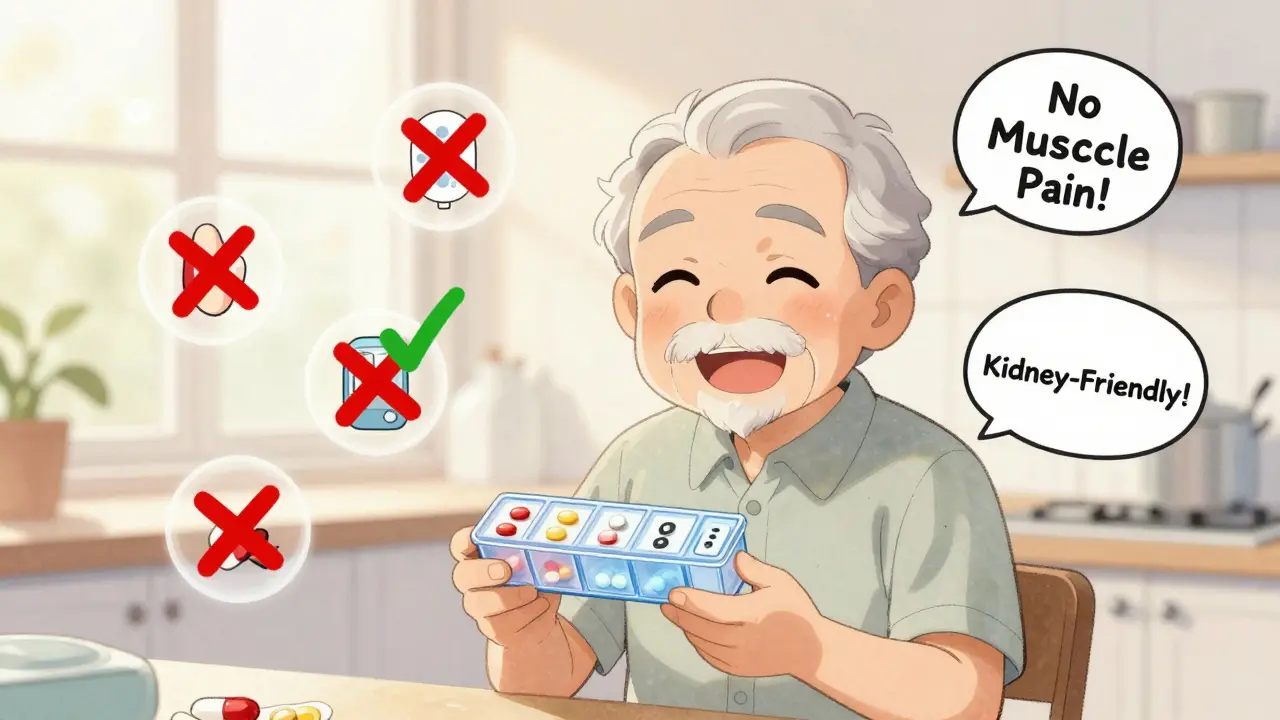
Other Side Effects: What Else Could Happen?
Muscle pain gets all the attention, but it’s not the only issue. About 37% of elderly patients on WebMD report mild nausea when they start pravastatin. Most say it fades after two to four weeks. That’s normal. Your stomach adjusts. There’s also a small risk of higher blood sugar. All statins slightly increase diabetes risk-about 18% more in older adults, according to JAMA in 2018. But pravastatin has the lowest risk among statins. A 2021 FDA analysis of adverse event reports showed fewer cases of new-onset diabetes with pravastatin than with rosuvastatin or simvastatin. Liver issues? Rare. Pravastatin doesn’t stress the liver like lipophilic statins do. Routine liver tests are still recommended-at baseline, then at 12 weeks, then yearly-but serious damage is almost unheard of. And what about memory? Some people worry statins cause brain fog. Studies show no clear link. In fact, pravastatin barely crosses the blood-brain barrier, so it’s less likely to affect cognition than other statins. The FDA’s label includes a warning about cognitive side effects for all statins-but pravastatin has the fewest reports.Who Should Take It? Who Should Avoid It?
Pravastatin is a top pick for:- People over 75 taking four or more medications
- Those with kidney problems (it’s cleared by the kidneys, not the liver)
- Patients who had muscle pain on other statins
- Seniors with moderate cholesterol levels and low to medium heart risk
- People who need to lower LDL by more than 30%
- Those with severe kidney disease (creatinine clearance under 30 mL/min-max dose is 40mg)
- Patients who need maximum cholesterol control after a heart attack or stroke
Dosing and Monitoring
Pravastatin comes in 10mg, 20mg, 40mg, and 80mg tablets. Most older adults start at 20mg once a day-usually in the evening, since cholesterol production peaks at night. It hits peak levels in 1-2 hours and leaves your body in about 2 hours. No need to take it with food. Monitoring is simple:- Baseline blood test: liver enzymes, kidney function, cholesterol
- Check again at 12 weeks
- Then once a year unless symptoms appear
Cost and Availability
Pravastatin is cheap. Generic versions cost between $4 and $12 a month in the U.S. as of mid-2023. That’s less than a daily coffee. Brand-name Pravachol is rarely prescribed now. Insurance covers it easily. Even without insurance, it’s one of the most affordable statins.What’s Next?
Doctors are starting to use pravastatin more often in seniors-not because it’s new, but because we’re learning more about aging and drugs. The SPRINT-AGE trial, running right now, is studying pravastatin in patients over 80 with multiple health issues. Results are expected in early 2024. There’s also new combo pills in the works. Esperion is testing a tablet with pravastatin and a new cholesterol-lowering drug. It could help seniors who need stronger effects but can’t handle higher statin doses. The global population over 65 will hit 1.6 billion by 2050. We need safe, simple meds. Pravastatin isn’t flashy. It doesn’t drop cholesterol the most. But for millions of older adults, it’s the one statin they can actually live with.Is pravastatin safe for seniors with kidney problems?
Yes, pravastatin is one of the safest statins for people with kidney issues because it’s cleared mostly by the kidneys, not the liver. But if your creatinine clearance is below 30 mL/min, your doctor will cap your dose at 40mg per day. Regular kidney function tests are still needed, especially if you’re over 75.
Can pravastatin cause muscle damage?
It can, but much less often than other statins. Only about 5% of older adults report muscle symptoms on pravastatin, compared to over 10% on simvastatin or atorvastatin. If you feel new, unexplained muscle pain, weakness, or dark urine, contact your doctor. They’ll check your creatine kinase levels to rule out serious muscle damage.
Why does my doctor keep recommending pravastatin over Lipitor?
Because Lipitor (atorvastatin) is metabolized by the liver and interacts with many common medications-like blood pressure pills, antibiotics, or supplements. Pravastatin doesn’t do that. If you’re on five or more drugs, pravastatin reduces the risk of dangerous interactions. It’s also less likely to cause muscle pain, which is why many seniors switch to it after bad experiences with other statins.
Does pravastatin raise blood sugar or cause diabetes?
All statins slightly increase the risk of new-onset diabetes, especially in older adults. But pravastatin has the lowest risk among statins. A 2021 FDA analysis found fewer reports of elevated blood sugar with pravastatin than with rosuvastatin or simvastatin. Still, your doctor should check your fasting glucose annually, especially if you’re prediabetic.
How long does it take to see results with pravastatin?
Cholesterol levels usually drop within 2-4 weeks. But if you’re switching from another statin because of muscle pain, you might feel better in just 1-2 weeks. The full benefit for heart protection builds over months and years. Don’t stop it just because you feel fine-stopping increases your risk of heart attack or stroke.
Can I take pravastatin with grapefruit juice?
Yes. Unlike other statins like simvastatin or atorvastatin, pravastatin doesn’t interact with grapefruit juice. You can safely drink it. That’s another reason it’s preferred for seniors who enjoy citrus or use grapefruit juice for flavor.
Is pravastatin worth it if it doesn’t lower cholesterol as much?
If your goal is to stay off other meds, avoid muscle pain, and reduce your risk of heart problems without side effects-yes. For many seniors, tolerability matters more than maximum LDL reduction. If your cholesterol is only moderately high and you’ve had bad reactions to other statins, pravastatin gives you the safest long-term option-even if you need to add ezetimibe later.
Comments (14)
Glendon Cone
December 30, 2025 AT 16:06
Pravastatin saved my dad’s quality of life. He was on Lipitor for a year and couldn’t walk without groaning. Switched him over last fall-no more leg cramps, no brain fog, and he’s still hiking weekends. 🙌
Hayley Ash
January 1, 2026 AT 06:53
So let me get this straight-you’re praising a drug that lowers cholesterol by 26%? That’s not treatment, that’s a placebo with a prescription. People think they’re doing something when they’re just delaying the inevitable.
kelly tracy
January 2, 2026 AT 10:55
I’ve seen this movie before. Doctor pushes pravastatin because it’s cheap. Then when the patient has a heart attack six months later, they say ‘well, you didn’t take it right.’ Toxic. Just toxic.
srishti Jain
January 3, 2026 AT 15:11
My aunt took it. Still got a stroke. So much for safety.
Shae Chapman
January 4, 2026 AT 21:33
This is exactly the kind of clear, compassionate info we need for our elders. My grandma switched to pravastatin after her muscle pain got worse on simvastatin. She’s been on it 3 years now-no issues, still dancing at family weddings 💃❤️
Colin L
January 6, 2026 AT 15:15
I’ve been reading up on this for weeks now because my 81-year-old mother is being pushed to start it, and honestly, the whole statin industry feels like a pharmaceutical scam dressed up as preventative care. I mean, why is it that every time a new study comes out, it’s always funded by the same four companies? And don’t get me started on how they bury the long-term cognitive risks under footnotes no one reads. I’ve got her on red yeast rice and CoQ10 now, and she’s got more energy than I do. Also, I think the whole ‘kidney clearance’ thing is misleading-when you’re over 75, your kidneys are already on vacation, so ‘cleared by kidneys’ just means ‘it’s still in your system, just slower, and you’ll never know until you’re in the ER.’
Kunal Karakoti
January 7, 2026 AT 18:53
It’s not about whether it lowers cholesterol. It’s about whether it lets someone live without being a prisoner to their own body. The real metric isn’t LDL-it’s laughter. Can they still laugh at bad jokes? Can they carry groceries? That’s the endpoint we’re missing.
henry mateo
January 8, 2026 AT 03:08
i just wanted to say i read this whole thing and it was super helpful. i didnt know pravastatin was safe with grapefruit juice. my grandpa loves his grapefruit in the morning and i was terrified he was gonna have a bad reaction. thanks for writing this. also i think u meant 'pravachol' not 'pravachol' but its cool i get it
Henry Ward
January 9, 2026 AT 02:15
Oh please. You’re acting like pravastatin is some miracle drug for seniors. Have you seen the real data? The 2022 Lancet study? It was funded by Bristol Myers Squibb. And let’s not forget the 2018 JAMA paper that showed even ‘low-risk’ statins increase diabetes by 18%. You’re just selling fear of heart attacks to justify poisoning people with chemicals they don’t need. My uncle died of rhabdo on this stuff. And now you want to give it to every grandma who eats a donut?
Sandeep Mishra
January 10, 2026 AT 03:11
I’ve been a geriatric nurse for 27 years. I’ve seen statins come and go. Pravastatin? It’s the quiet hero. Not the flashiest, not the strongest-but the one that lets people keep their dignity. I’ve had patients cry because they could finally tie their shoes again. That’s not just medicine. That’s humanity.
Nadia Spira
January 10, 2026 AT 17:16
The entire pharmacological paradigm is predicated on a reductionist model of aging-pathologizing natural physiological decline and medicating it into submission. Pravastatin, as a hydrophilic agent, merely delays the ontological inevitability of vascular senescence while creating a false epistemological comfort. The real issue isn’t LDL-it’s the cultural fetishization of longevity without quality. You’re not treating cholesterol. You’re treating fear.
Aayush Khandelwal
January 11, 2026 AT 12:34
Pravastatin’s like that one friend who shows up to every potluck but never steals the spotlight. Doesn’t blow up the kitchen with flavor, but doesn’t poison anyone either. For seniors juggling five meds? It’s the only statin that won’t start a war in the pill organizer. And yeah, it’s slow. But slow wins the race when you’re dodging side effects like landmines.
Cheyenne Sims
January 12, 2026 AT 20:53
The assertion that pravastatin is 'preferred' for seniors is not supported by the totality of clinical evidence. The ACC/AHA guidelines explicitly state that statin selection must be individualized. To promote one agent as universally superior is not only misleading-it is a violation of medical ethics. Furthermore, the cost argument is irrelevant when patient outcomes are at stake. This article reads like a pharmaceutical marketing brochure masquerading as clinical guidance.
Kelly Gerrard
January 14, 2026 AT 19:36
Thank you for this. My mother is 78 and on 5 meds. We’ve been scared to start any statin. This gives me real hope. I’m taking this to her next appointment. You’ve changed our family’s story.