Sick Day Medication Safety Checker
Your Symptoms
Your Medications
Medication Recommendations
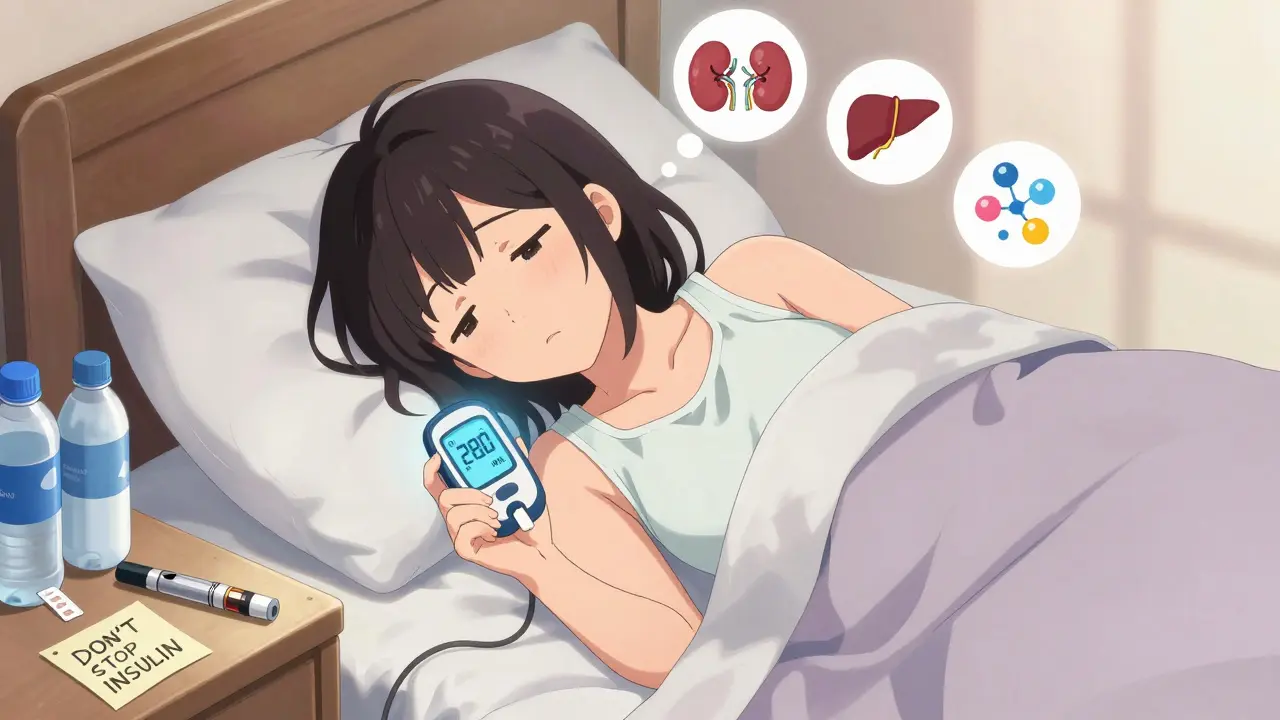
When you’re sick, your body goes into stress mode. Your blood sugar spikes. Your kidneys work harder. And if you have diabetes, the wrong move with your meds can land you in the hospital. Diabetic ketoacidosis (DKA) and acute kidney injury (AKI) aren’t rare complications during illness-they’re preventable, but only if you know exactly what to do with your medications. This isn’t about guessing. It’s about clear, life-saving steps based on real data from 2023 guidelines and real patient experiences.
Why Sick Days Are Dangerous for People with Diabetes
When you have a cold, flu, or stomach bug, your body releases stress hormones like cortisol and adrenaline. These hormones tell your liver to dump more glucose into your bloodstream. For someone without diabetes, insulin handles it. For someone with diabetes, especially type 1, insulin might be missing or not enough. That’s when your body starts breaking down fat for energy-and produces ketones. Too many ketones? That’s DKA. A 2022 JAMA study found people with diabetes are 300% more likely to develop DKA during illness.
At the same time, many diabetes medications-especially those for blood pressure and kidney protection-can backfire when you’re not drinking enough. ACE inhibitors and ARBs are meant to protect your kidneys, but if you’re vomiting or have diarrhea and your fluid intake drops below 1,500 mL a day, those same drugs can cause your kidneys to shut down. That’s AKI. A 2022 meta-analysis showed a 40% spike in AKI risk when dehydration meets these medications.
And here’s the scary part: 12.7% of all diabetes-related hospitalizations happen because someone kept taking the wrong medicine-or stopped the right one-when they got sick.
What Medications to Stop, Pause, or Keep
Not all diabetes meds behave the same when you’re sick. Here’s what the 2023 ADA Standards say, based on real-world outcomes:
- Metformin: Stop it immediately if you’re vomiting, have diarrhea, or have a fever over 100.4°F (38°C). Why? Metformin can build up in your blood if your kidneys aren’t filtering well, and that raises your risk of lactic acidosis. A 2019 NEJM study found an 8.3-fold increase in lactic acidosis risk when creatinine rises above 1.5 mg/dL. You don’t need to panic-just pause it until you’re eating and drinking normally again.
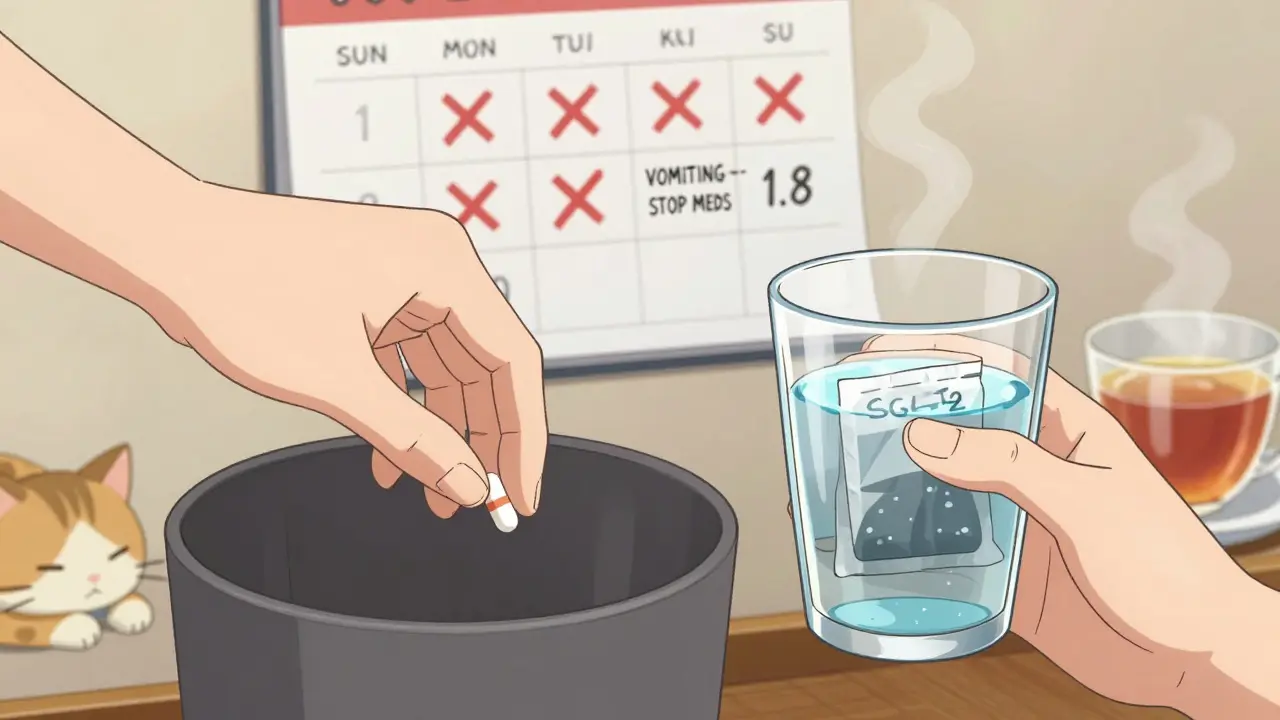
- SGLT2 inhibitors (empagliflozin, dapagliflozin, canagliflozin): Stop immediately at the first sign of illness. These drugs push sugar out through urine, which sounds good-until you’re dehydrated. Then, they can trigger euglycemic DKA (DKA even when blood sugar isn’t super high). The FDA flagged this in 2021 after reviewing over 1,200 adverse events. One patient I spoke to stopped her SGLT2 inhibitor only after 24 hours of vomiting-and ended up in the ER with ketones at 2.1 mmol/L. Waiting even one day increases DKA risk by 300%.
- ACE inhibitors and ARBs (lisinopril, losartan, valsartan): Pause if you’re drinking less than 1,500 mL (about 6 cups) of fluid in 24 hours. These drugs help protect your kidneys in normal conditions, but during dehydration, they reduce blood flow to your kidneys. That’s how AKI starts. A 2022 study showed a 40% jump in AKI cases when fluid intake dropped below this threshold.
- Insulin: Never stop insulin. Ever. Type 1 patients need to increase basal insulin by 10-20% every 4 hours if blood sugar stays above 15 mmol/L (270 mg/dL). Type 2 patients on insulin often need more, too. A 2023 Diabetes Care trial found 68% of type 2 patients needed higher insulin doses during illness. Test your blood sugar every 2-4 hours and adjust as needed. Don’t assume your usual dose will work.
- Sulfonylureas (glimepiride, glyburide): These can cause low blood sugar during illness, especially if you’re not eating. If you’re vomiting or eating less, talk to your doctor about reducing the dose. Don’t stop cold turkey-talk first.
How Often to Check Blood Sugar and Ketones
When you’re sick, checking once a day is not enough. You need to monitor like your life depends on it-because it does.
- Test blood sugar every 2-4 hours. That’s at least 6 times a day. Set alarms on your phone. Write each number down. You need a pattern, not a snapshot.
- Target range during illness: 100-180 mg/dL (5.6-10 mmol/L). Higher than normal? That’s okay. Lower than normal? Don’t ignore it.
- Start ketone testing if your blood sugar hits 240 mg/dL (13.3 mmol/L) or higher. Use blood ketone strips if you can-they’re more accurate than urine strips. If your blood ketones are over 0.6 mmol/L, call your doctor. If they’re above 1.5 mmol/L and you’ve been vomiting for more than 2 hours, go to the ER.
One patient told me she waited until her ketones were 3.2 mmol/L before going to the hospital. She lost three days in ICU. She didn’t realize ketones could climb that fast.
Hydration Is Non-Negotiable
You can’t outsmart dehydration. If you’re not drinking, your kidneys can’t filter. Your meds can’t work. Your blood sugar won’t come down.
- Drink at least 1,500 mL (6 cups) of fluid daily. Water is best. Sugar-free drinks like diet soda, unsweetened tea, or broth count.
- If you’re vomiting or have diarrhea, use electrolyte packets like Nuun or Liquid IV. Plain water won’t replace lost sodium and potassium.
- Avoid sugary drinks unless you’re treating low blood sugar. Even then, use 15g of fast-acting carbs (4 oz juice, 3-4 glucose tablets) and wait 15 minutes. That’s the 15-15 rule. It works.
One woman in Durban told me she drank only tea during her flu. She thought it was enough. Her creatinine jumped from 0.9 to 1.8 in 36 hours. She had AKI. She didn’t know her lisinopril needed to be paused.
What to Pack in a Sick-Day Kit
Don’t wait until you’re sick to prepare. Build your kit now. Here’s what you need:
- Glucose meter with 50+ test strips
- Ketone strips (blood or urine-preferably blood)
- 7-day supply of all your meds (including insulin)
- 6 bottles of sugar-free fluids (12 oz each)
- 10 electrolyte packets
- Glucose tablets or juice boxes (for lows)
- ADA Sick Day Log (print it out or save it on your phone)
People who prepared this kit ahead of time were 78% less likely to be hospitalized, according to Joslin Diabetes Center’s 2023 data.
When to Call for Help
Don’t wait. Don’t hope it gets better. If you see any of these, call your doctor or go to the ER:
- Blood sugar below 70 mg/dL and doesn’t rise after 30g of carbs
- Ketones above 1.5 mmol/L for more than 2 hours
- Vomiting for more than 4 hours
- Diarrhea for more than 6 hours
- Confusion, trouble breathing, or fruity-smelling breath
- Little or no urine output
These aren’t "maybe" signs. They’re red flags. A 2024 study found that patients who waited more than 12 hours after symptoms started were 5 times more likely to need ICU care.

Why Guidelines Clash-and How to Decide
Here’s the problem: not every guide agrees. ADA says you can keep metformin during mild illness. IDF says stop it. NICE says pause meds if you drink less than 1,200 mL. Joslin says "always take your meds unless told otherwise."
So who do you trust? The safest answer: your doctor. But here’s the fix: follow the most conservative, evidence-based rule. If you’re unsure, assume you need to stop metformin and SGLT2 inhibitors. Assume you need to pause ACE inhibitors if you’re not drinking. Assume you need to increase insulin. Assume you need to test every 2 hours.
And if your endocrinologist says one thing and your primary care doctor says another? Ask them to talk to each other. You shouldn’t be the one sorting out conflicting advice.
The Real Problem: Inconsistent Advice
A 2024 study found 41% of patients got different sick day instructions from different providers. That’s dangerous. One patient stopped her insulin because her pharmacist said to, but her endo told her to keep it. She ended up in DKA.
Here’s the truth: most guidelines were made for type 1 patients. But 90% of people with diabetes have type 2. And type 2 patients on insulin, metformin, and blood pressure meds? They’re at risk too. The system isn’t built for them.
And it’s getting worse. The 2024 flu season saw a 27% rise in diabetes complications during illness. More people are on SGLT2 inhibitors. More are on GLP-1 drugs. And we still don’t have clear rules for GLP-1s during sickness.
Final Advice: Be Prepared, Not Scared
You don’t need to be an expert. But you do need to have a plan. Build your sick-day kit. Know what meds to stop. Know how often to test. Know the warning signs. Talk to your doctor now-not when you’re feverish and vomiting.
Diabetes doesn’t take a sick day. Neither should you.
Should I stop my metformin if I have a stomach bug?
Yes. Stop metformin immediately if you’re vomiting, have diarrhea, or have a fever. Metformin can build up in your blood if your kidneys aren’t working well, which can lead to lactic acidosis-a rare but dangerous condition. Restart it only after you’re eating and drinking normally for at least 24 hours, and check with your doctor first.
Can I still take my blood pressure pills when I’m sick?
If you’re on ACE inhibitors or ARBs (like lisinopril or losartan), pause them if you’re drinking less than 1,500 mL of fluid in 24 hours. These drugs can cause acute kidney injury during dehydration. If you’re vomiting or have diarrhea, your fluid intake likely dropped. Talk to your doctor about when to restart.
Do I need to check ketones if my blood sugar is normal?
Yes. Especially if you’re on SGLT2 inhibitors. These drugs can cause euglycemic DKA-meaning ketones rise even when blood sugar is under 200 mg/dL. If you’re sick, test for ketones any time you feel unwell, even if your sugar looks fine. Blood ketones above 0.6 mmol/L mean it’s time to call your doctor.
What if I can’t reach my doctor during illness?
Call the ADA’s 24/7 helpline at 1-800-DIABETES. They can guide you on medication adjustments and when to go to the ER. If you’re vomiting, confused, have ketones over 1.5 mmol/L, or can’t keep fluids down, go to the emergency room. Don’t wait for a call back.
Is it safe to keep taking insulin when I’m sick?
Always. Never stop insulin. Type 1 patients should increase basal insulin by 10-20% every 4 hours if blood sugar stays above 270 mg/dL. Type 2 patients on insulin often need more too. Test every 2-4 hours and adjust. Skipping insulin during illness is one of the top causes of DKA.
How do I know if I’m dehydrated?
Signs include dry mouth, dark yellow urine, dizziness, fatigue, and less urine than usual. If you’ve had vomiting or diarrhea for more than 12 hours, assume you’re dehydrated-even if you feel fine. Drink fluids with electrolytes. Don’t wait for thirst.
If you’re managing diabetes and get sick, your meds aren’t optional. They’re your shield. Use them right, and you’ll avoid the hospital. Use them wrong, and you risk more than just a bad day-you risk your health.