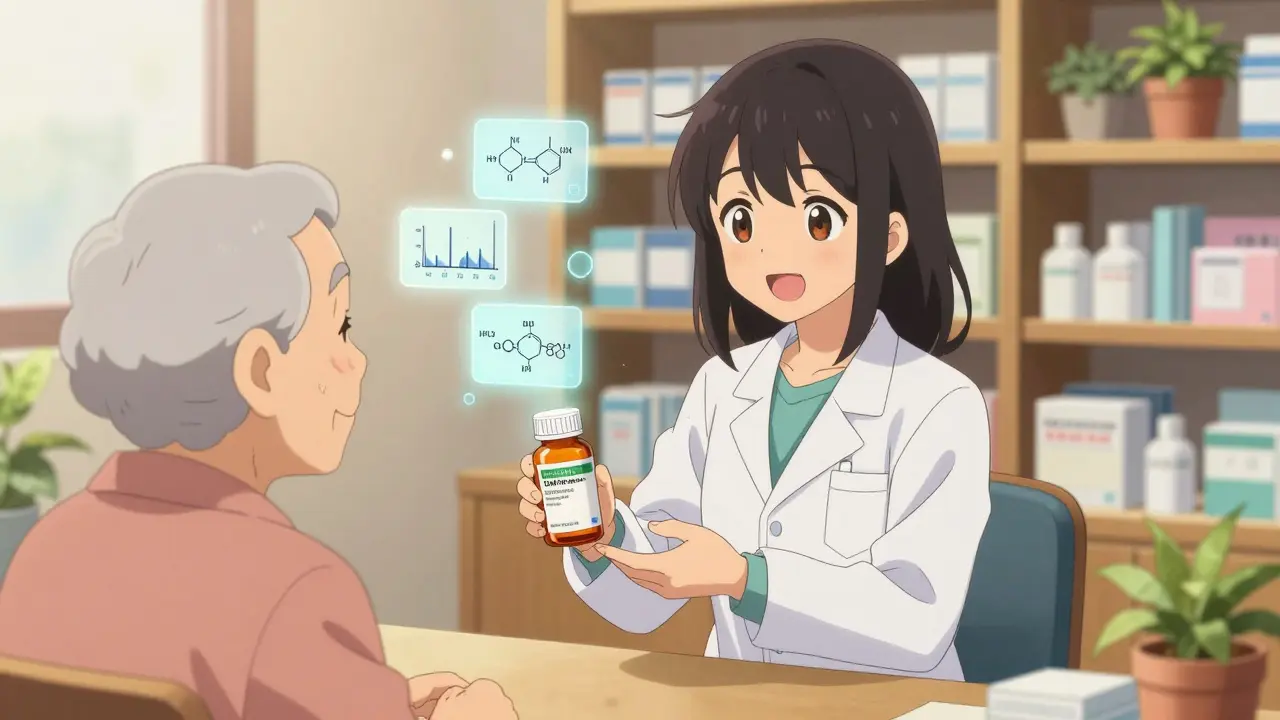
When you pick up a bottle of generic aspirin or a box of store-brand insulin, you expect it to work just like the brand-name version. But here’s the truth most people don’t think about: generic drugs aren’t just copies. They’re chemically similar, yes-but their stability, shelf life, and safety can vary wildly based on tiny differences in how they’re made. And those differences can mean the difference between a safe, effective medicine and one that’s useless-or even dangerous.
What Does ‘Stability’ Really Mean?
Stability isn’t just about whether a pill still looks the same. It’s about whether it still does what it’s supposed to do. The FDA defines it clearly: a product must retain its chemical integrity, physical form, and biological activity within strict limits from the moment it’s packaged until the day it expires. That means the active ingredient hasn’t broken down, the tablet hasn’t cracked or stuck together, and no harmful byproducts have formed. For pharmaceuticals, this is tested in four ways:- Chemical stability: Is the main drug still at 90-110% of its labeled strength? High Performance Liquid Chromatography (HPLC) detects even tiny amounts of degradation products. ICH guidelines say unknown impurities must stay below 0.1%-a level so small it’s like finding one grain of sand in a large sandbox.
- Physical stability: Has the pill changed color, texture, or dissolved too slowly? For liquid medicines, has it separated? For inhalers, is the dose still uniform? A 2020 FDA study found some generic levothyroxine tablets absorbed moisture differently than Synthroid, causing potency drops over time.
- Microbiological stability: Is the product still free from mold, bacteria, or yeast? Non-sterile products can’t exceed 100 colony-forming units per gram. Preservatives can fail if the water content changes, which is why 41% of recalls linked to stability issues involve microbial growth.
- Functional stability: Does the delivery system still work? A nasal spray must deliver the same spray pattern. A patch must stick and release the drug at the right rate. Even a small change here can mean the medicine doesn’t reach the bloodstream properly.
Why Accelerated Testing Can Mislead
Most companies don’t wait years to find out how long a drug lasts. They use accelerated testing: storing the product at 40°C and 75% humidity for six months, then using math to predict what will happen over two or three years. It’s fast. It’s cheaper. And it’s often wrong. A quality assurance professional on the American Pharmaceutical Review forum lost $250,000 and 18 months because their accelerated test showed no problems-but real-time testing revealed a hidden crystal form had developed after 24 months. The drug looked fine. It dissolved fine. But it didn’t absorb correctly. That’s because high heat can trigger degradation paths that don’t happen at room temperature. Dr. Kim Huynh-Ba, a former FDA stability expert with 25 years of experience, says this is a common trap: “You can’t just crank up the heat and assume you’ve seen everything.” The same thing happens with food products. A soup might seem stable at 40°C, but the real issue is how the fat oxidizes slowly over months at 20°C. Accelerated tests miss those slow, subtle changes.Generic Drugs Aren’t Created Equal
Brand-name drugs go through years of clinical trials and stability studies before approval. Generic manufacturers don’t need to repeat those trials. They just need to prove their version is “bioequivalent”-meaning it releases the same amount of drug into the blood at the same rate. But bioequivalence doesn’t guarantee stability equivalence. A 2020 FDA analysis found 17.3% of generic levothyroxine products had stability issues not seen in Synthroid. Why? Different fillers. Different coating. Different moisture barriers. One generic used a cheaper excipient that absorbed humidity faster. Over time, the tablets degraded, losing potency. Patients didn’t know. Their thyroid levels dropped. Symptoms returned. Texas A&M researchers found similar problems with nanoparticle drugs. These tiny particles are designed to sneak into specific cells. But if they clump together beyond 200 nanometers, they stop working. One generic version used a different stabilizer. After six months, the particles aggregated. The drug was still labeled as “effective”-but it wasn’t.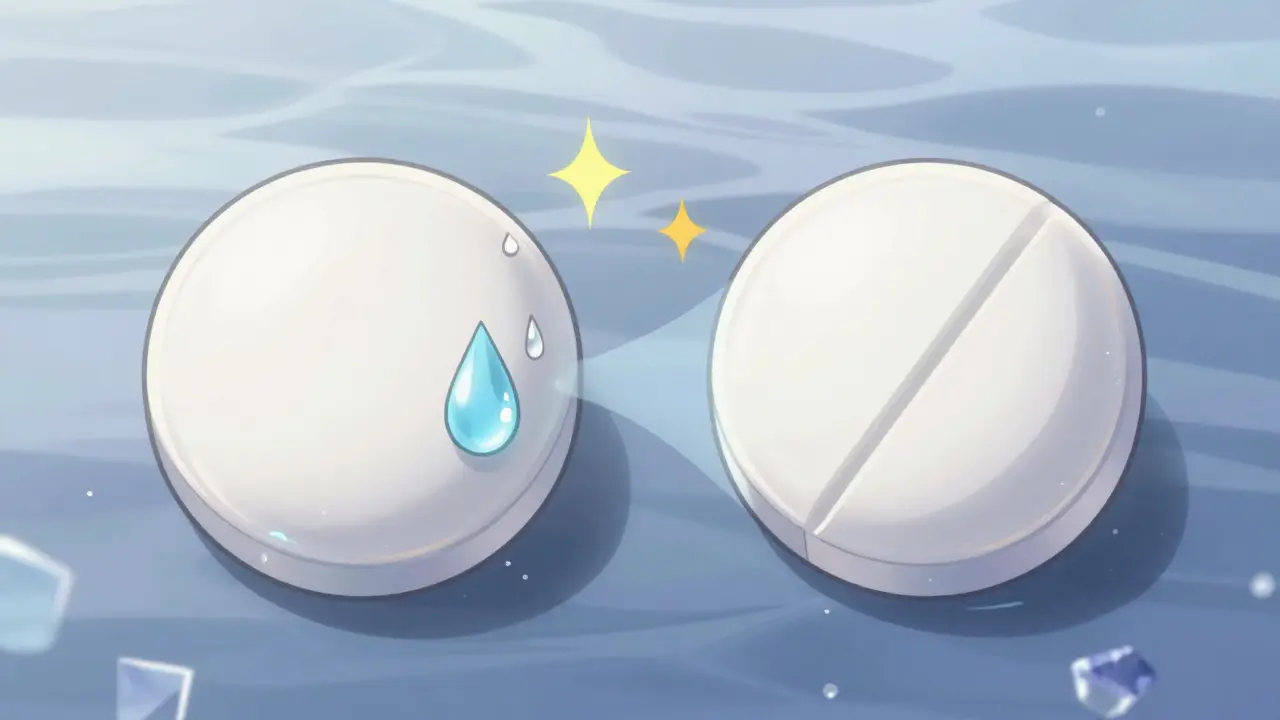
Storage Conditions Are Often Ignored-Until It’s Too Late
Even the most stable product fails if it’s stored wrong. The FDA requires exact documentation: “Room temperature” isn’t enough. You have to record the actual temperature and humidity in the warehouse, the truck, the pharmacy shelf. In 2021, a WHO report found 28.7% of medicines in low-income countries failed stability tests-not because they were fake, but because they were kept in hot, humid warehouses without climate control. In Durban, where summer temperatures regularly hit 32°C, a pharmacy that doesn’t monitor its storage is risking patient safety. A 2022 MIT study projected that by 2050, rising global temperatures could shorten average drug shelf life by 4.7 months just from heat exposure during transport and storage. That’s not science fiction. That’s happening now.What Happens When Stability Fails?
When a drug degrades, it doesn’t just become less effective. It can become toxic. Some degradation products are known carcinogens. Others cause allergic reactions. One generic antibiotic produced a breakdown compound linked to liver damage after long-term use. It wasn’t caught until patients started reporting unusual fatigue. The batch was recalled-but not before thousands had taken it. In food, the risks are similar. A jar of pickles with a broken seal can grow botulism. A bottle of infant formula that’s been stored too long can develop harmful bacteria. The end of shelf life isn’t just a date on the label-it’s the point where the product is no longer safe or acceptable to the consumer.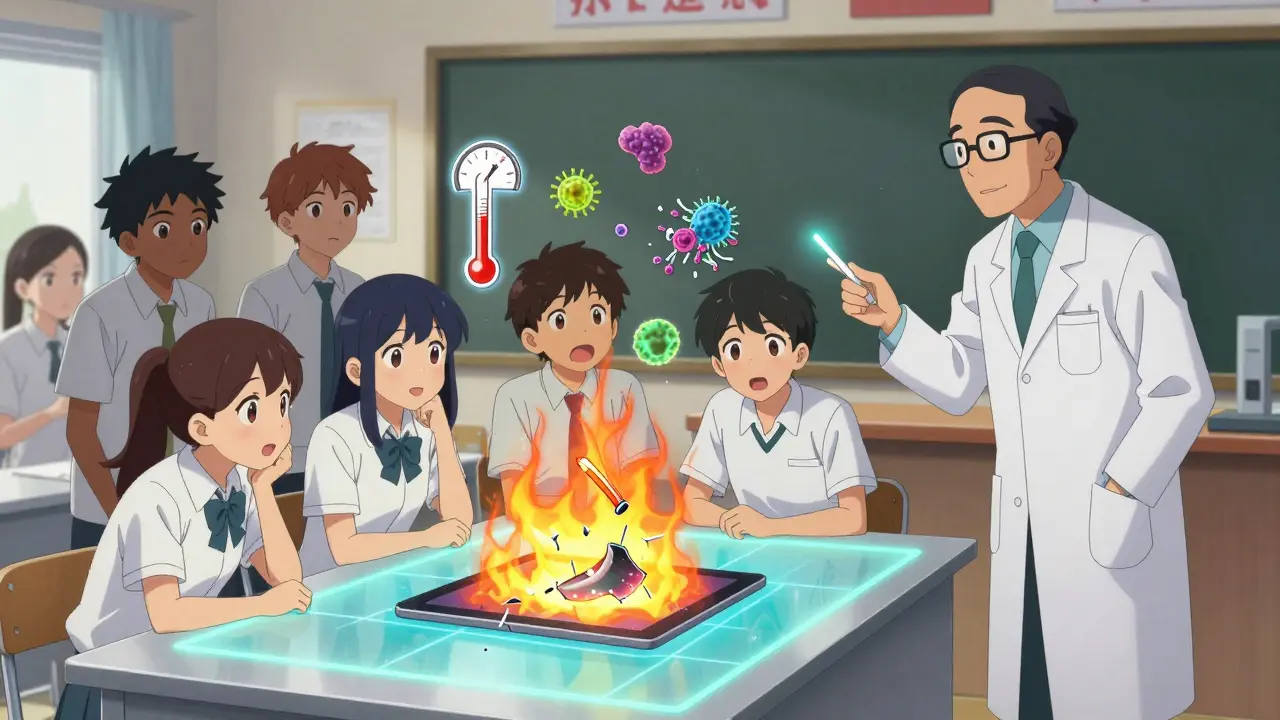
What’s Changing in 2026?
New tools are emerging. The ICH Q12 guideline, effective since late 2023, lets companies make changes to their manufacturing process after approval without restarting full stability testing-so long as they prove stability isn’t affected. That’s a big shift. The FDA’s pilot program for continuous manufacturing is showing promise. Instead of testing batches one at a time, companies can monitor the entire production line in real time, collecting stability data as they go. Early results show shelf life can be determined 40% faster. And companies like Amgen and Merck are using Risk-Based Predictive Stability (RBPS) models. These use machine learning to simulate degradation based on ingredient interactions, not just temperature. In trials, they cut testing time by 30%. But adoption is slow. Regulatory agencies still demand traditional data. Many small manufacturers can’t afford the tech. And most consumers have no idea any of this exists.What You Can Do
You can’t test your medicine at home. But you can protect yourself:- Check expiration dates. Don’t use anything past it-even if it looks fine.
- Store medicines in a cool, dry place. Not the bathroom. Not the car. Not a windowsill.
- For insulin, epinephrine, or other temperature-sensitive drugs, ask your pharmacist about cold-chain storage.
- If you notice a generic drug doesn’t seem to work like it used to-talk to your doctor. It might not be in your head.
Why This Matters
Stability testing isn’t glamorous. It doesn’t make headlines. But it’s the invisible guardrail keeping millions of people safe. When a generic drug works as well as the brand, it saves billions. When it fails, it can cost lives. The science is there. The regulations are clear. But the real challenge? Making sure every bottle, every pill, every drop is held to the same standard-no matter who made it, where it’s sold, or how much it costs.How is shelf life determined for generic drugs?
Shelf life for generic drugs is determined through stability studies that follow ICH Q1A(R2) guidelines. Manufacturers test three batches under real-time conditions (typically 25°C/60% RH) over 12 to 36 months, with additional testing at 3, 6, 9, 12, 18, 24, and 36 months. Accelerated testing at 40°C/75% RH for six months is used to predict long-term behavior, but results must be confirmed by real-time data. The expiration date is set based on when the product falls outside its established chemical, physical, or microbiological limits.
Can expired generic drugs be dangerous?
Yes. While many expired drugs simply lose potency, some can degrade into harmful substances. For example, tetracycline antibiotics can break down into compounds that damage the kidneys. Insulin may clump and become ineffective, leading to dangerous blood sugar spikes. Even common painkillers like aspirin can turn into acetic acid and salicylic acid, which can irritate the stomach. The risk isn’t always obvious-there’s often no visible change.
Why do some generic drugs expire faster than brand-name versions?
Generic drugs often use different inactive ingredients-like fillers, binders, or coatings-that affect how the drug interacts with moisture, light, and air. A brand-name drug may have a moisture-proof coating developed over years of research. A generic version might use a cheaper alternative that absorbs humidity faster, causing the active ingredient to break down sooner. This is why two identical pills can have different shelf lives.
How do storage conditions affect drug stability?
Heat, humidity, and light are the biggest enemies. High temperatures speed up chemical reactions that break down drugs. Humidity causes pills to swell, crack, or dissolve prematurely. Light can degrade compounds like nitroglycerin or vitamin C. A study showed that storing insulin at 30°C instead of 25°C reduced its potency by 15% in just 3 months. Always follow storage instructions on the label-even if they say “store at room temperature,” that means 15-30°C, not a hot garage.
Are there ways to tell if a drug has degraded before the expiration date?
Sometimes. Look for changes in color, smell, texture, or shape. Tablets that crumble, capsules that stick together, liquids that cloud or separate, or patches that lose adhesion are red flags. For injectables, check for particles or discoloration. If a medicine smells off-like vinegar or ammonia-it may have degraded. When in doubt, don’t use it. Contact your pharmacist or healthcare provider.
Comments (11)
Josh Kenna
January 20, 2026 AT 09:47
I’ve had generic levothyroxine that made me feel like a zombie-then switched back to brand and suddenly I could breathe again. No joke. My doctor shrugged and said ‘it’s the same chemical.’ But chemistry ain’t everything when your body’s screaming for balance.
Malikah Rajap
January 21, 2026 AT 21:09
Have you ever thought about how we treat medicine like a commodity? Like, we buy it like cereal-cheapest shelf, biggest box-and then wonder why we’re still tired? It’s not just about pills-it’s about trust. And trust? It’s not in the label. It’s in the lab. And most of us don’t even know what’s happening there.
Jake Rudin
January 22, 2026 AT 12:23
Acceleration is a lie. It’s a mathematical fantasy. Heat doesn’t mimic time-it distorts it. Like trying to predict a person’s lifespan by putting them in a sauna for a week. The body doesn’t work like a chemical reactor. And neither does medicine. We’re reducing life-saving science to a spreadsheet. And then we wonder why people die.
Lydia H.
January 23, 2026 AT 17:11
I used to think generics were just cheaper versions of the same thing. Then my mom’s blood pressure meds stopped working. She didn’t change anything-except the brand. Turned out the generic had a different coating that dissolved too slow. She ended up in the ER. Now I check the manufacturer. I don’t trust the label anymore.
Astha Jain
January 24, 2026 AT 02:18
OMG so true!! I’m from India and we get generics everywhere-like, literally from street vendors. And yeah, some of them just… don’t work. I had a cough syrup that tasted like plastic after 3 months. My aunt took it and got a rash. We just blamed the weather. But it wasn’t the weather. It was the excipient. #PharmaTruth
Phil Hillson
January 24, 2026 AT 13:57
Why are we even talking about this? It’s just aspirin. If it doesn’t work, take two. If it makes you sick, go to the ER. People are too scared of pills now. They think every generic is a death trap. Chill. It’s not 1985. The FDA isn’t asleep.
Erwin Kodiat
January 25, 2026 AT 06:30
I work in a pharmacy in rural Ohio. We get shipments from 3 different generic makers for the same drug. Two of them? The tablets crumble in your fingers. One? Looks perfect. I don’t know the science. But I know what feels right. And I tell patients: if it looks weird, don’t take it. No shame in asking for the brand.
Valerie DeLoach
January 26, 2026 AT 05:34
Storage matters more than most people realize. I’ve seen insulin left in a car during a Texas summer-30°C for 48 hours. The vial looked fine. The patient’s glucose spiked. It wasn’t their fault. It was the system’s. We need to treat medicine like perishable food-because it is. And we need labeling that says: ‘Do not expose to heat above 25°C.’ Not just ‘store at room temperature.’ That phrase is meaningless.
Jacob Hill
January 27, 2026 AT 00:32
Wait-so you’re saying that two pills with the same active ingredient can behave completely differently because of the filler? That’s wild. I always thought generics were just cheaper because they skipped marketing. Turns out, they’re skipping the *real* science. And we’re the ones paying for it-with our health.
Aman Kumar
January 28, 2026 AT 11:42
Let’s be brutally honest: most generic manufacturers are cost-optimized entities with zero investment in R&D. They’re not pharmaceutical companies-they’re chemical assembly lines. And the FDA? They approve based on bioequivalence, which is a statistical mirage. Real-world pharmacokinetics? Irrelevant. This isn’t regulation. It’s regulatory capture disguised as efficiency.
Christi Steinbeck
January 28, 2026 AT 18:00
My dad’s on insulin. He’s 72. He can’t afford the brand. But I made him switch back to the one with the blue cap-not the white one. He says it works better. I didn’t know why. Now I do. Don’t let anyone tell you it’s all the same. Your life isn’t a cost-cutting experiment.