Every year, millions of people in the U.S. skip doses, cut pills in half, or delay refills because their prescriptions are too expensive. The truth? You don’t have to choose between your health and your budget. Switching to generic medications isn’t a compromise-it’s a smart, science-backed move that saves money without sacrificing results.
Generic drugs are just as effective as brand-name drugs
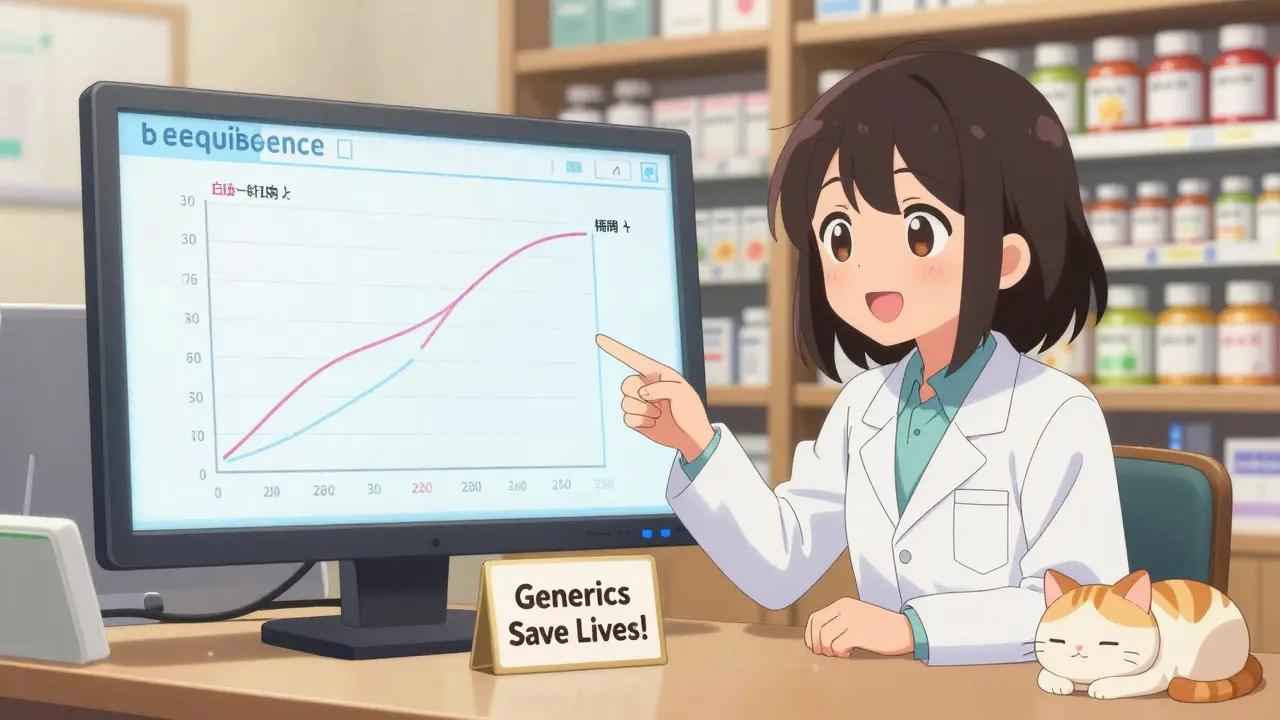
You might think brand-name drugs are stronger, faster, or better because they cost more. They’re not. Generic medications contain the exact same active ingredients, in the same strength, and delivered the same way as their brand-name versions. The U.S. Food and Drug Administration (FDA) requires them to meet the same strict standards for quality, safety, and effectiveness. The key term here is bioequivalence. That means when you take a generic drug, your body absorbs the medicine at the same rate and to the same extent as the brand-name version. The FDA tests this using precise measurements-like how much of the drug enters your bloodstream (AUC) and how fast it peaks (Cmax). The acceptable range? Between 80% and 125% of the brand-name drug’s performance. That’s not a wide margin-it’s tight enough to ensure consistent results. A 2022 study in the Journal of Managed Care & Specialty Pharmacy looked at over 10,000 patients using generic versions of heart medications like lisinopril and metoprolol. The results? No difference in hospital visits, heart attacks, or death rates compared to those on brand-name versions. Another study from the Journal of the American Heart Association tracked 186,000 patients with heart disease and found identical outcomes between generic and brand-name drugs. The bottom line: If your doctor prescribed a brand-name drug for a reason, the generic version will do the same job.Generic drugs cost up to 85% less
This is where the real change happens. Brand-name drugs carry the weight of years of research, marketing, and patent protection. Generic manufacturers don’t have to repeat expensive clinical trials. They just need to prove their version works the same way. That cuts costs dramatically. The FDA reports that generics cost, on average, 80% to 85% less than brand-name drugs. Here are real-world examples:- Lipitor (atorvastatin): Brand-name cost was $130/month in 2011. Generic? As low as $4/month at major pharmacies.
- Coumadin (warfarin): Brand-name price was over $300 for a 30-day supply. Generic? About $4.
- Allegra (fexofenadine): Brand-name cost $30. Generic? Around $10.
- Glucophage (metformin): Brand-name was $300/month. Generic? $4/month.
Insurance plans reward you for choosing generics
Your insurance company doesn’t want you to pay more than necessary. That’s why they structure their formularies-lists of covered drugs-to push you toward generics. Most plans have tiers:- Tier 1: Generics - copay of $1 to $10
- Tier 2: Preferred brand-name drugs - copay of $25 to $40
- Tier 3: Non-preferred brand-name drugs - copay of $50 to $75+
Generics are safe-here’s what the data says
People worry: “What if the generic doesn’t work the same?” or “What if the fillers are harmful?” Let’s clear this up. Generic drugs can differ in color, shape, size, or inactive ingredients (like dyes or fillers). These changes are purely cosmetic or for manufacturing reasons. They don’t affect how the medicine works. The FDA requires all generic manufacturers to follow the same Good Manufacturing Practices (GMP) as brand-name companies. In fact, many brand-name companies make their own generic versions. The FDA’s Adverse Event Reporting System (FAERS) shows that reports of side effects from generic drugs are proportional to how often they’re used. Since generics make up 90% of prescriptions, they naturally have more reports-but the rate of serious problems is no higher than with brand-name drugs. Even for drugs with narrow therapeutic windows-where small changes in blood levels could matter, like warfarin or thyroid meds-the FDA still requires bioequivalence. Studies tracking patients on generic versions of these drugs show no increase in complications. One neurologist at Mayo Clinic noted that for some epilepsy drugs, a few patients might notice subtle changes after switching. But that’s rare, and it’s not because the generic is weaker-it’s because the body is sensitive to even tiny shifts. In those cases, doctors may stick with one brand or generic manufacturer to keep consistency. But for 99% of patients, switching is perfectly safe.Why do people hesitate-and how to get past it
The biggest barrier to switching isn’t science. It’s perception. Many patients see a different-looking pill and assume it’s not the same. A Drugs.com review from early 2024 said: “My pharmacy switched the generic manufacturer. The pill changed color. I panicked-even though my doctor said it was fine.” That’s normal. But it’s also fixable. Ask your pharmacist: “Can you explain why this pill looks different?” They’ll show you the FDA’s Orange Book, which lists all approved generics and their therapeutic equivalence ratings. Most pharmacies have printed guides or QR codes you can scan to see the details. The CDC’s Medication Adherence Toolkit includes visual aids that show side-by-side comparisons of generic and brand-name drug absorption curves. These help patients understand that even if the pill looks different, the effect is identical. Also, don’t assume your doctor doesn’t support generics. The American Medical Association’s 2023 policy encourages doctors to prescribe generics when appropriate. If your doctor insists on a brand-name drug, ask why. Is it because it’s habit? Or because there’s a real medical reason?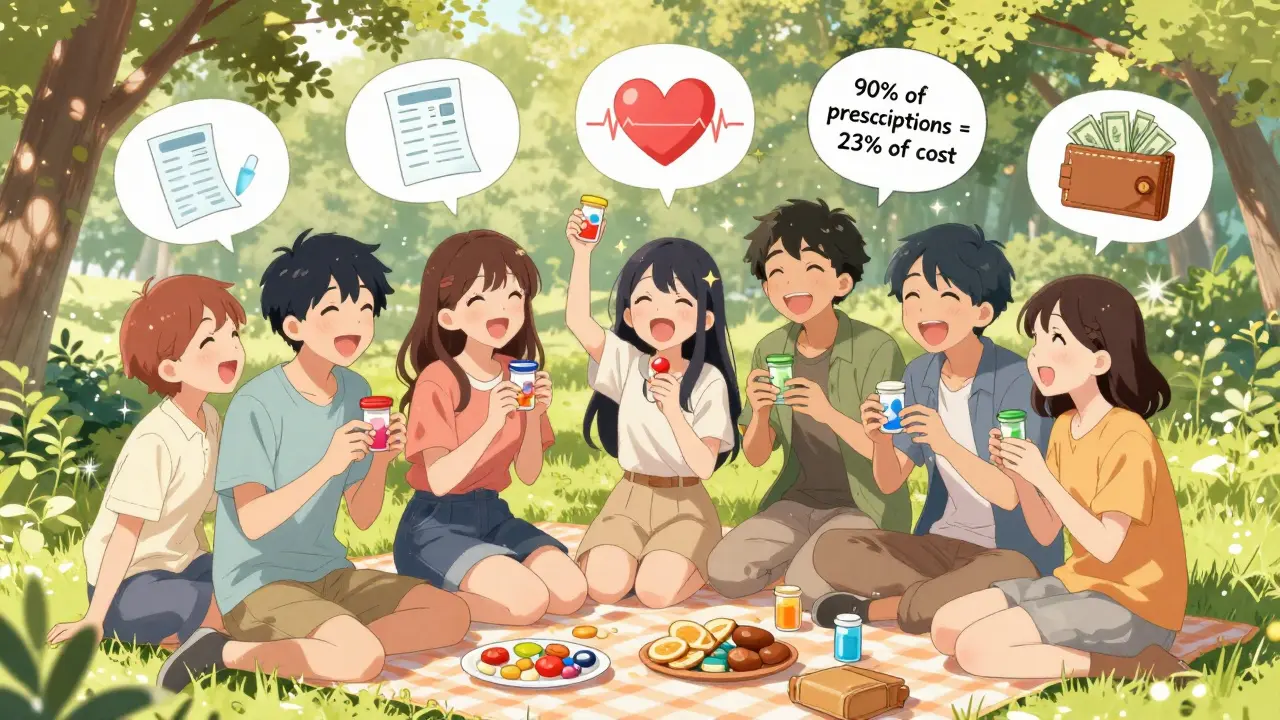
What about biosimilars? Are they the same?
Biosimilars are the next wave of generic-like drugs-but they’re not the same as traditional generics. While regular generics copy small-molecule drugs (like aspirin or metformin), biosimilars copy complex biologic drugs made from living cells-like insulin, Humira, or Enbrel. As of December 2023, the FDA had approved 37 biosimilars. They’re not exact copies (because biological products are too complex), but they’re highly similar and have no clinically meaningful differences in safety or effectiveness. The Congressional Budget Office estimates biosimilars could save the U.S. healthcare system $300 billion over the next decade. As more of these become available, expect even bigger savings for chronic conditions like arthritis, cancer, and diabetes.How to switch safely
Switching to a generic is usually simple:- Ask your doctor: “Is there a generic version of this drug?”
- Check with your pharmacist when you pick up your prescription. They’ll tell you if a generic is available and if it’s being substituted.
- Don’t panic if the pill looks different. Check the name on the label-it should match the generic version.
- Monitor how you feel. If you notice real changes in symptoms or side effects, contact your doctor. But remember: most changes are psychological, not physical.
- Keep taking your medication. Skipping doses because of cost is far riskier than switching to a generic.
The bigger picture: Why generics matter
Between 2012 and 2022, generic drugs saved the U.S. healthcare system $1.67 trillion. That’s not a small number. That’s enough to cover the entire annual healthcare budget for millions of people. Hospitals, pharmacies, insurers, and government programs all rely on generics to keep care affordable. Without them, many people would simply stop taking their meds. And that leads to higher costs down the road-emergency room visits, hospitalizations, lost workdays. The FDA’s 2023 Drug Competition Action Plan is pushing to remove barriers that delay generic entry-especially for complex drugs like inhalers and injectables. The goal? More competition. Lower prices. Better access. This isn’t about cutting corners. It’s about using science to make healthcare work for everyone.Are generic medications as safe as brand-name drugs?
Yes. The FDA requires generic drugs to meet the same strict standards for safety, strength, quality, and performance as brand-name drugs. They must prove bioequivalence-meaning they deliver the same amount of active ingredient into your bloodstream at the same rate. Adverse event reports for generics are proportional to their usage, showing no higher risk than brand-name drugs.
Why do generic pills look different?
Generic drugs can differ in color, shape, size, or packaging because those details are not part of the active ingredient. These differences are due to trademark laws (they can’t look exactly like the brand) and the use of different inactive ingredients like dyes or fillers. None of these changes affect how the medicine works.
Can I switch from a brand-name drug to a generic without my doctor’s approval?
In most cases, yes. Pharmacists are allowed to substitute a generic unless the prescription says “dispense as written” or “no substitution.” However, it’s always a good idea to talk to your doctor before switching, especially if you’re on a drug with a narrow therapeutic index (like warfarin or thyroid meds). They can help you monitor for any rare reactions.
Do generics take longer to work?
No. Generic drugs must meet the same bioequivalence standards as brand-name versions. That means they enter your bloodstream at the same rate and in the same amount. You won’t feel a delay in relief or effectiveness.
Are all generic drugs the same?
All FDA-approved generics for the same drug must meet the same standards. However, different manufacturers may produce slightly different versions. For most people, this doesn’t matter. But if you notice a change in how you feel after switching manufacturers, talk to your pharmacist or doctor. They can help you stick with one manufacturer if needed.
What if my insurance won’t cover the generic?
This is rare, but if it happens, ask your pharmacist if the generic is available at a lower cash price than your insurance copay. Many pharmacies offer generics for under $10-even without insurance. You can also ask your doctor to write a letter of medical necessity if you have a specific reason to avoid the brand-name drug.
Switching to generic medications isn’t about cutting corners. It’s about using proven science to make healthcare affordable. You’re not settling for less-you’re getting the same treatment at a fraction of the cost. And that’s something every patient deserves.
Comments (15)
Sharon Biggins
January 24, 2026 AT 05:11
i switched my blood pressure med to generic last year and honestly? i didn’t notice a difference. my bp is stable, no side effects, and i’m saving like $120 a month. small win for my wallet and my sanity.
John McGuirk
January 25, 2026 AT 17:04
they say generics are the same but who’s really checking? big pharma owns the fda. the fillers in generics are full of shit you can’t even pronounce. i’ve seen people crash after switching. it’s not coincidence.
Michael Camilleri
January 27, 2026 AT 08:40
you people think money is the problem but it’s not. the real issue is you’ve been trained to equate price with quality. you don’t need a generic pill to save money you need to stop believing in the myth of pharmaceutical superiority. it’s a psychological crutch. get over it
lorraine england
January 27, 2026 AT 20:22
my grandma’s on generic metformin and she says it’s easier to swallow because it’s smaller. she’s 82 and still hikes every weekend. if it works for her it works for anyone. no drama just results 😊
Himanshu Singh
January 28, 2026 AT 02:20
life is simple when you stop overthinking pills. if the science says it’s the same and the price is 1/10th? why not? 🤷♂️
Marlon Mentolaroc
January 29, 2026 AT 08:15
the 85% savings number is misleading. it’s only true for older drugs with tons of competition. new generics? not so much. and some insurers still nickel-and-dime you even with generics. don’t believe the hype.
Gina Beard
January 29, 2026 AT 10:18
the body remembers. even if the chemistry is identical, the experience isn’t. some people feel it. that’s not irrational.
Don Foster
January 29, 2026 AT 13:38
generic drugs are fine if you’re a peasant. i take brand name because i value precision. the difference between 80 and 125 percent bioequivalence? that’s not a margin that matters to someone who needs perfect control
Phil Maxwell
January 29, 2026 AT 20:23
my pharmacist switched me to generic lisinopril without asking. i was nervous but nothing changed. honestly? i’m glad they did. i’d have skipped doses if i had to pay full price.
Shelby Marcel
January 30, 2026 AT 23:19
i got my generic adderall and the pill looked like a tiny rainbow. i was so confused. turned out it was just a different dye. my focus is the same. kinda funny how we panic over color 😅
blackbelt security
January 31, 2026 AT 09:39
if you’re still paying full price for meds you’re leaving money on the table. it’s not a choice it’s a discipline. get the generic. your future self will thank you.
Patrick Gornik
January 31, 2026 AT 15:42
you’re all missing the real narrative. this isn’t about savings or science. it’s about the commodification of healing. the moment we reduce medicine to a cost-benefit spreadsheet we’ve already lost the soul of care. generics are a symptom of a broken system not a solution. the real fix? universal access. not cheaper pills.
Luke Davidson
February 1, 2026 AT 09:34
my dad had a stroke last year and they put him on generic warfarin. we were terrified. we checked the orange book, talked to the pharmacist, monitored his INR like hawks. after 3 months? same numbers, same stability. he’s alive and we saved $200 a month. thank god for science and common sense.
asa MNG
February 2, 2026 AT 19:31
they’re lying to you. the fillers in generics cause inflammation. i read it on a forum. my knees hurt after i switched. i went back to brand and boom pain gone. don’t trust the fda. they’re paid off. 💉🩸
Michael Camilleri
February 4, 2026 AT 17:51
you think your knee pain is from fillers? it’s from your fear. you believed the narrative so hard your body manifested it. that’s not medicine that’s psychology. stop blaming the pill and start owning your mind