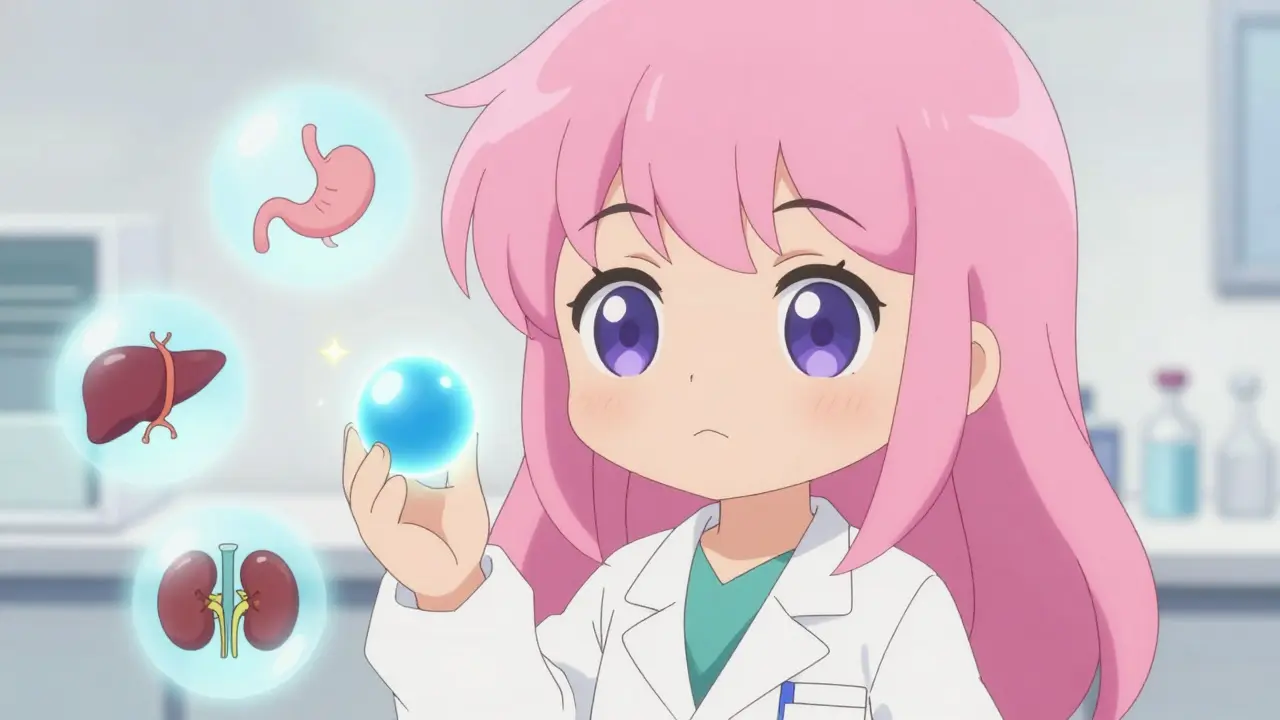
Have you ever wondered why one pill cures a headache while another lowers your blood pressure? Or why your doctor asks about your liver health before prescribing a new treatment? It isn't magic. It is biology meeting chemistry in a very precise dance. Understanding this dance-the field of pharmacology, defined as the study of how chemical agents affect biological systems-can make you a safer, smarter patient.
We take medications for granted. We swallow them, wait, and expect results. But inside your body, those pills are undergoing a complex journey. They travel through your bloodstream, bind to specific proteins, and trigger cascades of cellular signals. If we skip the details, we risk side effects or ineffective treatments. Let’s break down exactly what happens when you take a dose, using plain language and real-world examples.
The Two Pillars: Where Does the Drug Go?
To understand how a drug works, you have to look at two sides of the same coin. Think of it like sending a letter. First, you need to get the letter to the right house. Second, you need the person inside to read it and act on it. In medicine, these steps are called pharmacokinetics and how the body affects the drug.
Pharmacokinetics follows the acronym ADME. It tracks the drug’s physical journey:
- Absorption: How the drug enters your bloodstream. If you swallow a tablet, it dissolves in your stomach and small intestine. Some drugs work faster if taken on an empty stomach because food can block absorption. Others, like certain antibiotics, need food to prevent nausea.
- Distribution: How the drug spreads. Blood carries it to organs, muscles, and fat. Some drugs stay in the blood; others cross the blood-brain barrier to treat mental health conditions.
- Metabolism: How your body breaks the drug down. This mostly happens in the liver. Enzymes here chop the drug into smaller pieces so it can be removed. This is where genetic differences matter most.
- Excretion: How the drug leaves your body. Usually, this happens through urine (kidneys) or bile (feces).
If your kidneys aren’t working well, excretion slows down. The drug builds up in your system, leading to toxicity. This is why doctors check your creatinine levels before dosing. According to a 2023 study in JAMA Internal Medicine, adjusting doses based on kidney function reduced adverse drug events by 27%. That is not just a number; it means fewer hospital visits and less suffering.
The Target: What Does the Drug Do?
Once the drug reaches its destination, pharmacodynamics takes over. This is the study of the effect of a medicine on the body. Drugs don’t just float around causing chaos. They hunt for specific targets, usually proteins on or inside cells.
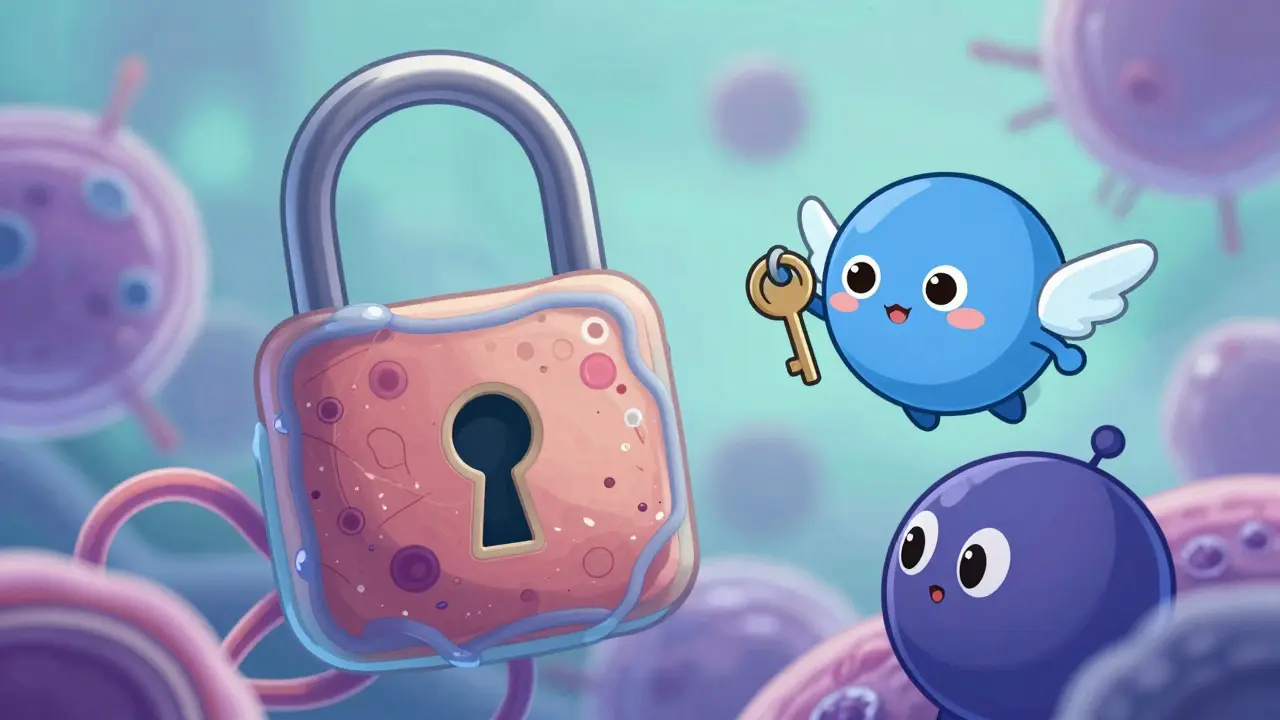
Imagine a lock and key. Your body has millions of locks (receptors). Natural chemicals in your body, like adrenaline or serotonin, are the keys that fit these locks. Drugs mimic these keys. They can do three main things:
- Agonists: These drugs fit the lock and turn it. They activate the receptor. For example, morphine acts as an agonist on opioid receptors in the brain, blocking pain signals.
- Antagonists: These drugs fit the lock but don’t turn it. Worse, they block the natural key from entering. Beta-blockers are classic antagonists. They sit on beta receptors in your heart and block adrenaline. This slows your heart rate and lowers blood pressure.
- Enzyme Inhibitors: Instead of receptors, some drugs target enzymes. Enzymes are workers that speed up chemical reactions. An enzyme inhibitor stops the worker. Statins, for instance, inhibit an enzyme in the liver that makes cholesterol. Less enzyme activity means lower cholesterol levels.
About 60% of all pharmaceuticals work by binding to receptors. Another 20% target enzymes. The rest use physical or chemical tricks, like magnesium citrate pulling water into your bowel to soften stool. Knowing whether your drug is an agonist or antagonist helps explain why it works-and why it might interact with other meds.
Mechanism vs. Mode: Why the Distinction Matters
You will often hear the terms "mechanism of action" (MOA) and "mode of action" (MoA) used interchangeably. They are not the same. Confusing them can lead to misunderstandings about how a treatment works.
| Aspect | Mechanism of Action (MOA) | Mode of Action (MoA) |
|---|---|---|
| Definition | The specific biochemical interaction at the molecular level. | The functional or anatomical change at the cellular or organ level. |
| Example: MAOI Antidepressant | Blocks the monoamine oxidase enzyme. | Increases serotonin and dopamine levels in the brain. |
| Example: Osmotic Laxative | Binds water molecules in the gut. | Softens stool and stimulates bowel movement. |
| Focus | Microscopic, molecular. | Macroscopic, physiological. |
Understanding MOA helps scientists design better drugs. Understanding MoA helps patients understand what to expect. If you know an MAOI blocks an enzyme, you understand why it interacts dangerously with tyramine-rich foods. The enzyme can’t break down tyramine, leading to a spike in blood pressure. That is the mode of action in action.
Why One Size Doesn’t Fit All
Here is the tricky part. Your body is unique. The standard dose listed on a bottle is an average. It assumes an average liver, average kidneys, and average genes. But averages don’t exist in real life.
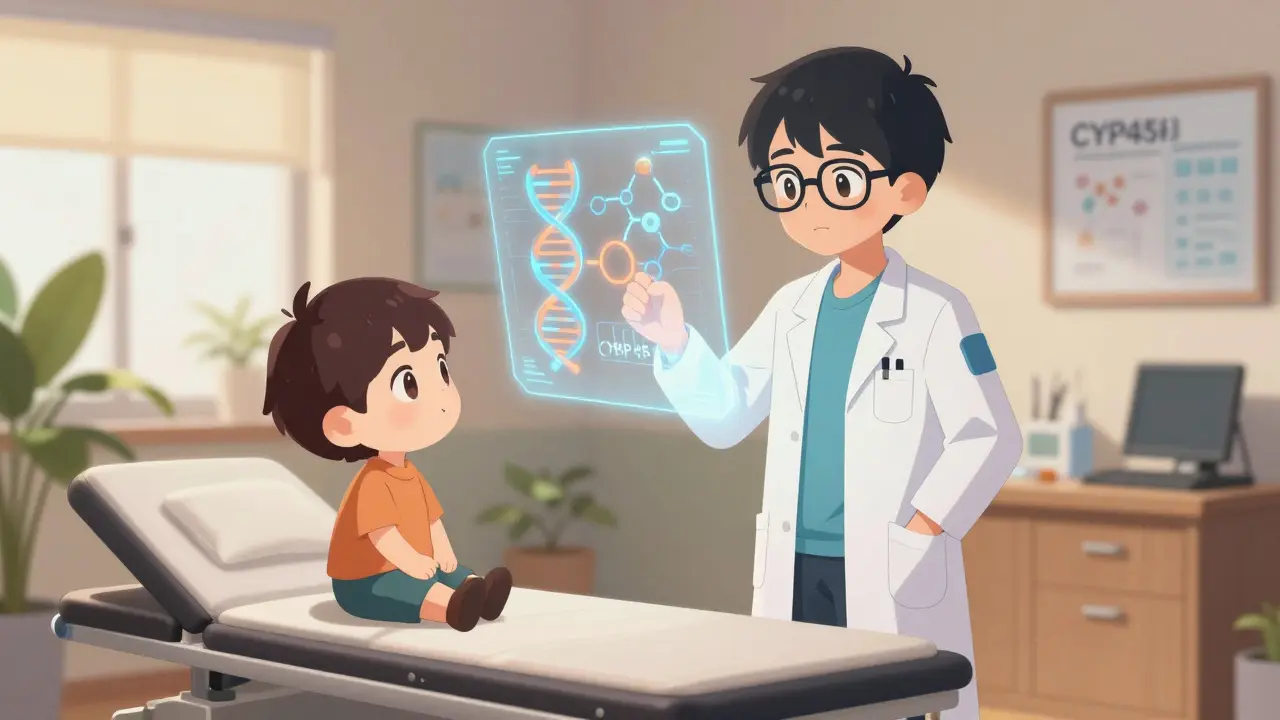
Genetics play a huge role. About 17% of people have variations in their CYP450 enzymes, the family of proteins responsible for metabolizing most drugs. If you are a "poor metabolizer," the drug stays in your system longer, increasing side effects. If you are an "ultra-rapid metabolizer," the drug clears too fast, making it ineffective. Dr. Emily Chen from the FDA noted in 2023 that these genetic differences make universal dosing recommendations challenging.
Consider warfarin, a common blood thinner. Its therapeutic window is narrow. Too little, and you risk clots. Too much, and you bleed. Warfarin is metabolized by the CYP2C9 enzyme. Genetic testing can reveal if you carry variants that slow this process. Patients who undergo this testing receive more accurate initial doses, reducing bleeding risks significantly. This is the promise of personalized pharmacodynamics.
Real-World Risks and Interactions
Medication errors often stem from ignoring pharmacological principles. Polypharmacy-taking multiple medications-is common, especially in adults over 65. Thirty-two percent of seniors take five or more drugs daily. Each drug adds a layer of complexity to your pharmacokinetic profile.
Drug interactions happen when one drug changes the ADME of another. For example, grapefruit juice inhibits CYP3A4, an enzyme that breaks down many statins and blood pressure meds. Drinking grapefruit juice can double the amount of drug in your blood, mimicking an overdose. This isn’t rare. It is a documented, serious risk.
Another danger is serotonin syndrome. This occurs when too many drugs increase serotonin levels simultaneously. Combining an MAOI (which stops serotonin breakdown) with an SSRI (which increases serotonin release) can be fatal. Healthcare providers must understand both the mechanism and the cumulative effect. A 2023 report highlighted cases where delayed recognition of this syndrome led to severe outcomes because the underlying pharmacodynamic overlap was missed.
The Future: AI and Precision Medicine
Pharmacology is evolving rapidly. Artificial intelligence is now predicting how drugs bind to proteins with high accuracy. DeepMind’s AlphaFold 3, released in 2024, predicts protein-drug binding configurations with 89% accuracy. This speeds up drug discovery and helps identify potential side effects before human trials begin.
Regulators are also changing. The FDA’s 2023 guidance encourages using real-world data to refine pharmacokinetic models. Instead of relying solely on controlled trials, researchers can see how drugs perform in diverse populations with varying genetics and lifestyles. This shift aims to bridge the gap between lab results and clinical reality.
However, complexity brings challenges. As models become more sophisticated, the knowledge gap between researchers and clinicians widens. There is a projected 25% increase in demand for pharmacology specialists by 2030 to help interpret this data. For patients, this means more personalized care-but also more questions to ask your doctor.
Practical Steps for Safer Medication Use
You don’t need a degree in pharmacology to stay safe. You just need to be informed. Here is how to apply these basics to your daily life:
- Know your kidney and liver status. Ask your doctor about your renal and hepatic function tests. These dictate how quickly you clear drugs.
- List all supplements. Herbal remedies like St. John’s Wort induce CYP enzymes, speeding up the metabolism of many drugs, including birth control and antidepressants. They are not harmless.
- Understand the timing. Take medications exactly as prescribed. Food, alcohol, and other drugs can alter absorption and metabolism. Consistency maintains stable blood levels.
- Ask about genetics. If you experience unusual side effects or lack of efficacy, ask if pharmacogenetic testing is appropriate. It could explain why standard doses fail you.
- Read the label, but verify. Package inserts are dense. Use reputable sources like the NIH or Mayo Clinic to decode jargon. If you don’t understand how a drug works, ask your pharmacist.
Medications are powerful tools. They save lives and improve quality of life. But power requires respect. By understanding the basic mechanics of pharmacokinetics and pharmacodynamics, you move from passive consumer to active participant in your health. You catch errors early. You avoid dangerous interactions. And you trust your treatment plan with confidence.
What is the difference between pharmacokinetics and pharmacodynamics?
Pharmacokinetics describes what the body does to the drug (absorption, distribution, metabolism, excretion). Pharmacodynamics describes what the drug does to the body (binding to receptors, inhibiting enzymes, producing therapeutic effects).
Why do some drugs cause side effects in only certain people?
Genetic variations in liver enzymes, particularly the CYP450 family, affect how quickly individuals metabolize drugs. Poor metabolizers may accumulate toxic levels, while rapid metabolizers may not reach effective concentrations. Age, kidney function, and other medications also influence individual responses.
Can I drink grapefruit juice with my medications?
It depends on the medication. Grapefruit juice inhibits the CYP3A4 enzyme, which metabolizes many drugs, including statins and blood pressure medications. This can lead to dangerously high drug levels in the blood. Always check with your pharmacist or doctor before consuming grapefruit products with prescription meds.
What is a therapeutic index?
The therapeutic index measures the safety margin of a drug. It is the ratio between the toxic dose and the effective dose. Drugs with a narrow therapeutic index, like warfarin or lithium, require careful monitoring because small changes in dose can lead to toxicity or ineffectiveness.
How do biologics differ from traditional small-molecule drugs?
Biologics are large, complex molecules derived from living organisms, such as antibodies or proteins. They often target specific immune pathways, like interleukins or TNF-alpha, rather than general receptors. Traditional drugs are smaller, synthetic molecules that typically target enzymes or broad receptor classes. Biologics usually require injection or infusion and cannot be taken orally.