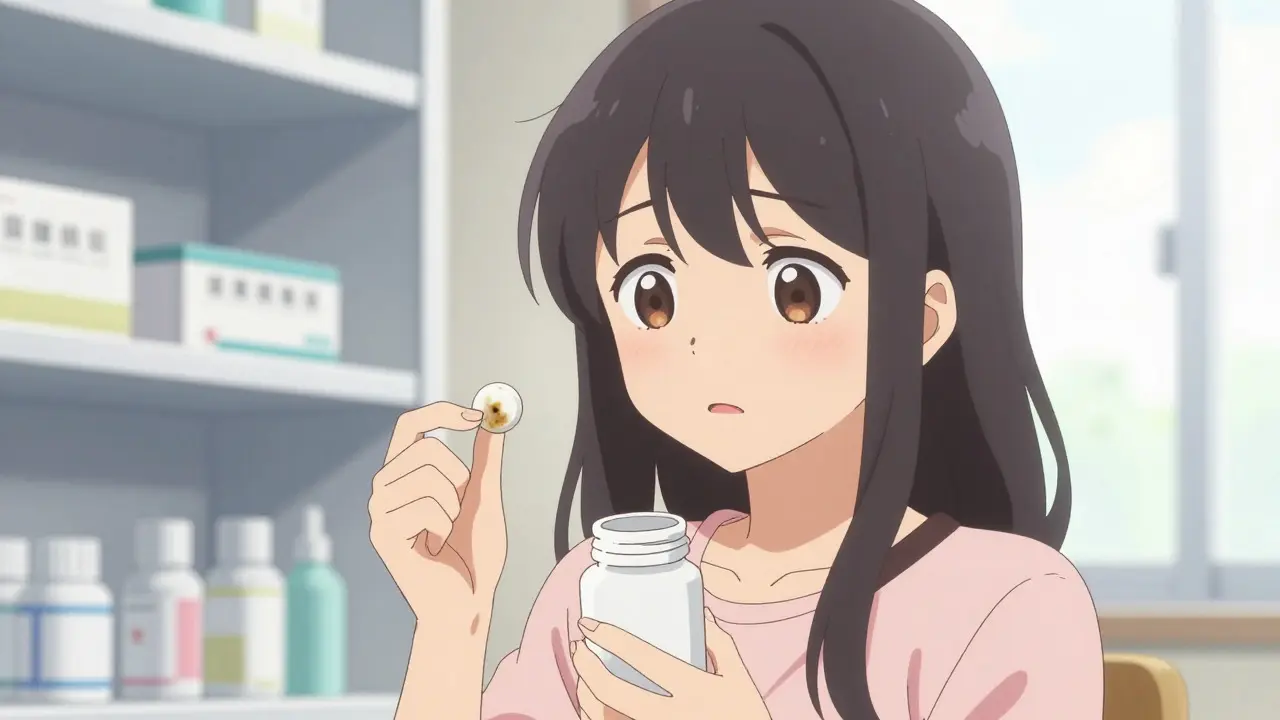
Did you know that a pill turning slightly yellow might signal more than just age? It could mean the active ingredient is breaking down. While most of us check the expiration date on the bottle, few actually look at the medicine inside. This gap in habit creates a real risk. The World Health Organization estimates that over 10% of expired medications show significant physical changes that affect their safety. If you have ever wondered whether those brown spots on your white pills or the weird smell from your old cream mean they are bad, you are not alone. Recognizing these subtle shifts in color, odor, and texture is a critical skill for anyone managing their own health or caring for others.
Why Physical Changes Matter More Than Dates
The expiration date is a manufacturer's guarantee of potency under specific storage conditions. However, it is not a magic switch that turns a safe drug into poison overnight. Sometimes, a drug remains stable well past its date; other times, it degrades long before. This is why relying solely on the calendar is risky. Physical inspection acts as your second line of defense. When a tablet crumbles, a liquid turns cloudy, or a cream separates, these are visible signs that the chemical structure may be compromised. The U.S. Food and Drug Administration (FDA) requires manufacturers to test these exact parameters-physical appearance, odor, and texture-to ensure products remain usable until the printed date. By learning to spot these changes yourself, you add a layer of personal safety that no label can provide.
What to Look For in Solid Dosage Forms
Tablets and capsules make up the bulk of household medications, and they have distinct warning signs. For tablets, discoloration is the most common issue. In a major five-year stability study, nearly 70% of expired solid samples showed some form of color change. White aspirin or paracetamol tablets should stay pure white. If you see yellowing, browning, or dark spots, the drug is likely oxidizing. Tetracycline antibiotics, for example, often turn from pale yellow to dark brown as they degrade, becoming not just ineffective but potentially toxic if ingested in high amounts.
Capsules present a different challenge. The shell itself might look fine, but the powder inside tells the story. Hygroscopic drugs like amoxicillin absorb moisture from the air. If you open a capsule and the powder feels clumpy, caked, or hard instead of loose and free-flowing, it has absorbed too much humidity. This "caking" means the drug’s solubility has changed, which can prevent your body from absorbing the correct dose. Always check the texture of the contents. If it sticks together or feels damp, toss it out.
| Dosage Form | Sign of Degradation | Possible Cause | Action Required |
|---|---|---|---|
| Tablets | Yellowing, browning, or dark spots | Oxidation or light exposure | Discard immediately |
| Tablets | Cracking or crumbling edges | Loss of binding agents due to heat/humidity | Discard; potency is uneven |
| Capsules | Clumping or caking of powder | Moisture absorption (hygroscopy) | Discard; absorption rate altered |
| Capsules | Discolored shell (fading or staining) | Chemical reaction with contents | Inspect contents; discard if powdery color changes |
Identifying Issues in Liquids and Ointments
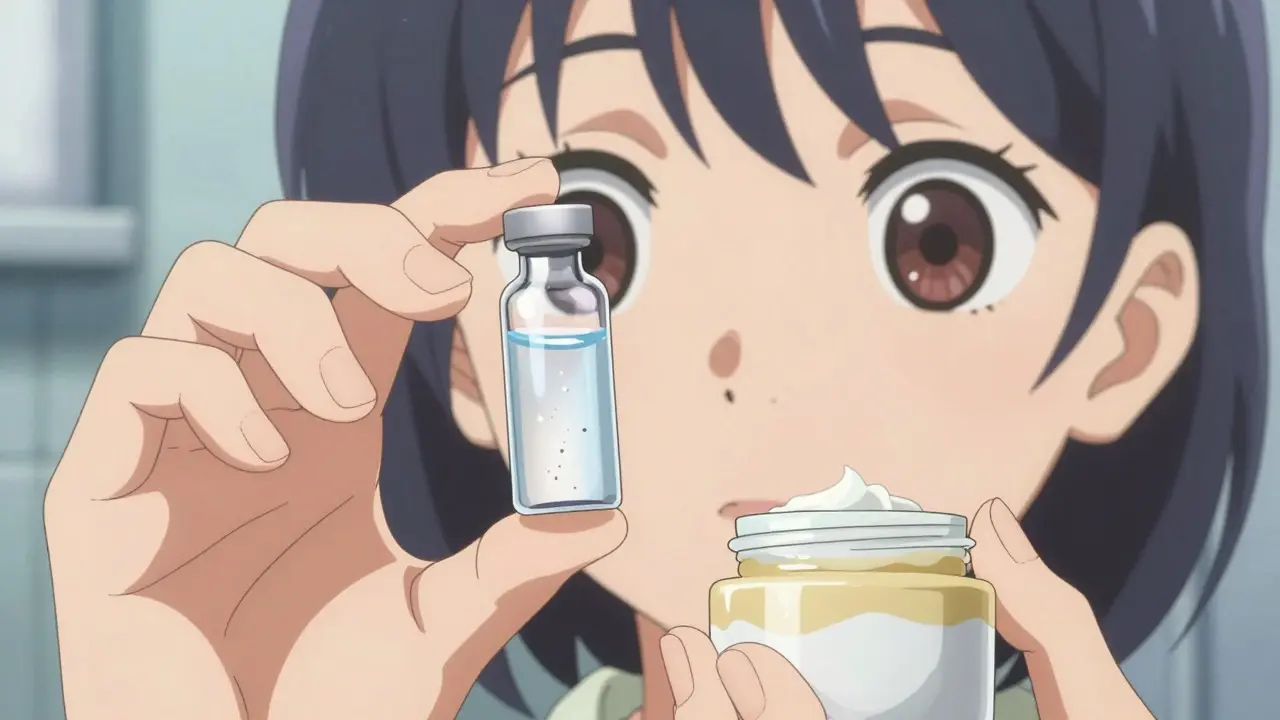
Liquid medications like syrups, suspensions, and eye drops require a different set of eyes. Cloudiness is a major red flag. Clear solutions, such as certain antihistamines or eye drops, should remain transparent. If they turn milky or develop floating particles, the solution has likely separated or grown microbial contamination. The FDA sets strict limits on particulates in injectables and ophthalmic solutions, but even oral liquids can become unsafe when foreign particles appear. Shake the bottle gently. If chunks settle at the bottom and do not dissolve back into suspension after shaking, the formulation has broken down.
Semisolid formulations like creams and ointments are notorious for phase separation. A stable lotion stays uniform. An expired one often splits into an oily layer and a watery layer. You might see this as "oil-off" where grease pools on top, or "water-off" where water seeps out. Mupirocin ointment, a common antibiotic cream, was documented to separate visibly after being stored beyond its expiration date. If your hydrocortisone cream looks thinner or smells rancid, it is time to replace it. Rancidity indicates the fats in the base have oxidized, which can irritate skin rather than heal it.
The Role of Odor in Detection
Your nose is surprisingly effective at detecting chemical breakdown. Most modern medications are designed to be odorless or have a mild, consistent scent. If a once-neutral pill starts smelling sharp, acidic, or like vinegar, something is wrong. Acetaminophen, for instance, should have no strong smell. If it smells bitter or chemical, it may be degrading into salicylic acid. Creams and ointments rely heavily on fragrance masks. When the pleasant lavender or unscented profile turns sour, fishy, or rancid, the preservatives have failed. In forensic science, analysts routinely document "any observed odor" as a key identifier for degraded substances. If a medicine smells different from the last time you used it, trust your instinct. It is usually a sign of instability.
Best Practices for Home Inspection
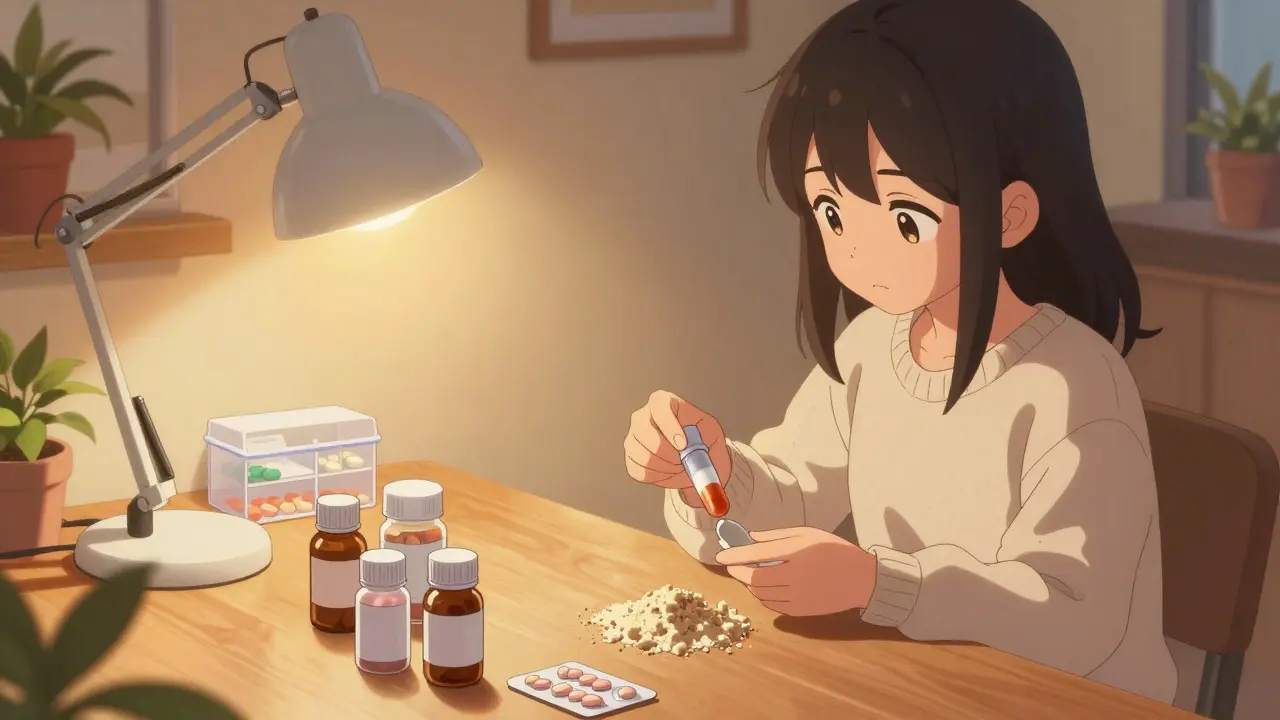
You don't need a laboratory to perform a reliable check. Consistency is key. Set a monthly reminder to go through your medicine cabinet. Use good lighting-natural daylight or a bright white lamp works best. Avoid inspecting pills in dim corners or under yellow-tinted bulbs, which can mask subtle color shifts. Hold the medication against a plain white background. This contrast makes faint yellowing or grayish tints much easier to spot. For liquids, hold the bottle up to the light to check for clarity and particle count. Keep a simple log if you manage multiple prescriptions. Note the date you opened the bottle and any observations. This helps you track how fast a specific product degrades in your home environment.
Storage conditions play a huge role in how quickly these changes occur. Heat accelerates degradation. Keeping meds in the bathroom cabinet next to a hot shower is a common mistake. Humidity promotes caking in capsules and mold growth in liquids. Store most medications in a cool, dry place away from direct sunlight. The ideal temperature range is between 20°C and 25°C. Fluctuations above 25°C can speed up physical changes by more than double. If you live in a humid climate, consider using a desiccant packet in your medicine box to control moisture levels.
When to Trust Your Eyes vs. When to Call a Pharmacist
While visual inspection is powerful, it has limits. Human eyes are not perfect instruments. Studies suggest that visual assessment of drug color has only about 65% accuracy compared to laboratory equipment. Some drugs change color naturally without losing potency, while others lose effectiveness before looking bad. For example, some iron supplements are naturally dark, and slight variations might be normal. If you are unsure, do not guess. Call your local pharmacist. They have access to reference images and professional guidelines. Bring the medication with you if possible. A quick conversation can save you from taking an ineffective dose or risking a side effect from a degraded compound. Remember, when in doubt, throw it out. The cost of a new prescription is far less than the cost of treating an adverse reaction.
Is it safe to take expired medication if it looks normal?
Generally, yes, for many non-critical medications, if stored properly. However, "looks normal" does not guarantee full potency. Critical drugs like insulin, nitroglycerin, or antibiotics should be discarded after expiration regardless of appearance because small changes in concentration can be dangerous. For minor ailments, a slightly expired pill that looks intact is often still effective, but always consult a pharmacist for high-risk treatments.
Why did my white tablet turn yellow?
Yellowing usually indicates oxidation, often caused by exposure to light or heat. This is common in drugs containing phenol or certain vitamins. While sometimes cosmetic, it can also signal that the active ingredient is breaking down. If the yellowing is uneven or accompanied by a strange smell, discard the medication.
What does "caking" mean in capsules?
Caking refers to the powder inside a capsule sticking together into hard lumps due to moisture absorption. This changes how the drug dissolves in your stomach, leading to unpredictable absorption rates. If the powder doesn't flow freely, the capsule should be discarded.
How long should I keep opened liquid medications?
Check the label for a "use within X days of opening