
Why Medication Adherence Matters More Than You Think
Skipping a pill here and there might seem harmless-until it isn’t. If you’re managing a chronic condition like high blood pressure, diabetes, or asthma, even small gaps in taking your meds can lead to serious complications. The World Health Organization says more than half of people with long-term illnesses don’t take their medicines as prescribed. That’s not just about forgetting-it’s about risk. Missed doses can send you back to the hospital, speed up disease damage, and cost the healthcare system billions every year. The truth? Your health doesn’t care if you were busy, forgot, or thought the pill wasn’t working. It only responds to what you actually take.
What Does “Adherence” Really Mean?
Adherence isn’t just about filling your prescription. It’s about three things: initiation (did you start the medicine?), implementation (are you taking it the right way, at the right time?), and persistence (did you keep going long enough?). A lot of tools measure just one piece, but real adherence needs all three. For example, you might fill your diabetes meds every month (persistence), but only take them when you feel unwell (poor implementation). That’s not adherence-it’s symptom-based dosing, and it won’t protect you from long-term damage.
The 5-Point Checklist to Track Your Adherence
You don’t need fancy gadgets or apps to know if you’re staying on track. Start with this simple, no-cost checklist. Answer honestly-this is for you, not your doctor.
- Do you take your meds at the same time every day? Consistency matters more than perfection. If your blood pressure pill is supposed to be taken in the morning, but you sometimes take it at night, your body doesn’t get stable levels. Set a phone alarm or link it to a daily habit like brushing your teeth.
- Have you missed a dose in the last 30 days? Don’t say “only once.” Be specific. Did you skip it because you were traveling? Afraid of side effects? Ran out? Write it down. Patterns matter more than single mistakes.
- Do you still have pills left when your prescription runs out? If you refill your statin every 30 days but always have 7 pills left, you’re not taking it as prescribed. That’s a red flag. Even if you feel fine, your arteries aren’t.
- Do you skip doses if you feel fine? This is the biggest trap. High blood pressure doesn’t always cause symptoms. Diabetes doesn’t always make you tired. If you stop because you “feel okay,” you’re playing Russian roulette with your organs.
- Can you explain why each medicine is prescribed to you? If you can’t say why you’re taking metformin or lisinopril, you’re less likely to stick with it. Talk to your pharmacist. Write it on a sticky note. Knowledge builds ownership.
How Doctors Measure Adherence (And Why It’s Not Perfect)
Your doctor probably doesn’t ask you directly if you’re taking your meds. They use indirect methods. The most common one is Proportion of Days Covered (PDC). It’s calculated by looking at how many days’ worth of medication you picked up over a set period. For example, if you were supposed to take a pill every day for 90 days and you filled enough to cover 75 days, your PDC is 83%. The standard goal? 80% or higher. But here’s the catch: PDC assumes you took every pill you bought. You might have bought them, then tossed them in a drawer. That’s why doctors also use tools like the Medication Adherence Report Scale (MARS-5)-a short 5-question survey that asks how often you forget, skip, or cut doses. It’s quick, free, and surprisingly accurate-when you’re honest.
What Doesn’t Work (And Why)
Don’t rely on pill counts alone. If you show your doctor a bottle with 5 pills left out of 30, they might think you’re doing great. But what if you took 3 pills in one day to “catch up,” then skipped the next four? The count doesn’t show that. Same with memory. People remember taking pills they took, but forget the ones they didn’t. Studies show patients report being 30% more adherent than they actually are. Electronic caps that log when you open your bottle are accurate-but expensive and not practical for most people. Prescription refill data is useful for big systems, but if you use three different pharmacies, your data gets split. That’s why 35% of Medicare patients have fragmented records.
How to Fix Gaps Without Shame
Adherence isn’t about guilt. It’s about problem-solving. If you’re missing doses, ask yourself: Is it the cost? The side effects? The complexity? Too many pills at once? Too many times a day? Each problem has a fix. If pills are too expensive, ask about generics or patient assistance programs. If you forget, use a pill organizer with alarms. If you’re scared of side effects, talk to your doctor-don’t just stop. One study showed that using the BATHE method (a simple way for doctors to ask: “What’s been going on for you?”) increased honest answers about missed doses by nearly half. You don’t need to be perfect. You just need to be open.
Tools That Actually Help
You don’t need tech to stay on track-but if you like it, here’s what works:
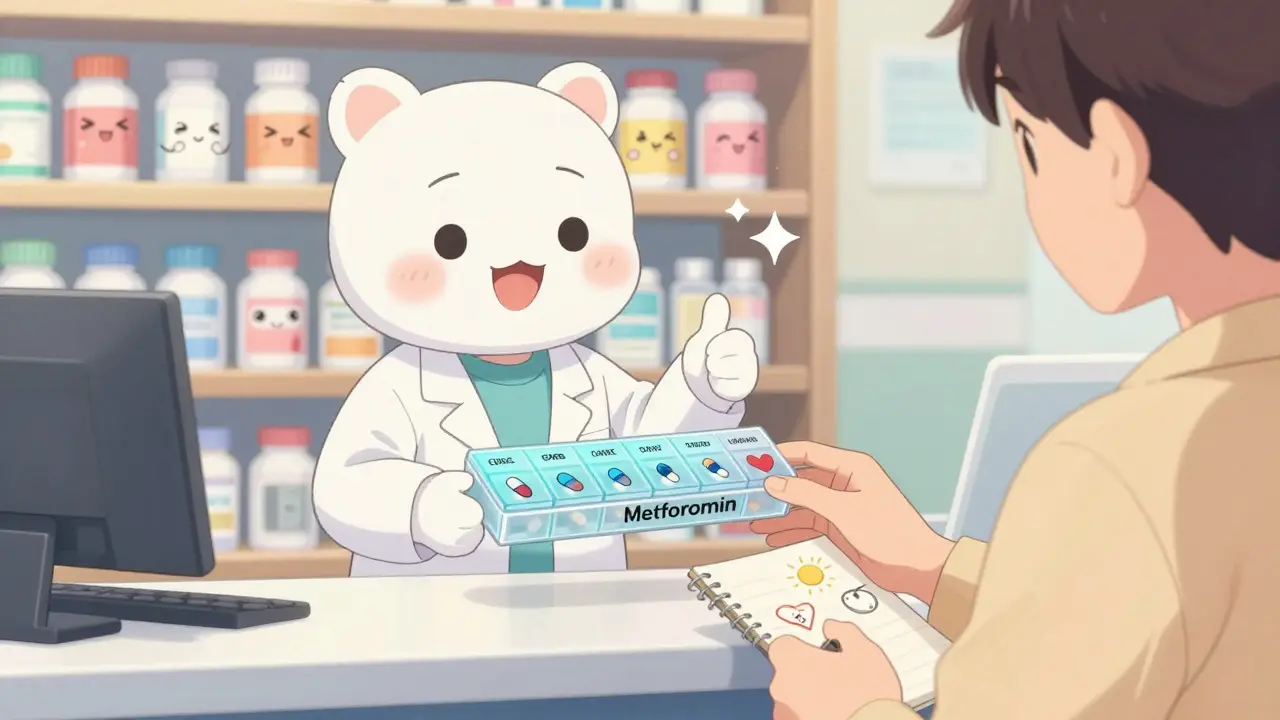
- Pill organizers with days of the week and morning/night slots. Simple, cheap, and reliable.
- Phone reminders with labels like “AM: Blood pressure pill” instead of just “Med.”
- Medication apps like Medisafe or MyTherapy that send alerts and let you log doses. Some even notify a family member if you miss a dose.
- Pharmacy services like CVS or Walgreens’ automatic refill and delivery. No more running out.
- Smart bottles like AdhereTech, which use cellular tech to send alerts if you don’t open the cap. Still pricey, but growing in clinics.

When to Talk to Your Doctor
If you’ve missed more than two doses in a month, or if you’ve stopped taking a medicine for any reason, tell your doctor. Don’t wait for your next appointment. A quick call or message can prevent a crisis. Say: “I’ve been having trouble taking my meds. Can we talk about making it easier?” That’s all it takes. Doctors aren’t judging you-they’re trying to keep you out of the hospital. And if your doctor doesn’t ask about adherence, ask them. It’s your health. You have the right to be supported.
What’s Changing in 2026
Health systems are starting to pay for adherence. Medicare plans now get bonuses up to $1,200 per patient if they help people stay on their meds for diabetes, blood pressure, or cholesterol. That means more pharmacies are offering free adherence coaching, and clinics are using AI tools to predict who’s at risk of dropping off. In 2025, new guidelines will start factoring in things like transportation, food access, and housing-because if you can’t get to the pharmacy or afford healthy food, taking pills is harder. The future isn’t just about tracking doses. It’s about removing the barriers that make adherence feel impossible.
Your Next Step
Take out your pill bottle right now. Count how many doses you have left. Check your calendar: when was the last time you took your meds on time? Write down one thing that’s making it hard. Then, pick one small fix: set a daily alarm, ask for a pill organizer, or schedule a 5-minute chat with your pharmacist. You don’t need to fix everything at once. Just start. Your future self will thank you.
Comments (11)
Carolyn Whitehead
February 1, 2026 AT 08:09
I used to skip my blood pressure meds when I felt fine until my mom had a stroke. Now I set three alarms and keep my pills next to my toothbrush. It’s not glamorous but it works.
you don’t need to be perfect, just consistent.
Diksha Srivastava
February 3, 2026 AT 00:18
This is exactly what I needed to read! I’m from India and my grandma takes 7 different pills but never misses one-she calls them her ‘little warriors.’ I’m starting to use the pill organizer too. You got this!
April Allen
February 4, 2026 AT 05:51
The PDC metric is fundamentally flawed because it conflates acquisition with ingestion. Real adherence requires pharmacokinetic validation-something most primary care systems lack the infrastructure to measure. Without bioavailability tracking, we’re optimizing for pharmacy inventory, not patient outcomes. We need decentralized wearable monitoring integrated with EHRs, not just reminders.
Russ Kelemen
February 4, 2026 AT 16:59
I love how this breaks it down without shaming. I’ve worked with patients who feel guilty for forgetting-like it’s a moral failure. But it’s a systems problem. If your meds cost $400/month and you work two jobs, no amount of willpower fixes that. The real win is when clinics start asking: ‘What’s getting in your way?’ not ‘Why didn’t you take it?’
Beth Beltway
February 6, 2026 AT 12:32
People think they’re being smart by skipping doses when they 'feel fine.' That’s not health management, that’s self-delusion. You wouldn’t stop charging your phone because the battery icon says 80%. Your body isn’t a suggestion box. If you’re not taking it as prescribed, you’re not managing your condition-you’re gambling with your organs.
Mike Rose
February 7, 2026 AT 02:27
lol i just take em when i remember. if i feel good i dont need em right? my doc says im fine so who cares. its not like i got time to be a pharmacist
Jodi Olson
February 8, 2026 AT 16:42
Adherence is not a behavioral flaw-it’s a structural failure. The burden of remembering, affording, and understanding complex pharmacological regimens is placed entirely on the individual, while the systems that create the barriers-insurance labyrinths, pharmaceutical pricing, fragmented care-are never interrogated. We praise compliance while ignoring coercion. The checklist is useful, but it’s a bandage on a hemorrhage.
Sidhanth SY
February 9, 2026 AT 06:23
I’ve been using Medisafe for 6 months now. My mom and I both use it-she’s 72, I’m 28. We get notifications if the other misses a dose. It’s weird at first but now it feels like we’re in it together. Also, Walgreens delivers my statins now. No more running out.
Adarsh Uttral
February 10, 2026 AT 10:53
i used to have like 10 pills a day and i kept forgettin. got a pill box with am/pm slots and now i just grab it after coffee. no alarms, no app. simple works. also i told my doc i cant afford the brand name-he gave me a coupon. life changer
Yanaton Whittaker
February 11, 2026 AT 18:47
AMERICA NEEDS TO STOP MAKING MEDS SO EXPENSIVE. IF YOU CAN’T AFFORD IT, YOU SHOULD GET IT FREE. WHY IS THIS EVEN A CONVERSATION? WE’RE THE RICHEST COUNTRY ON EARTH 🇺🇸💊 #HEALTHCAREISAHUMANRIGHT
Natasha Plebani
February 13, 2026 AT 15:15
The ontological disconnect between clinical adherence metrics and lived experience is profound. PDC and MARS-5 operationalize adherence as quantifiable behavior, yet they fail to account for epistemic agency-the patient’s internal negotiation between biomedical authority and somatic intuition. When someone skips a dose because they feel ‘off’ despite normal lab values, they’re not noncompliant-they’re engaging in embodied epistemology. The checklist is pragmatic, but the deeper issue remains: medicine treats bodies as data points, not subjects. Until we acknowledge that, adherence will remain a symptom of power, not wellness.