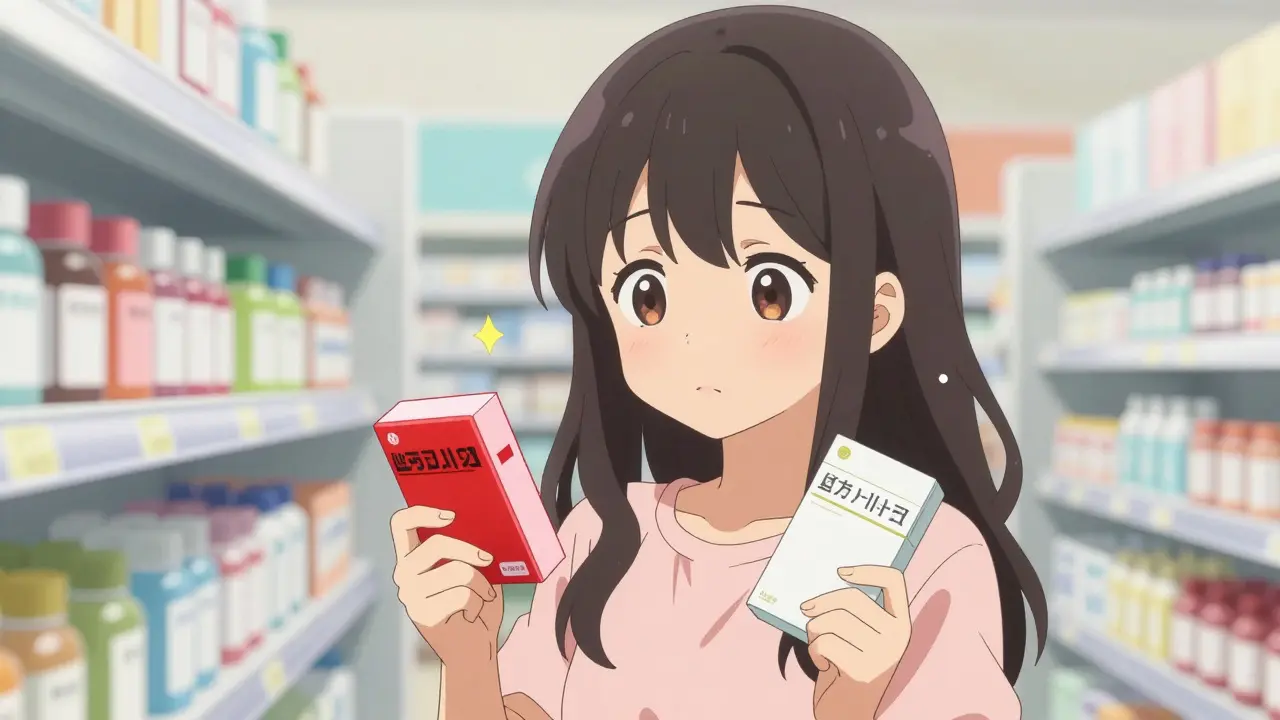
Walk down the pharmacy aisle, and you’ll see it every time. On the left, a box of Tylenol with the bright red logo you’ve trusted since childhood. Right next to it, a plain white box labeled "Acetaminophen" for less than half the price. It feels like a trap, doesn’t it? Why would anyone sell something that works just as well for so much less? The short answer is marketing. But if you’re trying to stretch your budget without risking your health, understanding this difference isn't just smart-it’s essential.
You don’t need a degree in pharmacology to figure out whether the cheap stuff actually works. In fact, the science says it does. Store-brand over-the-counter (OTC) medications are not inferior copies; they are required by law to be therapeutic equivalents to their name-brand counterparts. The savings are real, but knowing *why* they are cheaper-and when you might still want to pay more-is key to making the right choice for your body and your wallet.
The Science Behind the Savings
To understand why store brands cost so much less, we have to look at what’s inside the bottle. When you buy Ibuprofen, which is the active ingredient in Advil, you are buying a specific chemical compound that reduces inflammation and pain. Whether that ibuprofen comes from an Advil bottle or a Walmart Equate bottle, the molecule is identical. It has the same structure, the same weight, and the same effect on your body.
The U.S. Food and Drug Administration (FDA) requires that all OTC drugs, whether brand-name or store-brand, meet strict standards for safety, strength, quality, and manufacturing. This process was streamlined by the Hatch-Waxman Act of 1984, which allowed manufacturers to prove their products were "bioequivalent" to existing drugs without repeating expensive clinical trials. Bioequivalence means the drug delivers the same amount of active ingredient into your bloodstream within the same timeframe. Studies show the difference in absorption between brand and generic/store-brand drugs is typically less than 3.5%, a margin too small for most people to notice.
So, where does the brand name company get its higher price tag? Research and development costs. The original manufacturer spent millions developing the formula and running initial safety tests. Once the patent expires, other companies can step in and make the exact same active ingredient. They skip the R&D bill, passing those savings directly to you. You aren’t paying for better medicine; you’re paying for the advertising campaign that convinced you the red box is special.
What Actually Changes: Inactive Ingredients
If the active ingredient is the same, why do some people swear by the name brand? The answer lies in the "inactive ingredients." These are the fillers, binders, colors, flavors, and preservatives that hold the pill together or make the liquid taste like cherry instead of chalk. While these components don’t treat your illness, they can affect how you experience the medication.
- Pill Size and Shape: A store-brand tablet might be slightly larger or a different color due to trademark laws preventing them from copying the brand’s look exactly. If you have trouble swallowing large pills, this matters.
- Dyes and Allergens: Some name brands use specific dyes or gluten-containing binders. Store brands might use alternatives. If you have sensitive skin or allergies, check the inactive list carefully.
- Taste and Texture: For liquid cough syrups or children’s medicines, the flavoring agent is crucial. A child who refuses to drink a bitter-tasting generic syrup won’t get better, regardless of how effective the active ingredient is.
For most adults taking standard pain relievers or allergy meds, these differences are negligible. But if you’ve had a bad reaction to a generic before-like stomach upset or a rash-it might be due to one of these inactive components, not the medicine itself.
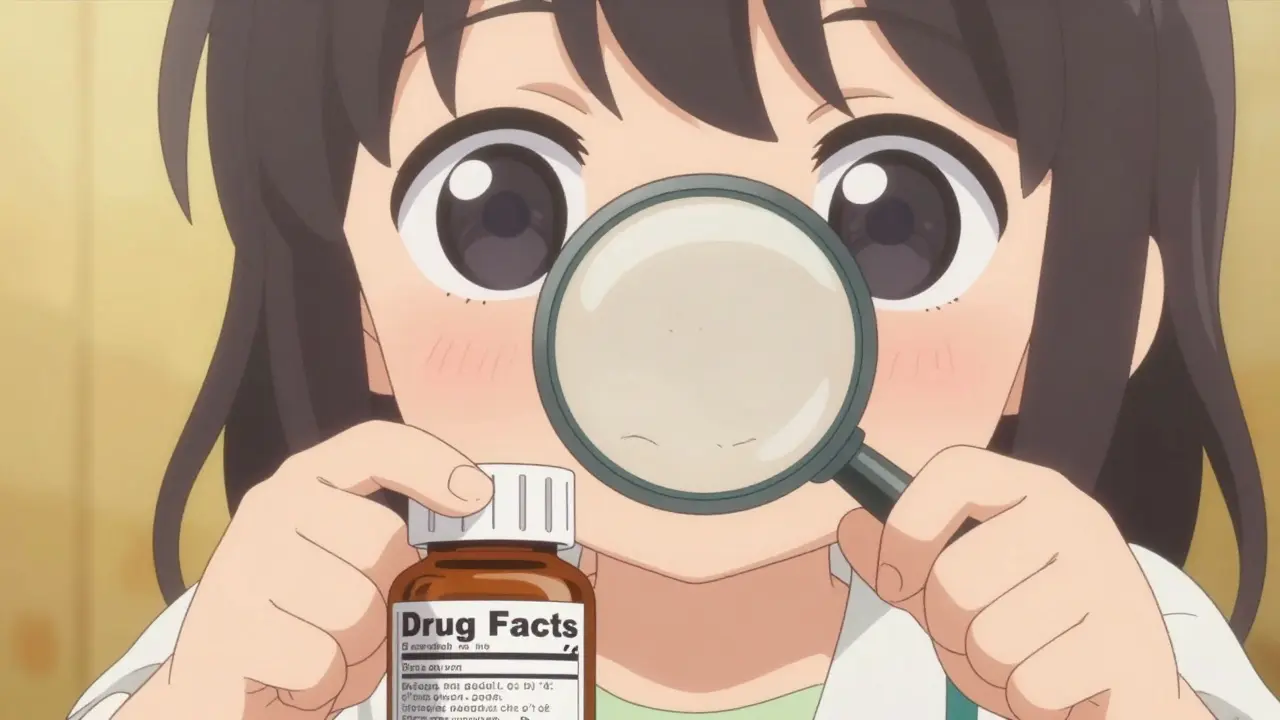
How to Compare Like a Pro
You don’t need to guess. Every OTC product in the United States must display a standardized "Drug Facts" label. This is your cheat sheet. Here is how to use it to verify that a store brand is truly equivalent to the name brand you usually buy.
- Find the Active Ingredient: Look at the top of the Drug Facts panel. It will say "Active ingredient" followed by the chemical name (e.g., Acetaminophen, Loratadine, Diphenhydramine). Ignore the brand name on the front of the box entirely.
- Check the Strength: Ensure the milligram (mg) amount per dose is identical. For example, if your usual brand is 500mg per tablet, make sure the store brand is also 500mg. Sometimes store brands offer lower strengths, which you’d have to take more of to get the same effect.
- Verify the Dosage Form: Make sure both are tablets, capsules, liquids, or gels. A dissolving caplet acts differently in the stomach than a hard tablet, even if the active ingredient is the same.
- Compare Prices Per Unit: Don’t just look at the total price. Calculate the cost per pill or per ounce. Often, store brands are 80-85% cheaper, but occasionally sales bring name brands down to competitive prices.
Pharmacists recommend keeping a mental note of the active ingredients you trust. Once you know that Claritin contains loratadine, you can confidently grab any box labeled "Loratadine" knowing it will work the same way.
| Feature | Name Brand (e.g., Advil) | Store Brand (e.g., Equate Ibuprofen) |
|---|---|---|
| Active Ingredient | Ibuprofen 200mg | Ibuprofen 200mg (Identical) |
| FDA Approval | Full NDA Process | ANDA Process (Bioequivalent) |
| Inactive Ingredients | Proprietary mix (dyes, binders) | Different mix (may vary in size/color) |
| Average Cost | $10.00 - $15.00 | $3.00 - $5.00 (60-80% savings) |
| Therapeutic Effect | High | High (Clinically Equivalent) |
When Might You Stick With the Name Brand?
While store brands are safe and effective for the vast majority of consumers, there are rare scenarios where sticking with the name brand makes sense. These exceptions are usually personal preference rather than medical necessity.
First, consider consistency. If you have been using a specific brand for years and it works perfectly, switching introduces a variable. Your body is used to that specific formulation of inactive ingredients. While unlikely, a change could theoretically cause mild digestive issues or allergic reactions in highly sensitive individuals. If you are managing a chronic condition with OTC aids, maintaining consistency can reduce anxiety about potential side effects.
Second, think about delivery systems. Some name brands invest in advanced delivery technologies, such as extended-release capsules or coated tablets designed to dissolve slowly. While generics often match these, some complex formulations may have slight variations in how quickly they release the drug. For immediate relief needs, like severe migraine pain, some users report feeling a faster onset with certain branded formulas, though clinical data rarely supports a significant difference in overall efficacy.
Finally, taste matters for children. Parents often find that toddlers refuse generic liquid acetaminophen because the flavoring is less appealing than the branded version. In this case, paying extra ensures the child actually takes the medicine. If they spit it out, the savings mean nothing.

Common Myths Debunked
Misinformation about generic and store-brand drugs persists despite clear evidence. Let’s clear up three common myths that keep people spending unnecessary money.
Myth 1: Store brands are made in dirty factories.
False. The FDA inspects manufacturing facilities regularly. Both brand-name and store-brand drugs must adhere to Good Manufacturing Practices (GMP). There is no difference in quality control standards. A pill made for a big brand and a pill made for a store brand might even come from the same factory, just packaged differently.
Myth 2: Generics contain fewer active ingredients.
False. As mentioned, the active ingredient must be identical in strength and dosage form. If a store brand contained less active ingredient, it would be considered mislabeled and illegal. The FDA tests random batches to ensure potency matches the label.
Myth 3: Doctors prefer name brands for themselves.
False. Surveys consistently show that over 80% of physicians and pharmacists use generic or store-brand medications for their own families. They know the science behind bioequivalence and choose the cost-effective option without sacrificing health outcomes.
Practical Tips for Maximizing Savings
Switching to store brands is one of the easiest ways to cut healthcare costs. Here are a few strategies to maximize your savings while staying healthy.
- Buy in Bulk: Store brands often offer larger bottles at a lower per-unit cost. Since OTC meds like pain relievers and antacids have long shelf lives, stocking up during sales can save hundreds annually.
- Use Pharmacy Apps: Many chains like CVS, Walgreens, and Walmart have apps that let you compare prices and check for coupons on both name and store brands. Sometimes, a coupon brings a name brand below the store brand price.
- Ask Your Pharmacist: Pharmacists are trained experts in drug equivalency. If you’re unsure if two products are the same, ask them. They can point out the active ingredient and confirm if the store brand is a suitable swap.
- Watch for Duplicate Ingredients: When saving money, don’t accidentally overdose. Many cold remedies contain acetaminophen. If you take a store-brand multi-symptom cold med and also take separate store-brand Tylenol, you risk liver damage. Always read the Drug Facts panel to avoid doubling up on active ingredients.
By shifting your mindset from "brand loyalty" to "ingredient awareness," you take control of your health budget. You aren’t compromising on care; you’re simply removing the markup for marketing.
Are store brand OTC medications as safe as name brands?
Yes. Store brand OTC medications undergo the same rigorous FDA testing for safety, effectiveness, and quality as name-brand drugs. They must demonstrate bioequivalence, meaning they deliver the same amount of active ingredient into your bloodstream at the same rate.
Why do store brand pills look different?
Trademark laws prevent store brands from copying the exact appearance of name-brand drugs. Differences in color, shape, and size are due to varying inactive ingredients like dyes and binders, which do not affect the therapeutic efficacy of the medication.
Can I switch between brand and store brand freely?
For most OTC medications, yes. However, if you have known allergies to specific inactive ingredients (like certain dyes or gluten), always check the Drug Facts label. If you experience side effects with a store brand, try the name brand to see if the inactive ingredients were the cause.
Do doctors recommend store brands?
Yes. Studies show that a high percentage of physicians and pharmacists use generic or store-brand medications for themselves and their families. They recognize that the active ingredient determines the effect, not the brand logo.
Is there any situation where I should buy the name brand?
You might prefer name brands for children's liquids if the taste of the generic is rejected, or if you have a specific sensitivity to inactive ingredients found in store brands. Additionally, if a name brand is on sale for less than the store brand, it makes financial sense to buy the familiar product.