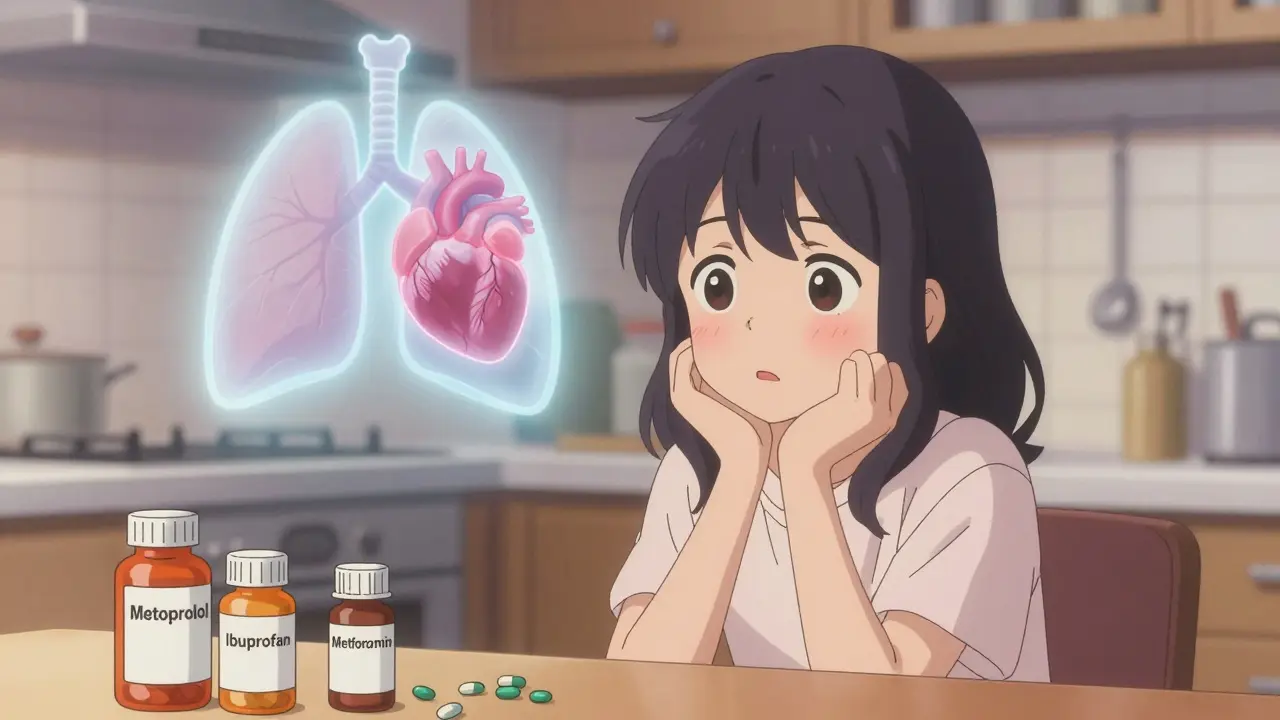
Have you ever taken a cold medicine and felt your blood pressure spike? Or noticed your diabetes symptoms got worse after starting a new heart pill? It’s not just bad luck. More often than not, it’s a hidden clash between your health condition and your medication - a drug-disease interaction.
Most people know about drug-drug interactions - like when antibiotics mess with birth control. But far fewer realize that your existing health problems can turn a safe drug into a dangerous one. This isn’t rare. It’s common. And it’s often missed.
What Exactly Is a Drug-Disease Interaction?
A drug-disease interaction happens when a medication meant to treat one condition makes another condition worse. It’s not about mixing pills. It’s about how your body, already under stress from one illness, reacts badly to a drug meant for something else.
For example, beta-blockers like metoprolol are commonly prescribed for high blood pressure and heart disease. But if you also have asthma, these drugs can tighten your airways and trigger a serious attack. Or take NSAIDs like ibuprofen - great for arthritis pain - but if you have heart failure, they can cause fluid retention and make your heart work harder.
The problem isn’t that the drugs are bad. It’s that they don’t know who they’re working on. A pill that helps one person can hurt another - simply because of their other health issues.
How Do These Interactions Actually Happen?
These clashes don’t happen randomly. They follow clear patterns. Here are the five main ways:
- Pharmacodynamic interference: The drug’s effect directly fights your disease. Beta-blockers masking low blood sugar in diabetics is a classic. You won’t feel shaky or sweaty - two key warning signs - until it’s too late.
- Pharmacokinetic changes: Your disease changes how your body processes the drug. Liver disease slows down how fast your body breaks down warfarin, making it too strong and raising bleeding risk.
- Masking symptoms: The drug hides signs of another problem. Diuretics for high blood pressure might make you feel better, but if you have kidney disease, they can hide worsening fluid buildup.
- Exacerbating complications: The drug worsens a side effect of your disease. NSAIDs can cause sodium retention, which pushes up blood pressure and strains the heart - a double hit if you already have heart failure.
- Direct organ toxicity: The drug damages an organ already weakened by disease. Metformin, a common diabetes drug, can cause lactic acidosis in people with poor kidney function - a life-threatening build-up of acid.
These aren’t theoretical. Studies show that over 80% of serious drug-disease interactions involve just a few conditions: chronic kidney disease, heart failure, liver disease, and mental health disorders like depression.
Who’s Most at Risk?
If you’re older, you’re at higher risk. The average American over 65 takes five or more medications and has nearly five chronic conditions. That’s a perfect storm for hidden clashes.
But it’s not just age. People with multiple long-term illnesses - diabetes plus heart disease, depression plus COPD, arthritis plus kidney disease - are especially vulnerable. And here’s the kicker: many of these patients don’t even realize their conditions might be interacting.
A 2022 survey found that only 22% of hypertensive patients knew why decongestants like pseudoephedrine could raise their blood pressure. Yet 89% of them had been prescribed these medications at some point. That’s not ignorance - it’s a system failure.
Why Do Doctors Miss These?
You’d think this would be easy to catch. But it’s not.
Most clinical guidelines - the rulebooks doctors follow - barely mention drug-disease interactions. A 2015 study found that only 16% of guidelines for diabetes, depression, and heart failure included warnings about these clashes. That means doctors are often following protocols that ignore half the patient’s health picture.
EHR systems - the digital records doctors use - aren’t much better. A 2022 study showed that while they flag 87% of high-risk interactions, they also throw up 42% false alarms. Doctors get so many alerts they start ignoring them. It’s called alert fatigue. And when that happens, real dangers slip through.
Pharmacists, who are trained to spot these issues, say they spend nearly 13 minutes per patient just reviewing potential interactions. But most pharmacy visits last less than five minutes. There’s just not enough time.
Real-World Examples You Need to Know
Here are some of the most dangerous - and common - combinations:
- SSRIs (like sertraline) + NSAIDs (like ibuprofen): This combo increases bleeding risk by 42%. If you’re on antidepressants and take ibuprofen for back pain, you could be at risk for internal bleeding.
- Metformin + kidney disease: Even mild kidney decline can turn metformin into a poison. Lactic acidosis is rare, but deadly. Kidney function tests should be done every 3-6 months if you’re on this drug.
- St. John’s wort + antidepressants: This popular herbal supplement can trigger serotonin syndrome - a potentially fatal surge in brain chemicals. It’s not just prescription drugs that are risky.
- Anticholinergics (like diphenhydramine) + dementia: These are often in sleep aids or allergy meds. But they can speed up cognitive decline in people with memory problems.
- SGLT2 inhibitors (like dapagliflozin) + kidney disease: Newer diabetes drugs that help flush sugar through urine can unexpectedly raise the risk of diabetic ketoacidosis in patients with poor kidney function - a 2023 FDA warning confirmed this.
And here’s something most people don’t know: the American Geriatrics Society updated its Beers Criteria in 2023 and added 12 new drug-disease warnings. One of them? Avoiding opioids in patients with COPD. Why? Because opioids suppress breathing - and if your lungs are already struggling, it can be fatal.
What Can You Do?
You can’t fix this alone. But you can be smarter about your care.
- Keep a full list of everything you take: Include prescriptions, over-the-counter pills, supplements, and even herbal teas. Bring it to every appointment.
- Ask: “Could this make another one of my conditions worse?” Don’t wait for your doctor to bring it up. Be proactive.
- Get your kidney and liver function checked regularly: These organs handle most drug metabolism. If they’re not working well, your meds can build up to dangerous levels.
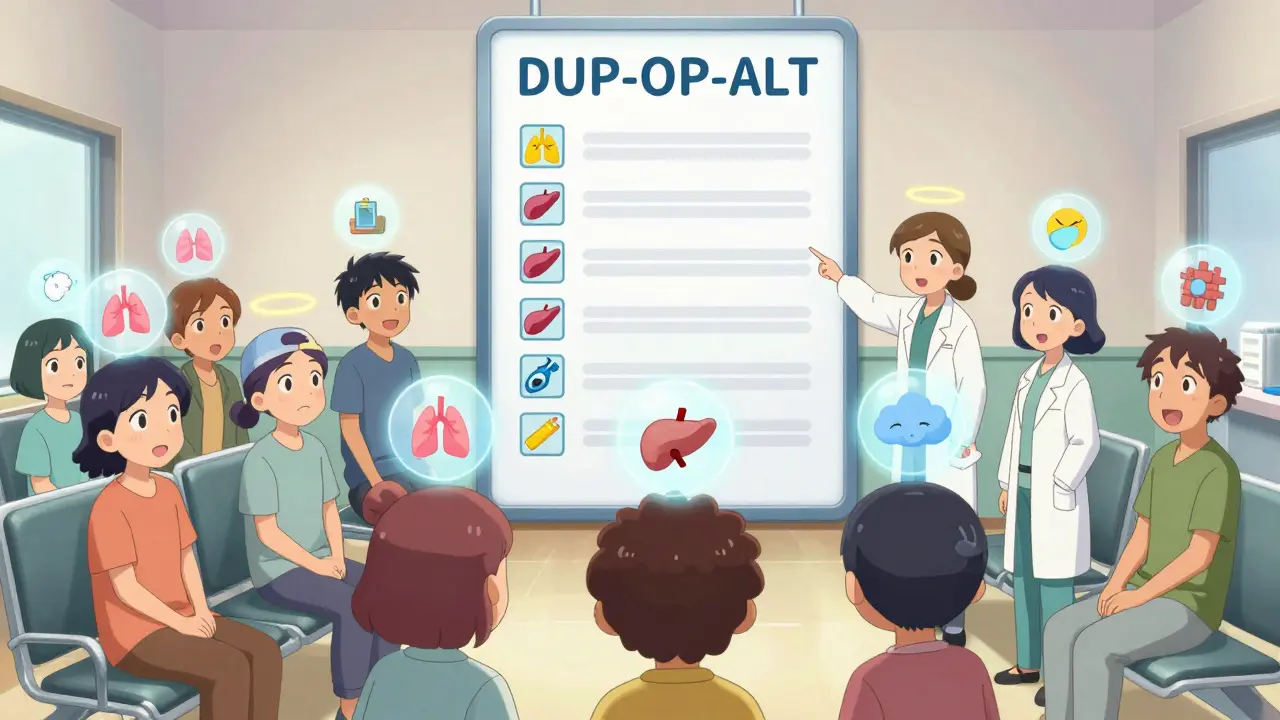
- Use the DUP-OP-ALT framework: Ask your pharmacist: Is this drug a Duplication? Opposition? Or does it ALTer how another drug works? It’s a simple, powerful tool.
- Ask for a medication review: Many clinics now offer free medication reviews. Use them. Especially if you take four or more drugs.
And if you’re on multiple medications, don’t assume everything is safe just because your doctor prescribed it. Some of the most dangerous interactions happen with drugs that are perfectly fine - until they meet your other conditions.
The Future: Better Screening, Better Outcomes
Change is coming - slowly.
The FDA now requires drug companies to test how their medications affect patients with common comorbidities. The European Medicines Agency demands drug-disease interaction data in every new application. And researchers at the University of Toronto built a machine learning tool that predicts dangerous interactions with 89% accuracy - far better than old rule-based systems.
Health systems are catching on too. Mayo Clinic cut hospital readmissions by 27% after launching a dedicated drug-disease interaction screening program. The NIH’s All of Us program is now using genetic data and health records to predict individual risk - a step toward truly personalized medicine.
But the biggest barrier isn’t science. It’s time. And awareness.
Until every patient’s full health picture is considered - not just the condition they came in for - these interactions will keep slipping through the cracks.
What Should You Do Next?
Take action now:
- Write down every medication and supplement you take - including dosages and why you take them.
- Look up your top three health conditions. Search for “drug-disease interaction [your condition].”
- Bring your list to your next doctor or pharmacist appointment. Say: “I want to make sure none of these are making my other conditions worse.”
- Ask for a kidney and liver function test if you haven’t had one in the last year.
Medications save lives. But they can also hurt - especially when your health history isn’t fully seen. Don’t let your other conditions be an afterthought. They’re part of the equation. And they matter.
Comments (8)
Kandace Bennett
March 13, 2026 AT 21:14
OMG this post is EVERYTHING 😭💖 I’ve been taking ibuprofen for my arthritis and sertraline for anxiety-no one ever told me this combo could make me bleed internally?! I’m deleting my medicine cabinet rn. 🧼🩸 #DrugDiseaseAwareness #LifeSaved
Tim Schulz
March 15, 2026 AT 14:32
Ah yes, the classic ‘doctor prescribed it so it must be fine’ delusion. 🙄 Let me guess-you also think ‘natural’ means ‘safe’? St. John’s Wort + SSRIs? Honey, that’s not a supplement, it’s a suicide pact with serotonin. 🤡 Maybe if your EHR didn’t scream like a broken alarm clock 400 times a day, we wouldn’t have this problem. But hey, at least we have 13-minute pharmacy visits. 🎉
Jinesh Jain
March 17, 2026 AT 04:27
Interesting read. In India, many people use over-the-counter painkillers for chronic issues without knowing their liver or kidney status. I’ve seen friends take diclofenac daily for years-no tests, no warnings. The system here doesn’t even track prescriptions properly. This article should be translated and shared widely.
douglas martinez
March 18, 2026 AT 02:01
Thank you for this comprehensive and clinically grounded overview. The emphasis on pharmacodynamic interference and the DUP-OP-ALT framework is particularly valuable. These are not theoretical concerns-they are preventable adverse events that contribute significantly to hospitalizations. I encourage all patients with polypharmacy to request formal medication reconciliation through their primary care provider or clinical pharmacist. Safety is not incidental-it is engineered.
Sabrina Sanches
March 18, 2026 AT 17:35
I just checked my meds list and realized I’ve been taking diphenhydramine for sleep for 8 years because my doctor said it was ‘safe’… and I have mild cognitive decline… OH MY GOD I NEED TO CALL MY PHARMACIST RIGHT NOW
Emma Deasy
March 20, 2026 AT 05:11
I cannot believe how under-discussed this is. I mean, think about it: we have entire departments dedicated to drug-drug interactions, but drug-disease? It’s like someone forgot the patient is a whole person. The Beers Criteria update? A small victory. But the fact that only 16% of guidelines mention it? That’s not negligence-it’s systemic abandonment. And don’t get me started on how EHRs are designed like a toddler’s tantrum: too loud, too often, too useless. We need mandatory training. We need audits. We need accountability. This isn’t just medicine. It’s survival.
tamilan Nadar
March 21, 2026 AT 20:32
In my village in Tamil Nadu, elders take aspirin daily for ‘blood thinning’ because they heard it helps the heart. No one checks their kidneys. No one asks about their diabetes. The local shop sells pills like candy. This article is needed everywhere-not just in the US. We need community health workers to teach this. Not doctors. Not apps. People.
Rosemary Chude-Sokei
March 22, 2026 AT 14:54
I work as a clinical pharmacist and can confirm: the 13-minute review statistic is accurate. We’re expected to catch life-threatening interactions in the time it takes to brew a coffee. I once had to stop a patient from taking metformin after a recent CT scan with contrast-her eGFR had dropped to 38. She was told it was ‘fine’ by her PCP. I spent 45 minutes on the phone with the doctor. He hadn’t seen the lab results. This isn’t about patient ignorance. It’s about fragmented care. We need integrated health records, mandatory pharmacist involvement in chronic disease management, and a cultural shift away from ‘prescribe and forget.’