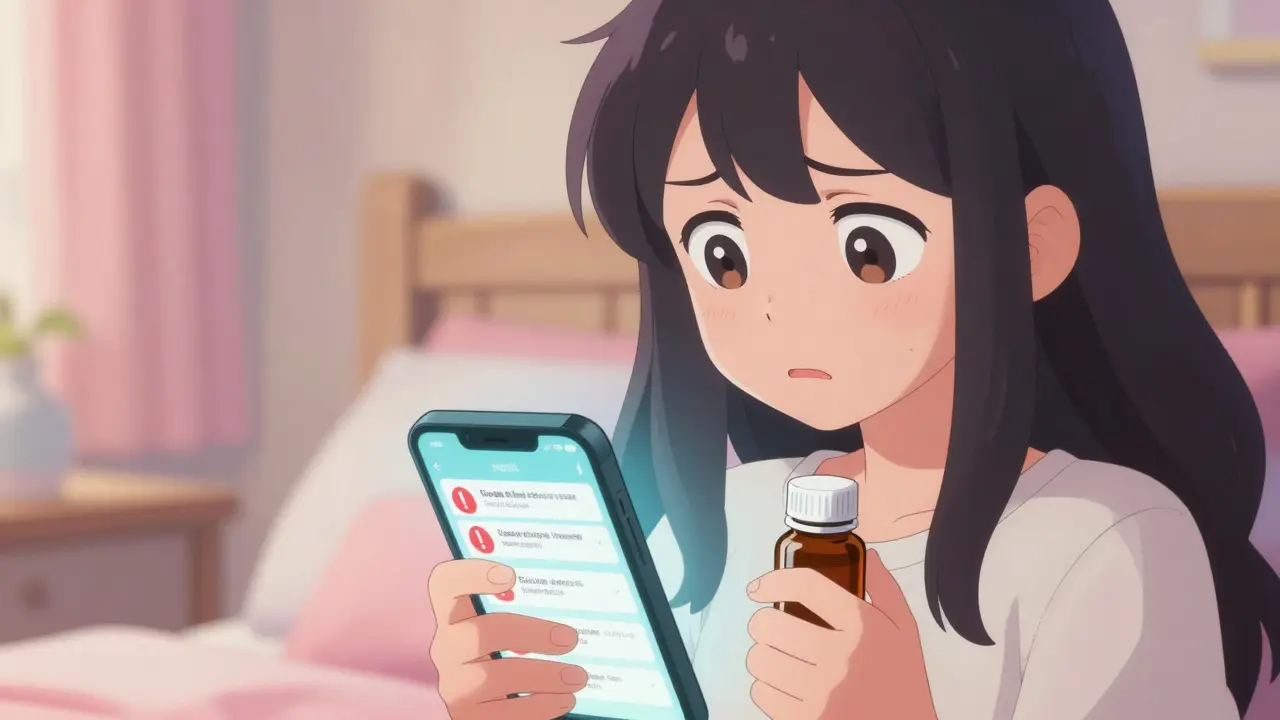
You see a viral post on Facebook or a scary headline on a news site claiming your daily medication has been recalled. Your first instinct is probably to stop taking it immediately. But wait-doing that without double-checking can be more dangerous than the recall itself. From fake alerts designed to scam vulnerable people to vague reports that omit critical details, the internet is full of noise. The real goal is to move from "I saw this online" to "I have verified this with an official source." drug recall verification isn't about trusting a headline; it's about cross-referencing specific codes and official government data to ensure your health isn't compromised by misinformation.
| Feature | Official FDA Notice | Red Flags / Fake Alerts |
|---|---|---|
| Recall Event Number | Follows 'RE-XXXX-XXXX-XXXXXX' format | Missing or random number sequences |
| Lot Numbers | Specific 10-15 character alphanumeric codes | Vague terms like "all bottles" or "recent batches" |
| Classification | Clearly states Class I, II, or III | No classification or just says "Dangerous" |
| Source | Links to fda.gov or official manufacturer site | Social media shares or unofficial blogs |
The Danger of the "Quick Share"
Why does it matter if you spend ten minutes verifying a post? Because misinformation in medicine has real-world consequences. Between 2020 and 2024, the Federal Trade Commission tracked over 1,200 cases of consumer harm caused by fraudulent recall scams. Some of these are simple mistakes-like a news outlet reporting a "market withdrawal" (a voluntary company move) as a formal recall-but others are malicious.
Consider the case of insulin pen alerts. In 2023, a fake recall alert went viral, causing nearly 150 people to end up in the ER because they stopped using their life-saving medication. The common thread in these disasters? Patients accepted a social media post that lacked the mandatory Recall Event Number. If you see a warning that doesn't give you a specific code to track, treat it as a rumor, not a medical directive.
How to Spot a Real FDA Notice
The U.S. Food and Drug Administration (or FDA) doesn't just put out a vague tweet. Legitimate notices are highly structured. When you're looking at a digital alert, check for these three non-negotiable elements:
- The Recall Classification: You'll see Class I, II, or III. A Class I recall means there is a reasonable probability that using the drug will cause serious adverse health consequences or death. If a post doesn't categorize the risk, it's likely not an official notice.
- Firm Notification Distribution Code (FNDC): Official notices contain this unique identifier, which starts with an 'F' followed by eight alphanumeric characters.
- The "Reason for Recall" Section: Legitimate alerts are specific. They won't just say "contaminated"; they'll specify something like "N-Nitrosodimethylamine (NDMA) levels exceeding 96 ng/day."
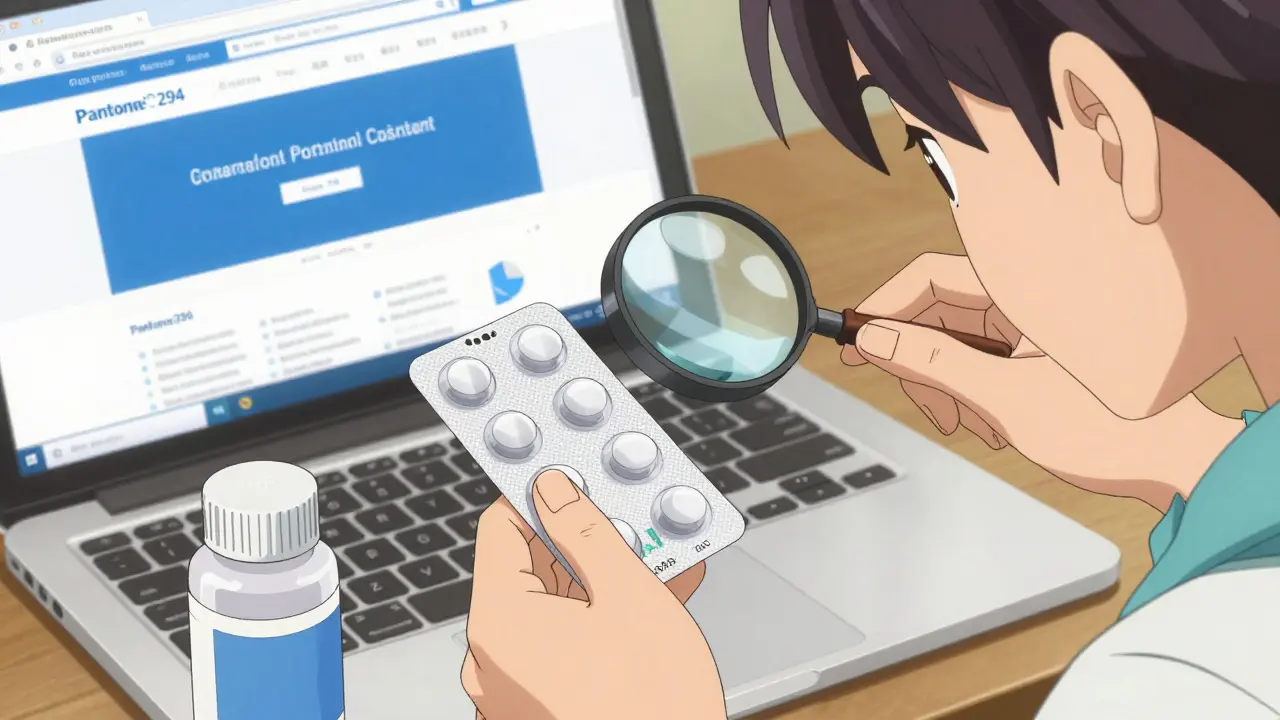
Visuals matter too. Official FDA documents use a specific Pantone 294 blue for their seal and maintain strict black text formatting. If the "official" PDF looks like it was made in a basic app or has blurry logos, be skeptical.
Step-by-Step Verification Protocol
Don't rely on a single search result. Use this five-step process to confirm if your medication is actually affected. This method is designed to cut through the noise and get you to a factual answer in minutes.
- Find Your Lot Number: Look at the bottom edge of your medication bottle or the foil on your blister pack. You're looking for a 10-15 character alphanumeric sequence (e.g., LOT# ABC1234567). This is the only way to know if your specific bottle is affected.
- Search the Official FDA Recall Index: Go to fda.gov/recalls. Enter the exact brand name and your lot number. Pro tip: include the manufacturer's name in your search; FDA usability tests show this significantly increases the accuracy of the results.
- Cross-Reference the Enforcement Report: Every Friday at 2:00 PM ET, the FDA updates its Enforcement Report. This is the gold standard for verification. Look for the entry following the format: CLASS I - [Product] - [Manufacturer] - [RE Number] - [Reason].
- Verify via the Manufacturer: Contact the drug company, but do not use a phone number found in a Google search or a social media post. Use the contact information listed specifically in the FDA's official announcement to avoid phishing sites.
- Get Direct Confirmation: If you're still unsure, call the FDA's Division of Drug Information at 1-855-543-3784. Give them the Recall Event Number. They typically process these requests within a few business hours, providing a definitive "yes" or "no."
Government Portals vs. Third-Party Apps
You might be tempted to use a third-party drug checker app because they have fancy scanners. While these can be helpful, they aren't foolproof. A 2024 study found that while some popular apps had high accuracy, they still missed about 10% of recalls-specifically those involving compounded medications.
Comparing official portals to commercial databases reveals a stark difference in speed and reliability. The FDA.gov portal captures 100% of Class I recalls within 24 hours of the manufacturer's notification. In contrast, commercial databases often lag, covering only about 72% of those same recalls in the same timeframe. Even Recalls.gov, which is a great aggregator for multiple agencies, can experience delays of up to 36 hours compared to the direct FDA portal.
Common Pitfalls to Avoid
One of the biggest mistakes people make is confusing a "market withdrawal" with a "recall." A market withdrawal happens when a company decides to pull a product for reasons that aren't necessarily safety-related-maybe the packaging is wrong or the product doesn't meet a quality standard. These don't always require FDA notification. Confusing the two leads to nearly 32% of all verification errors, causing people to panic over non-dangerous issues.
Another trap is the "quiet period." There is often a 72-hour window where the FDA and the manufacturer are coordinating the recall before it goes public. During this time, leaks can happen on social media. If you see a "leak" without an official RE-number, don't stop your medication. Instead, wait for the formal announcement or call your pharmacist.
The Future of Drug Safety Monitoring
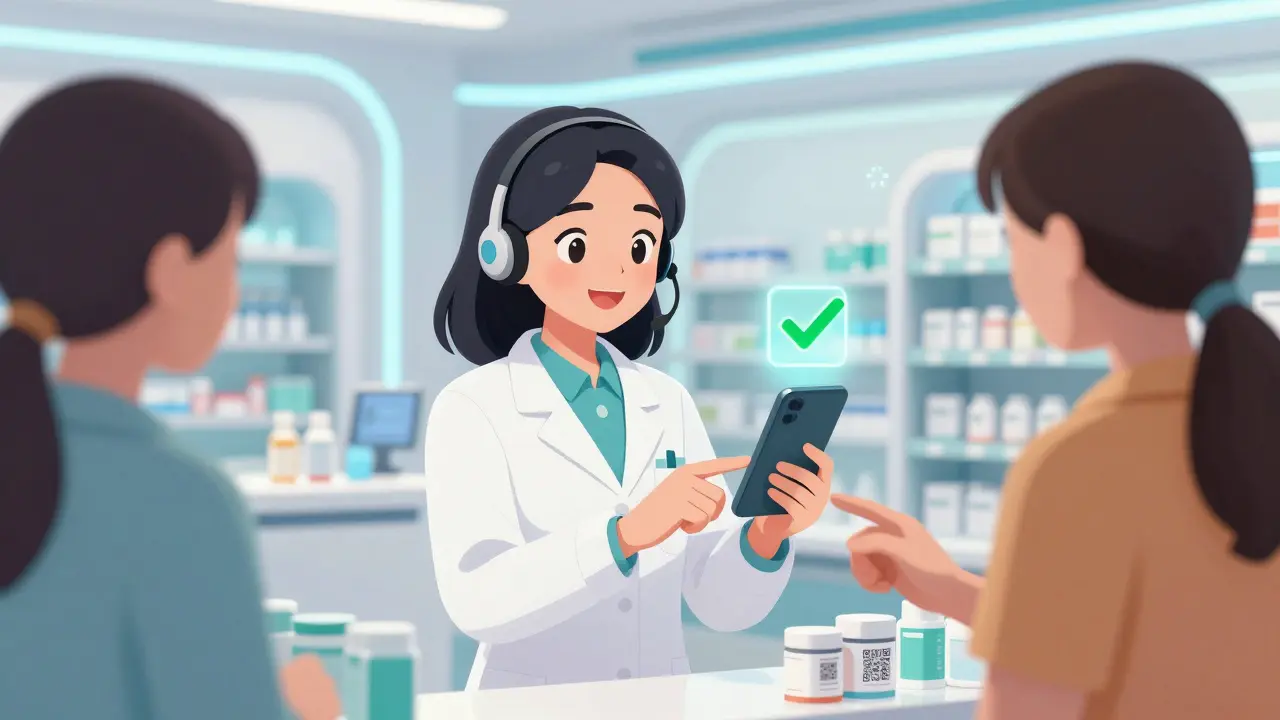
The way we verify meds is changing fast. By the end of 2026, the Recall Modernization Act will require QR codes on all prescription labels. This means instead of hunting for a lot number, you'll simply scan your bottle with a smartphone to get an instant verification status.
We're also seeing a shift toward blockchain-based systems. The Pharmaceutical Supply Chain Integrity Network is working on creating immutable records of every drug batch, making it nearly impossible for fake recalls to trick the system. However, as technology improves, so do the threats. The FDA has already documented cases of AI-generated "deepfake" recall notices that look perfectly legitimate but lead users to malicious websites. Always stick to the .gov domain to stay safe.
What should I do if I can't find my lot number?
If the lot number is rubbed off or missing, do not guess. Take the medication bottle to your local pharmacist. Pharmacies keep records of the lot numbers for the batches they dispense, and they have direct access to the National Drug Code Directory to verify the safety status of your specific prescription.
Does a "Class III" recall mean I should stop taking my meds?
Not necessarily. A Class III recall involves a situation where the medication is unlikely to cause adverse health consequences (for example, a labeling error). You should never stop taking a prescribed medication without consulting your doctor or pharmacist, as the risk of stopping the treatment may be higher than the risk posed by the recall.
How can I tell if a recall notice on social media is a scam?
Look for the "RE-" prefix followed by a 16-digit number (e.g., RE-2024-XXXX-XXXXXX). If the post uses emotional language ("URGENT," "DEADLY") but lacks a specific Recall Event Number and a detailed "Reason for Recall" section, it is likely a scam or misinformation.
Is Recalls.gov as fast as FDA.gov?
Generally, no. While Recalls.gov is an excellent tool for seeing recalls across multiple agencies (like the CPSC or USDA), it can have a delay of 12 to 36 hours compared to agency-specific portals. For the fastest, most accurate drug-specific information, go directly to the FDA's recall index.
What is the difference between a recall and a market withdrawal?
A recall is a request for the return of a product that violates the law or may be harmful. A market withdrawal occurs when a product has a purity or quality problem that doesn't violate the law and doesn't pose a safety risk. Market withdrawals don't always require a formal FDA public notification.
Next Steps for Patients and Caregivers
If you've confirmed that your medication is part of a recall, don't panic. First, call your prescribing doctor to discuss an alternative or a replacement. Second, contact your pharmacy to see if they can provide a replacement batch from a different lot. Finally, keep the packaging of the recalled drug; you may need it for the pharmacy to process a return or for the manufacturer to track the affected batch.
Comments (9)
Eric Mwiti
April 26, 2026 AT 00:51
Oh sure, because we all have ten minutes to play detective with alphanumeric codes while dealing with a health scare. Truly a peak user experience provided by the government.
Andre Ojakäär
April 26, 2026 AT 21:29
everyone ignores the lot numbers but thats literally the only thing that matters!! i bet half the people reading this dont even know where to look on the bottle... honestly its wild how clueless some people are about basic med safety
Michael Chukwuma
April 27, 2026 AT 05:05
I agree that checking the lot number is the safest bet. It's easy to get overwhelmed, but following a protocol helps keep things calm.
Edwin Perez
April 28, 2026 AT 07:44
Sure, trust the .gov site. That's exactly what they want you to do so you don't notice the patterns. These "market withdrawals" are just a way to scrub the evidence of bad batches before they get caught. Who knows what's actually in the pills anyway.
Anand Mehra
April 28, 2026 AT 16:42
systemic failure of literacy. people trust pixels over protocols. pathetic really
Beena Garud
April 30, 2026 AT 04:17
The pursuit of truth in the digital age requires a disciplined mind and a commitment to empirical evidence. One must treat the internet not as a source of truth, but as a gateway to the primary archives of authority. It is a profound tragedy when the haste of communication outweighs the necessity of accuracy, for the cost of such an error is nothing less than human life itself. We must cultivate a culture of verification over a culture of reaction. The dichotomy between a government portal and a commercial app is a reflection of our society's preference for convenience over certainty. We are witnessing the erosion of critical thinking in favor of algorithmic speed. To rely on a third-party app is to delegate one's health to a corporate entity whose primary goal is engagement, not safety. The structural rigidity of an FDA notice is a safeguard against the chaos of misinformation. It is an intellectual imperative to educate the vulnerable on these distinctions. Only through rigorous cross-referencing can we mitigate the dangers of the "quick share." The intersection of technology and medicine is fraught with peril if not guided by strict protocols. We must aspire to a standard where the lot number is the only currency of truth in these matters. Let us not be seduced by the ease of a scan until the security of the blockchain is fully realized. Until then, the manual search remains our most faithful ally. Accuracy is not a luxury; it is a fundamental requirement for survival.
Karyn Tindall
April 30, 2026 AT 13:05
I am absolutely horrified by the insulin pen story! Imagine being in the ER just because some random person shared a fake post! This is an absolute nightmare!
Kristen O'Neal
May 2, 2026 AT 10:08
The part about the 72-hour "quiet period" is a huge red flag for anyone who tracks these things. It's exactly why social media leaks are so dangerous because they give you a half-truth without the context to actually act on it safely. We need better real-time communication from agencies so these leaks don't cause panic.
Elle Torres Sanz
May 2, 2026 AT 21:23
It's a good reminder to keep our medication packaging until we're sure about everything. A little extra patience goes a long way for everyone's peace of mind.