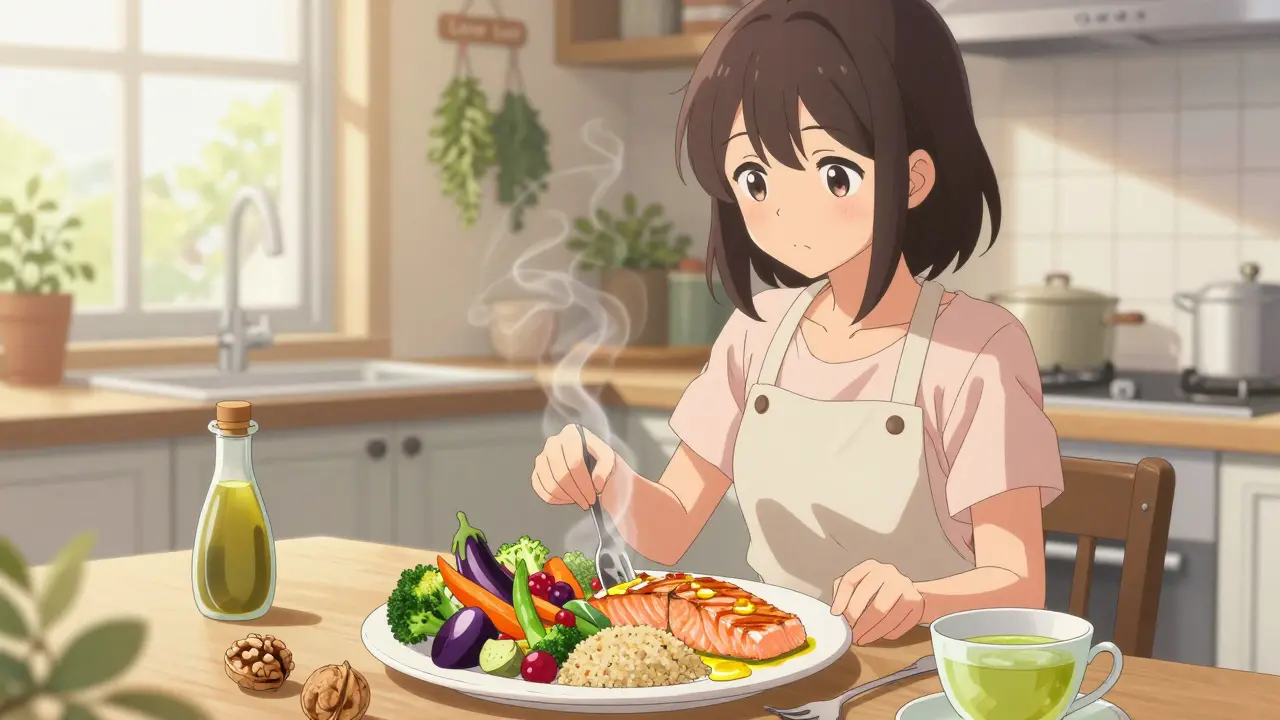
When your liver is struggling, food isn't just fuel-it's medicine. Too many people believe liver damage is irreversible or that only drugs can fix it. That’s not true. Decades of clinical research show that what you eat can cut liver fat by up to 40% in under a year, lower harmful enzymes, and even reverse early-stage scarring-without a single pill. The key isn’t a magic supplement or a juice cleanse. It’s a simple, proven way of eating: the Mediterranean diet.
What a Liver-Healthy Diet Really Means
There’s no such thing as a ‘liver detox’ diet. Those trendy 3-day cleanses? They don’t work. The American Liver Foundation says there’s zero scientific evidence behind them. Instead, real change comes from patterns that have been tested in thousands of patients over years. The Mediterranean diet isn’t a trend-it’s the gold standard. Studies published in Hepatology and the Journal of Hepatology show it reduces liver fat more than low-fat or keto diets. It’s not about cutting calories alone. It’s about what you put on your plate.The liver doesn’t care if you eat gluten-free or paleo. It cares about sugar, fat quality, and fiber. When you eat too much added sugar-especially from soda, candy, or processed snacks-your liver turns it into fat. That fat builds up, causes inflammation, and over time, leads to scarring. The goal of a liver-healthy diet is simple: stop the fat buildup, reduce inflammation, and give your liver the nutrients it needs to heal.
The Mediterranean Diet: The Only Pattern With Level 1 Evidence
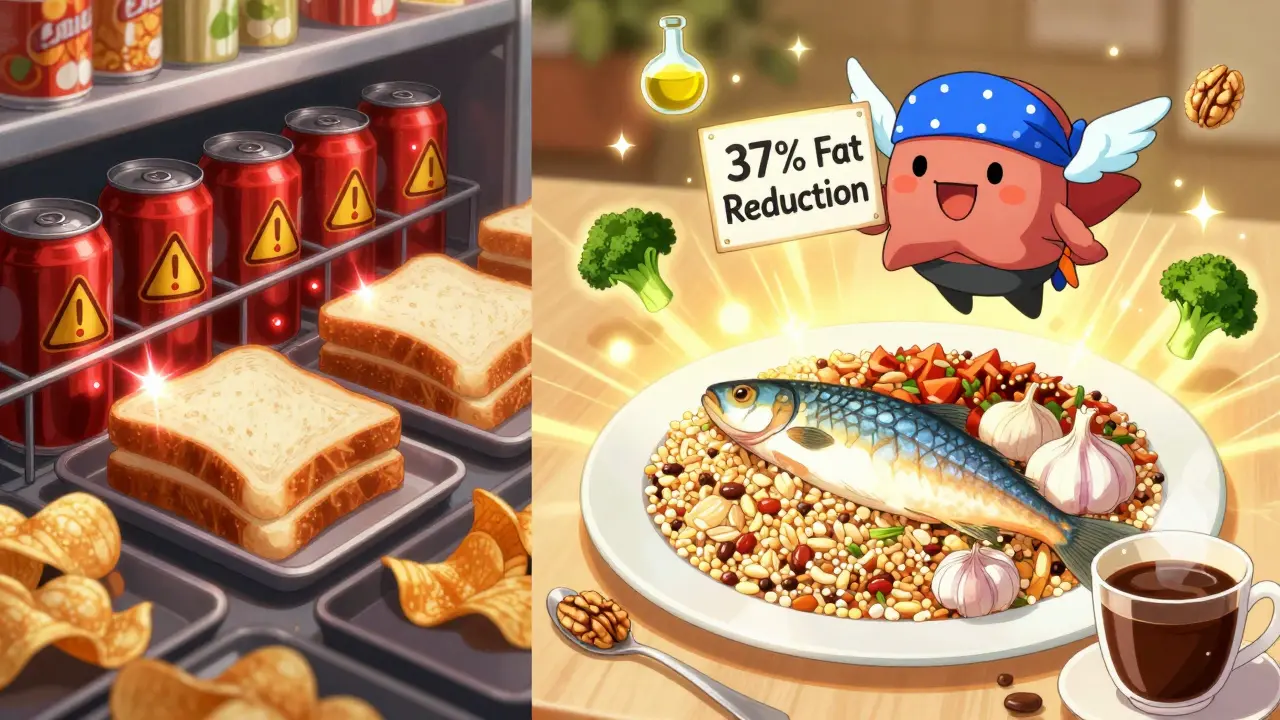
The Mediterranean diet isn’t just about olive oil and pasta. It’s a full system of eating backed by decades of research. The landmark 2013 study in Hepatology found that people with fatty liver who followed this diet cut liver fat by 37% in just 6 months-even without losing weight. That’s huge. Most medications don’t do that.Here’s what it looks like in practice:
- Half your plate = vegetables and fruits. Aim for 3 servings of veggies and 2 servings of fruit every day. Different colors matter. Blueberries, blackberries, and eggplant have anthocyanins-plant compounds shown to cut liver inflammation by 25% in clinical trials.
- One-quarter = lean protein. Think chicken, fish, beans, lentils, or tofu. A serving is about the size of a deck of cards. Eat this at every meal.
- One-quarter = whole grains. Brown rice, quinoa, oats, barley. Avoid white bread, white rice, and anything labeled ‘enriched.’ Whole grains are packed with fiber, which helps your liver process fat better.
- Fats = mostly monounsaturated. Olive oil, avocados, nuts (especially walnuts-30g a day lowers LDL by 15% in fatty liver patients). Keep total fat under 30% of daily calories.
- Sugar = under 10% of daily calories. That’s about 25g for women, 36g for men. No soda. No sweetened yogurt. No candy. Natural sugar from fruit is fine.
These aren’t guesses. They’re based on data from the Harvard Healthy Eating Plate, the Mayo Clinic’s 2024 guidelines, and the American Association for the Study of Liver Diseases (AASLD) 2023 update. Dr. Rohit Loomba, who led the AASLD guidelines, says this is the only diet with Level 1 evidence for improving liver tissue structure-not just blood tests.
Foods That Help: What to Eat Daily
Some foods are like vitamins for your liver. They don’t just avoid harm-they actively repair.- Walnuts: 1 ounce (about 14 halves) a day. Rich in omega-3s and antioxidants. A 2023 study showed they reduce liver fat by 18% in 6 months.
- Cruciferous vegetables: Broccoli, kale, Brussels sprouts, cabbage. They contain indole-3-carbinol, a compound that helps your liver detoxify harmful substances. Eating them 4 times a week cuts liver fat by 18% over 6 months.
- Fatty fish: Salmon, mackerel, sardines. Eat 2 servings a week. Omega-3s reduce liver inflammation and triglycerides.
- Coffee: Yes, coffee. Two cups a day (black or with a splash of milk) is linked to lower liver enzyme levels and less scarring. It’s not caffeine alone-it’s the antioxidants.
- Green tea: 2-3 cups a day. Contains EGCG, which reduces fat buildup in liver cells.
- Garlic: Adds flavor and helps lower liver enzymes. A 2021 trial showed garlic supplements reduced liver fat by 20% in NAFLD patients.
These aren’t ‘superfoods’ marketing hype. They’re backed by peer-reviewed trials. You don’t need to eat all of them every day. But if you include a few regularly, your liver will thank you.
Foods to Avoid: The Real Enemies
Some foods don’t just lack benefits-they actively damage your liver.- Sugary drinks: Soda, energy drinks, sweetened tea, fruit juice. One 12-ounce can has 39g of sugar-more than your daily limit. These are the #1 cause of fatty liver in adults.
- Processed carbs: White bread, pastries, crackers, instant oatmeal. They spike blood sugar fast, forcing your liver to convert it into fat.
- Trans fats: Found in fried foods, margarine, packaged snacks. They raise bad cholesterol and trigger liver inflammation. Check labels for ‘partially hydrogenated oils’-even if it says ‘0g trans fat,’ if it’s listed, avoid it.
- Excess alcohol: Even moderate drinking (2 drinks/day for men, 1 for women) can worsen fatty liver. For some, zero is the only safe amount.
- Salty foods: Canned soups, deli meats, frozen meals. Sodium over 2,000mg a day can worsen fluid retention and liver complications, especially if cirrhosis is present.
It’s not about perfection. It’s about reducing these as much as possible. If you drink soda daily, cut it to once a week. If you eat chips every night, swap them for roasted chickpeas. Small changes add up.
Real People, Real Results
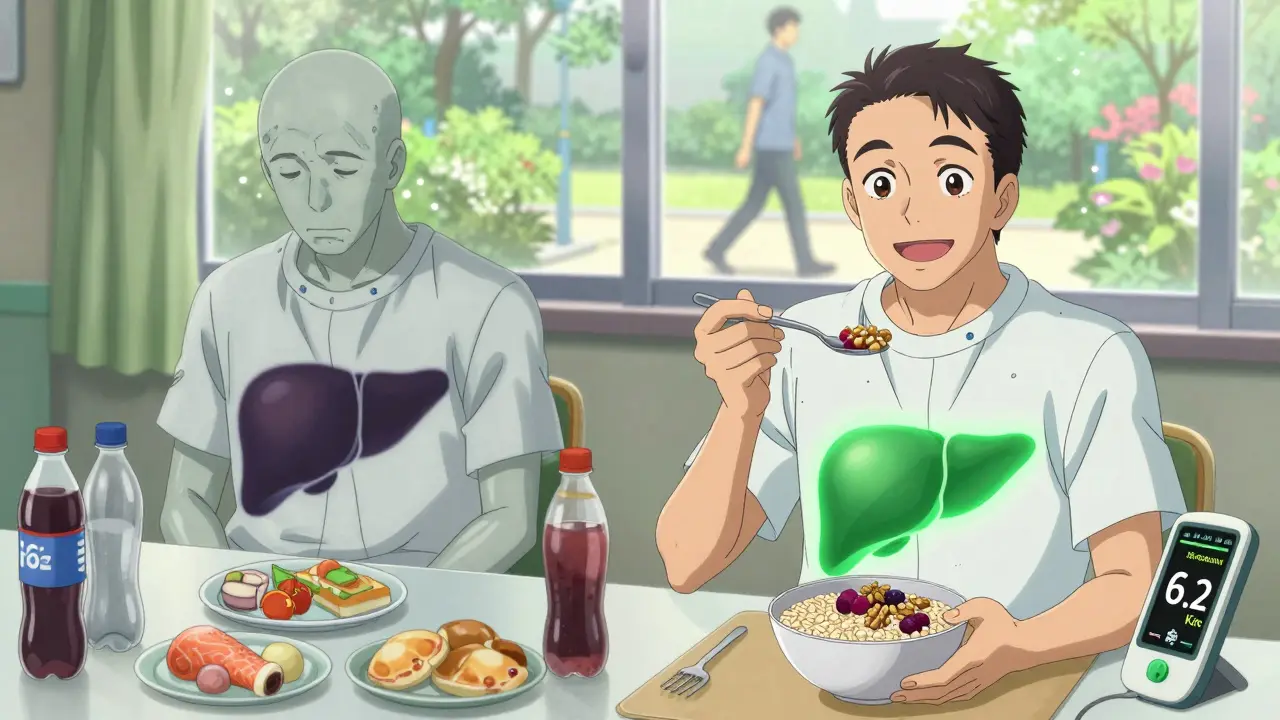
John, 58, from Ohio, had stage 2 liver fibrosis. His FibroScan score was 12.5 kPa (a sign of moderate scarring). His ALT liver enzyme was 112 U/L (normal is under 40). He started the Mediterranean diet and walked 30 minutes daily. After 9 months, his FibroScan dropped to 6.2 kPa-back in the normal range. His ALT fell to 45. He didn’t take medication. He just changed his food.On Reddit’s r/FattyLiver, 68% of over 1,200 people said they had more energy within 3 months. But 42% said it was hard to stick to because fresh food costs more. USDA data shows a Mediterranean-style meal runs about $1.50 more per serving than processed alternatives. That’s real. But solutions exist: frozen veggies are just as nutritious, canned beans are cheap and high in fiber, and batch-cooking on Sundays saves time and money.
Sarah, from Texas, had migraines when she cut all sugar. Her doctor helped her adjust: she now gets 15g of natural sugar daily from berries. That’s okay. The goal isn’t zero sugar-it’s avoiding added sugar. Fruit is fine.
Practical Tips to Make It Stick
Changing how you eat is hard. Most people give up within 6 months. Here’s what actually works:- Start with one meal. Make breakfast Mediterranean: oatmeal with berries, walnuts, and a drizzle of olive oil. Then add lunch. Then dinner. Slow progress lasts.
- Use lemon juice or herbs instead of salt. It’s a trick 41% of successful users on Reddit swear by.
- Read labels. Hidden sugar is everywhere. Look for words like ‘high fructose corn syrup,’ ‘dextrose,’ ‘maltose.’ If sugar is in the first three ingredients, skip it.
- Shop the perimeter. Grocery stores put fresh food on the edges. Processed stuff is in the middle. Stick to the outside aisles.
- Use frozen veggies. They’re just as healthy as fresh, cheaper, and last longer.
- Batch cook. Cook a big pot of lentils, roast a tray of veggies, grill chicken. Portion it out. You’ll eat better all week.
The learning curve is 4-6 weeks. Most people struggle with portion sizes and hidden sugars at first. But after that, it becomes routine. The VA Health System’s free 12-week nutrition program has an 87% satisfaction rate. It’s not about willpower-it’s about building habits.
What About Other Diets?
You’ve heard of keto, low-fat, intermittent fasting. Do they help?- Keto: May reduce liver fat short-term, but long-term studies show it doesn’t improve fibrosis as well as the Mediterranean diet. Plus, high saturated fat can raise cholesterol.
- Low-fat: People think ‘low-fat = healthy.’ But cutting fat often means adding more sugar. That’s worse for the liver.
- Intermittent fasting: A 10-hour eating window (like 8 a.m. to 6 p.m.) is being tested in a major 2024 trial. Early results show it boosts liver fat loss by 27% when combined with the Mediterranean diet. But don’t try it without medical advice if you have advanced liver disease.
- DASH diet: Great for blood pressure, but lacks the specific liver-protective fats and phytonutrients of the Mediterranean diet.
The Mediterranean diet isn’t just the best for your liver-it’s the best for your heart too. The PREDIMED trial showed a 30% drop in heart disease risk. So you’re healing two organs at once.
What If You Have Advanced Liver Disease?
If you have cirrhosis, protein intake used to be restricted. But new research shows that’s wrong. The European Association for the Study of the Liver now says adequate protein prevents muscle loss, which is a major cause of death in advanced liver disease. Aim for 1.2-1.5g of protein per kg of body weight. That’s about 75-95g a day for most people. Talk to your doctor before making big changes.Sodium still matters. Keep it under 2,000mg. Avoid canned foods, salty snacks, and restaurant meals. If you’re retaining fluid, your doctor may prescribe a diuretic-but diet still plays the biggest role.
What’s Next?
The future of liver health is personalized. Mayo Clinic is launching a $2.1 million study in 2024 to see how your gut bacteria predict which foods work best for you. But right now, the best advice is simple: eat real food. More plants. Less sugar. More olive oil. More movement.By 2030, experts predict, doctors will track your dietary adherence like they track your ALT levels. Because food isn’t optional. It’s the most powerful tool we have to heal the liver.
Can you reverse fatty liver with diet alone?
Yes, especially in the early stages. Studies show that following a Mediterranean diet can reduce liver fat by 25-40% in 6-12 months, lower liver enzymes by 20-30%, and even reverse early fibrosis. Weight loss helps, but even without losing weight, dietary changes alone improve liver health. The key is consistency-eating whole foods, cutting sugar, and choosing healthy fats daily.
Is the keto diet good for fatty liver?
Keto may reduce liver fat in the short term, but it’s not the best long-term choice. Many keto diets are high in saturated fat, which can increase inflammation and cholesterol. The Mediterranean diet has been proven to reduce both liver fat and fibrosis more effectively than keto, with better heart health outcomes. It’s also easier to sustain over time.
What’s the best breakfast for a fatty liver?
A Mediterranean-style breakfast: steel-cut oats or whole grain toast topped with sliced berries, a sprinkle of walnuts, and a drizzle of olive oil. Add a boiled egg or a spoon of Greek yogurt for protein. Skip sugary cereals, pastries, and juice. This combo gives fiber, healthy fats, antioxidants, and protein-all of which help your liver process fat and reduce inflammation.
Do I need to cut out all sugar?
No. You need to cut out added sugar-like soda, candy, and sweetened yogurt. Natural sugar in fruit, vegetables, and dairy is fine and even beneficial. Berries, apples, and citrus contain fiber and antioxidants that protect the liver. The goal is to stay under 10% of daily calories from added sugar, which is about 25g for women and 36g for men.
Can I drink alcohol if I have fatty liver?
If you have non-alcoholic fatty liver disease (NAFLD), the safest answer is no. Even small amounts of alcohol can worsen liver damage and speed up scarring. For people with advanced disease, any alcohol is risky. Some doctors allow occasional light drinking, but most recommend complete abstinence. If you’re unsure, ask your hepatologist.
How long until I see results from a liver-healthy diet?
Many people notice more energy and less bloating within 3-4 weeks. Liver enzymes (like ALT) often drop within 6 months. Liver fat reduction can be seen on scans in 6-12 months. The key is consistency-not perfection. Even small, daily improvements add up over time.
Comments (14)
Dylan Patrick
March 17, 2026 AT 10:55
Just tried this for 3 months. No meds. No supplements. Just swapped soda for sparkling water with lemon, ate more veggies, and threw walnuts on everything. My ALT dropped from 120 to 52. I didn’t even lose weight. My liver just... chillaxed. 🙌
Serena Petrie
March 18, 2026 AT 00:36
So basically eat like your grandma used to. Got it.
Aaron Leib
March 20, 2026 AT 00:02
This is the most practical liver advice I’ve seen in years. No hype. Just food. I’ve shared this with my whole family. My mom’s been on it for 4 months and says she feels like she’s 30 again. Seriously, this works.
Kathy Leslie
March 21, 2026 AT 05:29
I used to think ‘liver health’ was just about cutting out alcohol. Then I found out my daily oatmeal with raisins and honey was the real problem. Switched to berries and walnuts. No more afternoon crashes. Also, coffee. Always coffee.
Leah Dobbin
March 22, 2026 AT 12:43
As a hepatology researcher in Cape Town, I’ve seen the data. Mediterranean diet = gold standard. The indole-3-carbinol in cruciferous veggie intake correlates with reduced NAFLD progression (p<0.01). And yes, frozen broccoli is just as bioavailable as fresh. Stop overthinking. Just eat the damn greens.
Noluthando Devour Mamabolo
March 23, 2026 AT 07:14
Broccoli + walnuts + coffee = my new holy trinity 🙏✨ I used to eat chips every night. Now I roast chickpeas. My husband thinks I’m weird. I don’t care. My liver feels like a happy puppy now. 🐶💚
Elsa Rodriguez
March 24, 2026 AT 20:50
I tried this for two weeks. Then I went to a BBQ and ate a whole slab of ribs. Now I feel like a traitor to my own liver. I’m crying. I’m so weak. Why is healthy food so boring???
Amisha Patel
March 26, 2026 AT 09:49
Can I use coconut oil instead of olive oil? I’ve heard it’s better for metabolism
Stephanie Paluch
March 26, 2026 AT 20:43
Wait wait wait-I just read this and cried. I had fatty liver and didn’t even know it. My doctor said ‘watch your sugar’ but didn’t say how much. This? This is the first time I felt like someone actually *got* me. Thank you. I’m starting tomorrow. 🥹
Rosemary Chude-Sokei
March 27, 2026 AT 05:03
While I appreciate the evidence-based approach, I must emphasize that dietary adherence is not universal. Socioeconomic barriers, food deserts, and systemic inequities render this framework inaccessible to many. A diet that costs $1.50 more per serving is not a solution-it’s a privilege. We must advocate for policy change alongside personal change.
tynece roberts
March 27, 2026 AT 16:27
so i tried this and honestly? the walnuts are the real MVP. i put them on everything. even on my yogurt. and i drink like 3 cups of green tea a day. also i stopped eating white bread. my stomach stopped bloating. idk if it’s the diet or just age but i feel better. also i still eat pizza on weekends. i’m not a robot.
Hugh Breen
March 28, 2026 AT 02:43
THIS IS THE ONLY THING THAT WORKS. I’M A 52-YEAR-OLD GUY WHO THOUGHT KETO WAS GOD. I WAS WRONG. THE MEDITERRANEAN DIET DIDN’T JUST FIX MY LIVER-IT GAVE ME BACK MY LIFE. I’M SLEEPING. I’M ENERGIZED. I’M NOT A WALKING LIVER DISEASE STATISTIC ANYMORE. THANK YOU FOR THIS. 🙏🔥
Byron Boror
March 28, 2026 AT 04:33
Why are we all eating like Europeans now? We got our own food traditions. Who says we need olive oil? We got good ole lard and cornbread. My granddad lived to 92 eating fried liver and grits. This is just another woke diet fad.
mir yasir
March 28, 2026 AT 20:10
While the Mediterranean diet demonstrates statistically significant outcomes in NAFLD regression, one must consider the confounding variables inherent in observational studies. The PREDIMED trial, while robust, was not randomized to dietary intervention alone-physical activity and socioeconomic status were uncontrolled. A meta-analysis published in the *European Journal of Clinical Nutrition* (2022) suggests that caloric restriction, not macronutrient composition, remains the primary driver of hepatic fat reduction. Therefore, the current paradigm may be overattributing causality.