When a brand-name drug’s patent is about to expire, you’d expect competition to kick in - lower prices, more choices, savings for patients. But what happens when the company that made the original drug launches its own version under a generic label? This is the reality of authorized generics, and it’s reshaping how competition works in the pharmaceutical industry.
Authorized generics aren’t knockoffs. They’re exact copies of the branded drug - same active ingredients, same dosage, same factory, same quality control. The only difference? They’re sold without the brand name. You might not even notice them on the shelf. But their impact on the market is huge.
How Authorized Generics Enter the Market
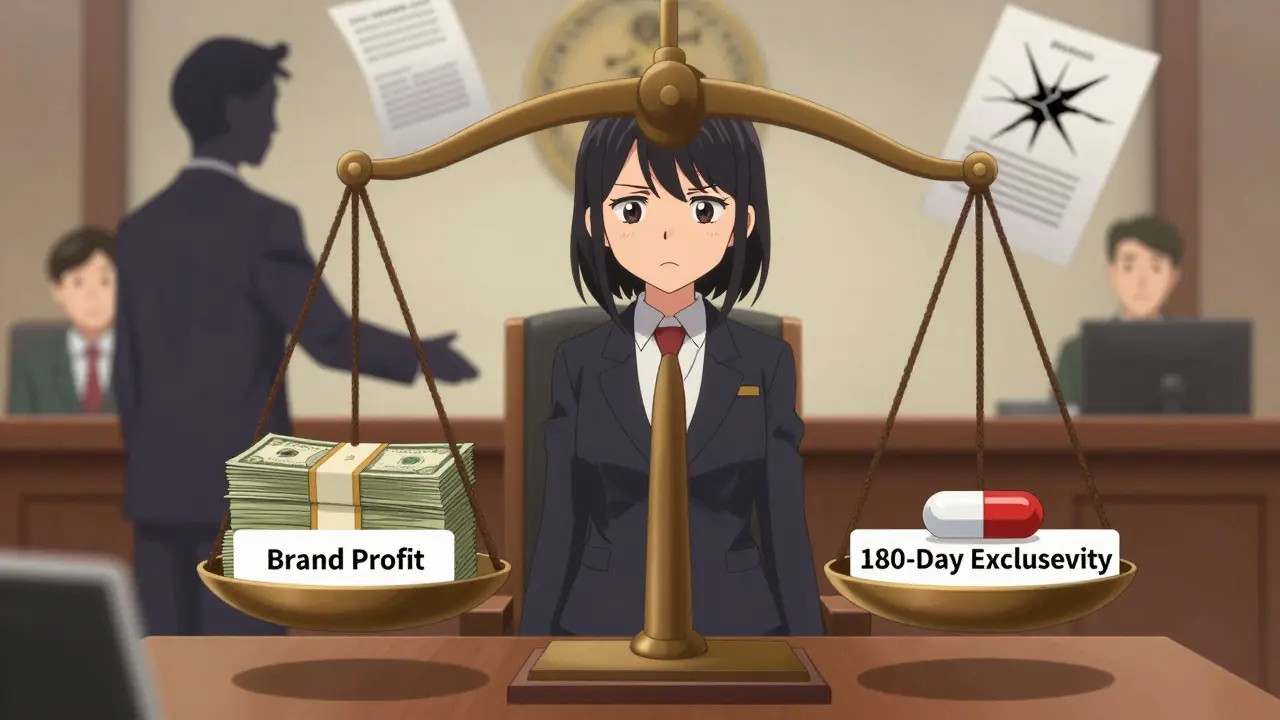
The legal foundation for authorized generics comes from the Hatch-Waxman Act of 1984. This law was meant to balance two goals: give drug companies enough time to profit from their innovation, and let cheaper generics enter quickly once patents expire. It gave the first generic company to challenge a patent a 180-day exclusivity period - a reward for taking the legal risk.
But here’s the twist: the law never said the brand company couldn’t launch its own generic version during that time. The FDA has always allowed it. So, instead of letting the first generic company enjoy a monopoly on low-priced versions, the brand company can jump in with its own generic, priced just below the brand name but still above what independent generics would charge.
This isn’t a random move. It’s strategic. Brand companies often launch their authorized generic within 30 to 60 days after the first generic hits the market. Sometimes, they do it through a subsidiary or a third-party partner to keep things legally clean. The process is fast - no new clinical trials, no new FDA approval. Just repackage, re-label, and roll out.
The Competitive Distortion
Think of the generic market like a race. The first runner gets a prize: 180 days with no competition. That’s when they make most of their money. But if the original brand company enters as a second runner - same speed, same route - they cut into that prize.
The Federal Trade Commission (FTC) found that when an authorized generic enters, the first generic’s revenue drops by 40% to 52% during those 180 days. Without an authorized generic, that first filer might capture 80% to 90% of the generic market. With one? They’re lucky to get half that.
And it doesn’t stop there. Even after the exclusivity period ends, companies that faced authorized generic competition see 53% to 62% lower revenues over the next 30 months. That’s not a small blip - it’s a structural shift.
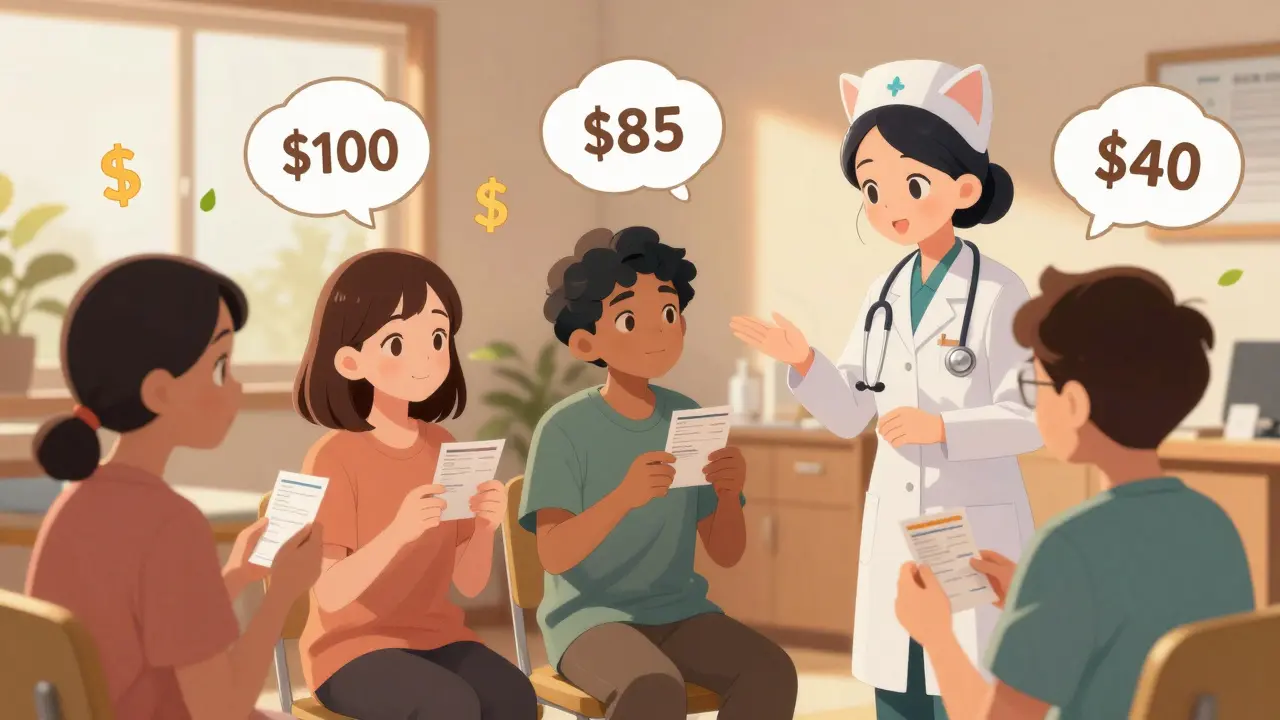
Why? Because authorized generics don’t play by the same rules as true generics. They’re not priced to win on cost. They’re priced to hold the line. You might see the branded drug at $100, the authorized generic at $85, and the independent generic at $40. The gap between the first two is narrow. That keeps prices higher than they’d be otherwise.
The Settlement Trap
The biggest controversy around authorized generics isn’t just their existence - it’s how they’re used in patent litigation settlements.
When a generic company sues a brand company to challenge a patent, the brand can offer a deal: “Don’t launch your generic, and we won’t launch our authorized version.” This is called a “reverse payment.” The generic company gets a cash payout. The brand company keeps its monopoly longer.
From 2004 to 2010, about 25% of patent settlements involving first-filer generics included these kinds of agreements. The result? Generic entry was delayed by an average of 37.9 months. That’s over three years of higher prices for patients.
The FTC called this the “most egregious form of anti-competitive behavior” in pharma. And they’re not alone. Former FTC Chairman Joseph Simons said in 2019 that these deals “circumvent the competitive structure Congress established.”
But here’s the twist: recent data shows this is changing. A 2023 study found that authorized generics are now significantly less likely to enter the market after a patent settlement. Why? Because regulators are watching. The FTC has opened 17 investigations since 2020, and courts are becoming less tolerant of these arrangements.
Who Wins? Who Loses?
It’s not black and white.
Independent generic manufacturers lose. Teva Pharmaceutical reported a $275 million revenue shortfall in 2018 because of authorized generics on just a few drugs. The Generic Pharmaceutical Association (now the Association for Accessible Medicines) says this undermines the whole incentive system of Hatch-Waxman. If the 180-day exclusivity isn’t worth anything, why risk a lawsuit?
Branded companies win. They protect their revenue, keep prices high, and avoid losing market share entirely. They argue they’re just giving customers another option.
Patients? It’s mixed. On one hand, authorized generics bring some price relief - more than nothing. On the other, they prevent the deeper discounts that true competition brings. A 2024 study in Health Affairs found that pharmacies paid 13% to 18% less for generics when an authorized version was available. But that’s still far above what you’d pay if only independent generics were competing.
Pharmacy benefit managers (PBMs) mostly like them. A 2023 survey found 68% of PBM executives prefer formularies that include authorized generics. Why? Because they add pricing tiers - more flexibility to negotiate with manufacturers.
The Future: Tightening Regulations
The landscape is shifting. Authorized generics were present in 42% of markets in 2010. By 2022, that dropped to 28%. Why? Because of legal pressure.
The Supreme Court’s 2013 ruling in FTC v. Actavis didn’t ban authorized generics, but it made clear that reverse payment deals need scrutiny. Since then, the FTC has made blocking these arrangements a top priority. In 2022, its Competition Bureau director said they’ll challenge any deal that uses authorized generics to delay competition.
Legislation is catching up. The Preserve Access to Affordable Generics and Biosimilars Act, reintroduced in 2023, would make it illegal to agree not to launch an authorized generic. If it passes, the practice could vanish.
Even the Congressional Research Service admits that for low-revenue drugs - the ones that make up 13% of prescriptions but just 1% of total spending - the threat of an authorized generic might discourage generic companies from challenging patents at all. That’s not competition. That’s silence.
What This Means for You
If you’re paying for a drug, you might see a generic version with a different label. You might think you’re getting a bargain. But if that generic was made by the same company that sold the brand name, you’re not getting the full benefit of competition.
The system was designed to bring prices down fast. But authorized generics - and the deals that come with them - slow that down. They create a middle ground that benefits manufacturers more than patients.
As regulations tighten and more cases get reviewed, we’re likely to see fewer of these arrangements. But until then, it’s worth asking: Is this generic really cheaper - or just a slightly cheaper version of the same thing?
What is an authorized generic?
An authorized generic is a version of a brand-name drug that is made and sold by the original manufacturer or a licensed partner. It has the same ingredients, dosage, and quality as the branded product but is sold under a generic label and often at a lower price. Unlike traditional generics, it doesn’t require separate FDA approval because it uses the brand’s existing regulatory data.
How do authorized generics affect generic drug competition?
They reduce competition by entering the market during the 180-day exclusivity period granted to the first generic company. This cuts into the first-filer’s revenue by 40%-52% during exclusivity and lowers their long-term sales by over 50%. Instead of a single low-priced generic dominating the market, authorized generics create a pricing tier that keeps prices higher than they’d be under true competition.
Why do brand companies launch authorized generics?
Brand companies use them to protect revenue and delay the full impact of price competition. By launching their own generic, they capture market share before independent generics can build momentum. In some cases, they also use them as part of settlement deals - agreeing not to launch an authorized generic in exchange for the generic company delaying its entry.
Are authorized generics legal?
Yes, launching an authorized generic is legal under current FDA rules and the Hatch-Waxman Act. However, agreements between brand and generic companies to delay authorized generic entry - known as reverse payment settlements - are under intense regulatory scrutiny and may violate antitrust laws. Courts and the FTC have begun challenging these deals more aggressively.
What’s being done to stop anti-competitive practices involving authorized generics?
The Federal Trade Commission (FTC) has made blocking these practices a priority, opening 17 investigations since 2020. Legislation like the Preserve Access to Affordable Generics and Biosimilars Act, reintroduced in 2023, aims to ban agreements that delay authorized generic entry. Courts are also becoming stricter, with the Supreme Court’s 2013 FTC v. Actavis ruling setting a precedent for scrutinizing reverse payments.
Do authorized generics save patients money?
They can, but not as much as true generic competition. Authorized generics are typically priced 15%-20% below the brand name but 25%-30% above independent generics. So while they offer some relief, they prevent the deeper price drops that come when multiple independent generics enter the market. Studies show pharmacy costs are lower when authorized generics are present, but patients still pay more than they would under full competition.
As the pharmaceutical industry evolves, the line between innovation and market control is getting thinner. Authorized generics are a legal tool - but they’re also a way to delay real competition. Whether they ultimately help or hurt patients depends on who’s writing the rules - and who’s paying the bill.
Comments (13)
becca roberts
March 19, 2026 AT 17:05
So let me get this straight - the drug company makes the brand, then makes the 'generic' version of itself, and calls it competition? 🤦♀️
It's like McDonald's launching 'Cheeseburger Lite' right after a rival opens up, then charging $6.50 for it while the rival's is $3. You're not lowering prices - you're just rebranding your monopoly.
And don't even get me started on reverse payments. Paying a competitor to stay out of the game? That's not capitalism. That's a bribery scheme with a PhD.
Andrew Muchmore
March 21, 2026 AT 11:38
Authorized generics are legal because the law didn't anticipate this loophole. Hatch-Waxman was meant to speed up access, not let brands game the system. FTC has been fighting this for years. Courts are finally catching up.
Paul Ratliff
March 21, 2026 AT 21:00
bro honestly i didnt even know this was a thing until i saw my rx go from $40 to $85 and then back to $45. turns out the 'generic' was made by the same company as the brand. mind blown. why do they even bother with the fake label?
SNEHA GUPTA
March 22, 2026 AT 04:30
This is a classic case of systemic exploitation disguised as innovation. The pharmaceutical industry, under the guise of consumer choice, manipulates regulatory frameworks to preserve profit margins. The Hatch-Waxman Act, while well-intentioned, has been weaponized. True competition requires market entry without strategic interference - which is precisely what authorized generics prevent.
Gaurav Kumar
March 23, 2026 AT 06:10
Americans always complain about drug prices but never question why they let corporations run the system. In India, generics are cheap because we don’t let pharma giants control the market. This is why your healthcare is broken - you trust the same companies that overcharge you to 'regulate' themselves. 🇮🇳
Jeremy Van Veelen
March 24, 2026 AT 01:01
I work in pharma law. Let me tell you - this isn’t a glitch. It’s a feature. Companies spend millions drafting patent strategies that include authorized generics as a tactical delay tool. The FTC? They’re playing whack-a-mole. The system is rigged. And the worst part? Patients think they’re getting a deal when they’re just getting a slightly cheaper version of the same exploitation.
Laura Gabel
March 25, 2026 AT 12:24
I just want my insulin to be cheaper. I don't care if it's made by the same company. If it's under $50 I'm good.
jerome Reverdy
March 26, 2026 AT 18:22
The whole authorized generic thing is a perfect example of regulatory arbitrage. You’ve got a legal loophole that exploits the spirit of competition without technically violating the letter of the law. It’s like using a 501(c)(3) to funnel corporate cash into lobbying - technically legal, morally bankrupt. The system rewards complexity. The more convoluted the structure, the more profit you squeeze out.
Andrew Mamone
March 28, 2026 AT 01:44
I didn’t realize how much this affected real people until I saw my mom’s prescription price jump after an authorized generic hit. She’s on a fixed income. That $15 difference? That’s groceries. 🥺
And yeah, I know it’s legal. But legality ≠ morality.
MALYN RICABLANCA
March 29, 2026 AT 20:51
OH MY GOSH. THIS IS A SCANDAL. A FULL-ON, RED-ALERT, CRIMINAL-NEGLIGENCE SCANDAL. 🤯
They’re not just selling generics - they’re selling a FAKE PROMISE. A LIE wrapped in a white pill. And the FDA? They’re just standing there like a bouncer at a club letting the same guy in through the back door. The FTC is barely scratching the surface. This needs a congressional hearing. A Netflix docu-series. A protest outside the White House. I’m crying. I’m so angry. I need a nap and a lawyer.
gemeika hernandez
March 30, 2026 AT 20:59
I don't get why people make this so complicated. The brand makes the drug. They make a cheaper version. They sell it. It's not magic. It's business. If you want cheap, wait for 5 other generics to come in. Until then, be grateful for any discount.
Nicole Blain
March 31, 2026 AT 01:01
I just checked my last refill. It was labeled as a generic. Turned out it was an authorized one. Honestly? I didn’t even notice. 😅
Guess I’m just glad it’s not $200 anymore.
Kathy Underhill
March 31, 2026 AT 16:27
The real issue isn’t the authorized generic itself - it’s the settlement agreements that delay market entry. The Hatch-Waxman Act created a mechanism for timely generic access. When brand companies use their own generics as leverage in litigation, they subvert the public interest. The law must close this gap - not just in theory, but in enforcement.