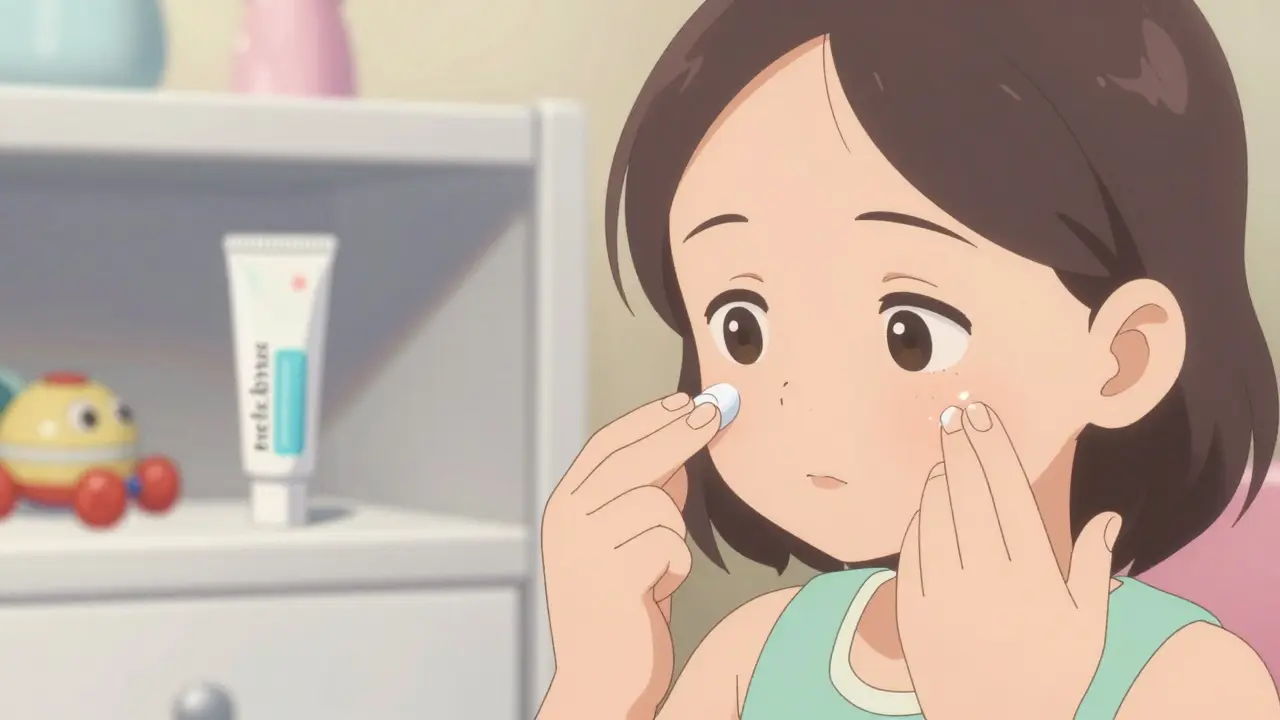
When it comes to treating rashes, eczema, or minor skin irritations in kids, topical creams and ointments seem harmless-just a quick rub and done. But what many parents don’t realize is that topical medications can be just as dangerous as pills if used incorrectly. Children’s skin isn’t just smaller-it’s fundamentally different from adult skin. It absorbs medications faster, lets more chemicals pass through, and reacts more strongly to even small doses. A pea-sized amount of cream that’s fine for an adult could be toxic for a baby. Every year, thousands of children end up in emergency rooms because of mistakes with topical treatments. This isn’t about scare tactics. It’s about knowing exactly what’s safe, what’s not, and how to use it right.
Why Kids’ Skin Is So Different
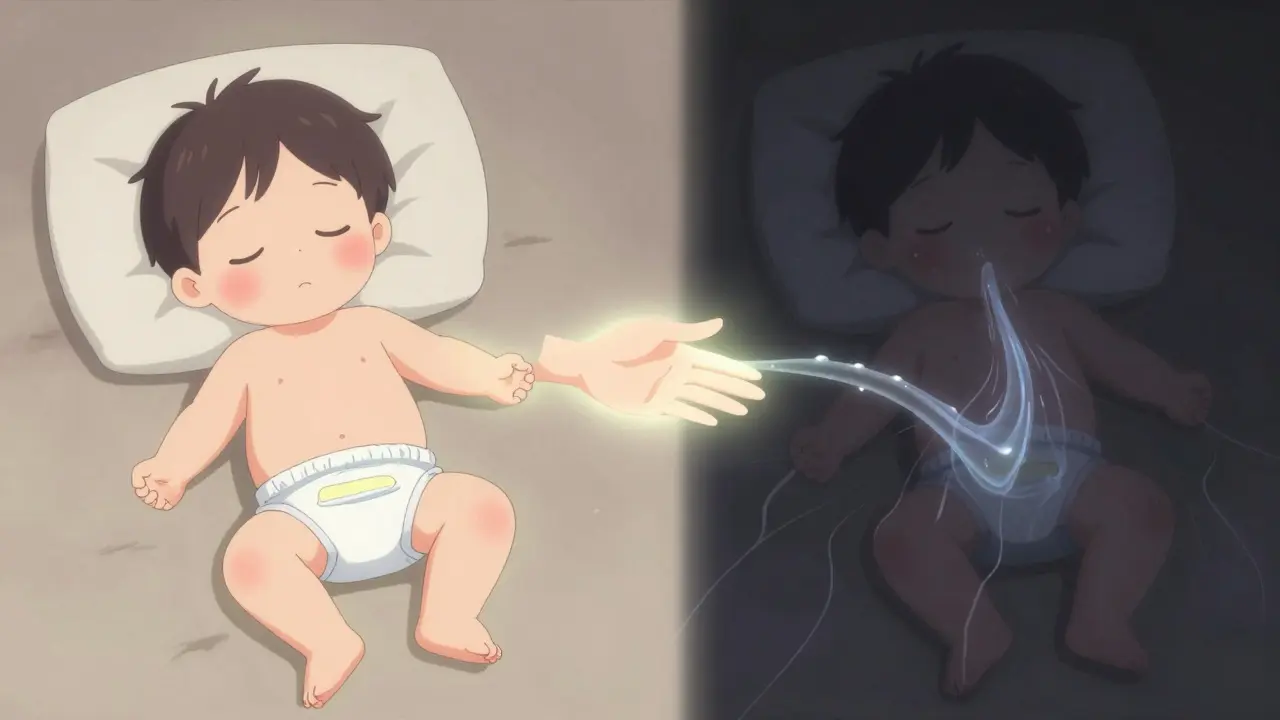
Adult skin has a thick outer layer called the stratum corneum that acts like a barrier. Kids’ skin, especially under age 1, is thinner, more porous, and has a higher surface-area-to-body-weight ratio. This means a topical cream applied to a child’s skin can enter their bloodstream 3 to 5 times more easily than in an adult. For infants with eczema or broken skin, that absorption can jump up to 10 or even 15 times higher. A study tracking 12,350 children found that using even a low-potency steroid on just 10% of their body surface area could lead to hormonal suppression-similar to giving them oral prednisone. That’s not a side effect. That’s a systemic drug effect.
Topical Corticosteroids: The Most Common-and Riskiest-Choice
Most pediatric dermatologists reach for corticosteroid creams first for eczema, diaper rash, or allergic reactions. But not all steroids are created equal. They’re ranked from Class I (strongest) to Class VII (mildest). Hydrocortisone 1% (Class VI-VII) is generally safe for short-term use on small areas. But anything stronger-like triamcinolone or betamethasone (Class IV-V)-carries a black box warning from the FDA for use under age 2. Why? Because these can shut down the body’s natural hormone production. In one study, 15.8% of children using potent steroids developed adrenal suppression, compared to just 2.3% with mild ones. And parents often don’t know the difference. A 2023 survey found that nearly half of all topical steroids sold in the U.S. are available without a prescription, and many come in packaging that doesn’t warn about pediatric risks.
What About Lidocaine and Benzocaine?
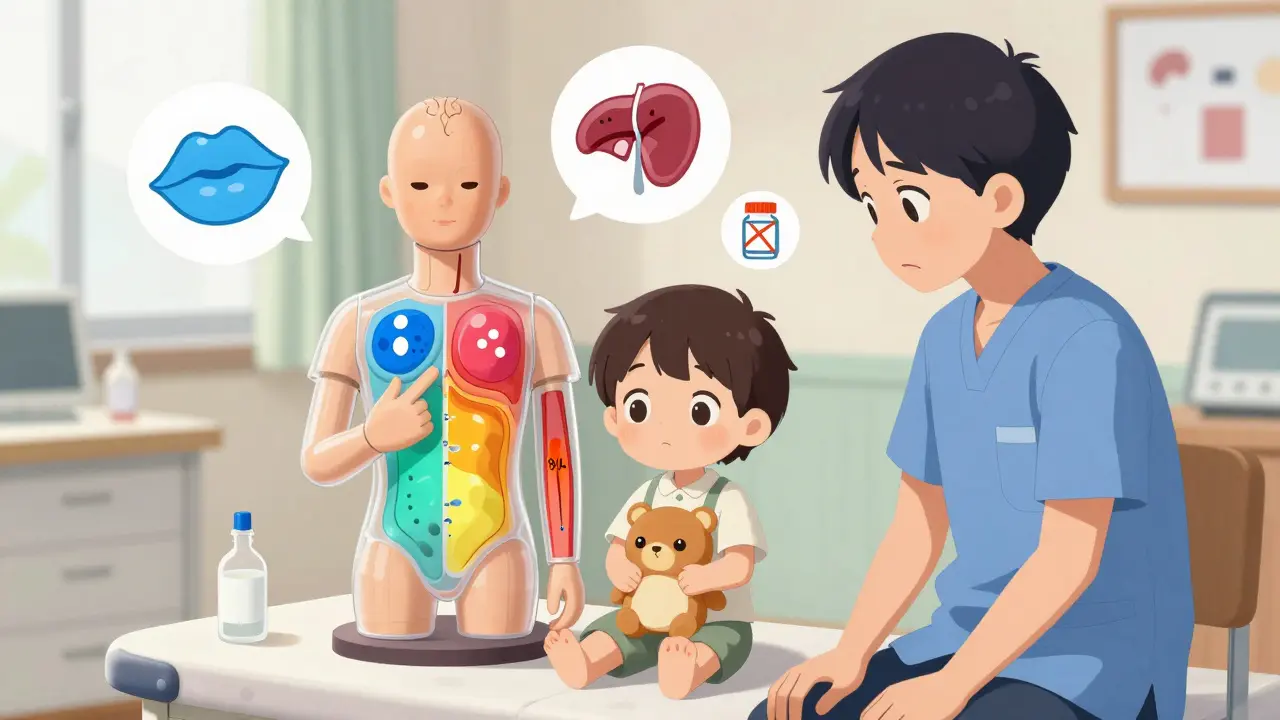
Teething gels, numbing creams for shots, and sunburn sprays often contain lidocaine or benzocaine. The FDA banned benzocaine products for children under 2 in 2018 after more than 400 cases of methemoglobinemia-where the blood can’t carry oxygen properly. Babies exposed to benzocaine can turn blue, struggle to breathe, and drop oxygen levels to dangerous levels within minutes. Even lidocaine isn’t risk-free. While it’s sometimes used in hospitals for needle pain, the dose must be tightly controlled. A 10kg baby can safely receive no more than 1.2g of 4% lidocaine cream total in 24 hours. That’s about two fingertip units. Apply it to a large area, especially if the skin is cracked, and absorption can spike from 3% to 60%. Seizures have been reported at doses over 3mg per kg of body weight.
What’s Safer? Alternatives to Steroids and Anesthetics
For eczema, calcineurin inhibitors like tacrolimus (0.03%) and pimecrolimus are now recommended as first-line treatments for children over 3 months, especially on the face. These don’t suppress the adrenal system at all. They’re not perfect-there’s a theoretical cancer risk, but 15 years of real-world use have shown zero confirmed cases. For teething, chilled (not frozen) rubber teethers work better than any gel. For minor cuts or burns, plain petroleum jelly or zinc oxide paste is safer than anything medicated. And for diaper rash, frequent changes and air exposure are more effective than medicated powders or creams.
How Much Is Too Much? The Fingertip Unit Rule
Parents often squeeze out a glob that looks like a marble. That’s way too much. The standard unit used by pediatric dermatologists is the fingertip unit (FTU). One FTU is the amount of cream squeezed from a standard tube along the length of an adult’s index finger-from the tip to the first crease. That’s about 0.5 grams. One FTU covers two adult palms. For a child under 5, you might only need half an FTU for a small rash. A 10kg child should never get more than 2g of steroid cream total per day. That’s four FTUs. And never apply it to more than 10% of their body surface at once. If you’re covering their whole back and legs, you’re risking systemic toxicity.
Storage and Access: The Hidden Danger
Most accidental poisonings happen because the cream was left on the bathroom counter after use. The American Association of Poison Control Centers found that 78% of pediatric exposures occur when products are left accessible. Child-resistant packaging is required for prescription anesthetics, but many OTC products still come in easy-open tubes. Always lock creams and ointments in a high cabinet-not the medicine cabinet. Never leave a tube on the changing table. And never, ever use an adult’s leftover steroid cream on your child. A 2022 study showed that 19% of households share topical medications between family members. That’s how a 9-month-old ends up with a Class II steroid meant for an adult’s psoriasis.
When to Call a Doctor
Stop the cream and seek help immediately if your child shows any of these signs:
- Sudden drowsiness or confusion
- Difficulty breathing or bluish lips or skin
- Unusual swelling, redness, or blistering at the application site
- Changes in appetite, weight, or mood lasting more than a few days
These aren’t normal reactions. They’re signs of systemic absorption. Methemoglobinemia from benzocaine needs urgent treatment with methylene blue. Steroid toxicity may require hormone replacement therapy. Don’t wait to see if it gets better.
The Bottom Line
Topical medications are tools-not toys. They can heal, but they can also harm. The safest approach is simple: use the lowest potency possible, for the shortest time, on the smallest area. Always check the label for age restrictions. Never guess the dose. Store everything out of reach. And if you’re unsure, call your pediatrician. There’s almost always a safer way to treat a rash or irritation without risking your child’s health.
Can I use hydrocortisone cream on my baby’s face?
Yes, but only hydrocortisone 1% (Class VI-VII), and only for a few days. Never use it on large areas or for more than 7 days without a doctor’s advice. The face is especially absorbent, and even mild steroids can cause thinning of the skin or hormonal changes if used too often or too widely.
Is it safe to use a topical anesthetic before a shot?
Lidocaine cream can be used safely for needle pain in children over 3 months, but only if applied correctly. Use one fingertip unit, cover with plastic wrap (occlusion) for 30-60 minutes, then wipe off before the shot. Never use more than 1.2g total in 24 hours. Avoid benzocaine entirely-it’s banned for under-2s. The risk of methemoglobinemia isn’t worth the temporary numbness.
What’s the difference between a Class I and Class VII steroid?
Class I steroids (like clobetasol) are very strong and can cause serious side effects in children, including adrenal suppression and growth delay. They’re not approved for kids under 12. Class VII steroids (like hydrocortisone 1%) are mild and generally safe for short-term use. The difference isn’t just strength-it’s risk. Using a Class I steroid when a Class VII would work is like using a sledgehammer to fix a loose screw.
Why can’t I use my adult eczema cream on my child?
Adult creams often contain higher-strength steroids, antifungals, or numbing agents that aren’t tested or approved for children. A cream labeled for "severe eczema" in adults might contain a Class I steroid-exactly the kind that can shut down a child’s hormone system. Even if it looks the same, the dose and formulation aren’t safe for small bodies. Always use products labeled for pediatric use.
Are natural or organic topical creams safer for kids?
Not necessarily. Many "natural" products contain essential oils, plant extracts, or herbal ingredients that can irritate or even poison young skin. Tea tree oil, for example, can cause hormonal disruption in children. There’s no regulation for "organic" claims on topicals, so you don’t know what’s really in them. A plain petroleum jelly or zinc oxide paste is often safer than anything marketed as "natural."
Comments (8)
Stephen Alabi
March 25, 2026 AT 04:32
While the article presents itself as a cautionary guide, it fundamentally underestimates the complexity of pediatric dermatology. The assertion that topical medications are 'just as dangerous as pills' is a gross oversimplification that ignores pharmacokinetic thresholds, dosing gradients, and clinical context. The FDA's black box warnings are not blanket prohibitions-they are risk-benefit advisories predicated on unmonitored, prolonged, or misapplied use. To suggest that a pea-sized amount of hydrocortisone 1% on a 2% body surface area is equivalent to systemic administration is not merely misleading-it is dangerously reductive. Pediatricians do not prescribe based on fear; they prescribe based on evidence, and that evidence includes decades of controlled studies demonstrating safety when used as directed. The real danger lies not in the medication, but in the narrative that turns every topical application into a potential emergency.
Agbogla Bischof
March 25, 2026 AT 14:13
Let me be clear: this is one of the most meticulously researched, clinically grounded pieces I’ve read on pediatric topical safety. The fingertip unit explanation? Brilliant. The breakdown of steroid classes? Essential. The emphasis on storage and cross-contamination? Long overdue. I’ve seen too many parents apply adult corticosteroids to infants because 'it worked for me'-and then panic when the child develops moon face or lethargy. The data cited here isn’t scare tactics-it’s prevention. The 15.8% adrenal suppression rate with potent steroids? That’s not a statistic; that’s a family’s life altered. Thank you for writing this with precision, clarity, and zero sensationalism. This should be mandatory reading for every new parent.
Pat Fur
March 26, 2026 AT 23:54
I just want to say-thank you. My daughter had a bad eczema flare last winter. We used the 1% hydrocortisone for three days, just on her cheeks. I read the label. I used half a fingertip. And I put it away. No more. No guessing. No sharing. It’s not about being paranoid. It’s about being smart. I’m so glad someone finally said it plainly: less is more. And natural doesn’t mean safer. Tea tree oil? Nope. We tried it. She broke out worse. Zinc oxide paste? Perfect. Simple. Safe. I wish I’d known this sooner.
Anil Arekar
March 27, 2026 AT 03:08
The structural integrity of this article is commendable. The hierarchical organization-from physiological differences in pediatric skin to pharmacological risk stratification-demonstrates a profound grasp of both clinical science and public health communication. The inclusion of quantitative data, such as the 3–5-fold increase in transdermal absorption and the 1.2g lidocaine threshold, elevates this beyond anecdotal advice into the realm of evidence-based practice. Furthermore, the emphasis on storage protocols and the 78% exposure statistic underscores a critical public safety gap often neglected in clinical discourse. As a global health educator, I endorse this as a model for patient-facing materials. It is neither alarmist nor dismissive; it is authoritative, accessible, and actionable.
Elaine Parra
March 27, 2026 AT 19:53
Look, I’m a nurse. I’ve seen kids come in blue from benzocaine. I’ve seen toddlers with adrenal insufficiency because their mom used her husband’s psoriasis cream on their diaper rash. This isn’t theoretical. It’s real. And every time someone says 'it’s just a cream,' a child gets hurt. The FDA didn’t ban benzocaine for kids because they’re being overly cautious-they did it because kids died. The fact that 49% of parents don’t know steroid classes? That’s negligence. This article isn’t scaring you-it’s saving you. Stop being lazy. Read the label. Ask the pharmacist. Don’t use adult products on babies. And if you think 'natural' is better, go ahead and try tea tree oil on your 6-month-old. See how that goes. I dare you.
Natasha Rodríguez Lara
March 28, 2026 AT 08:00
Thank you for writing this. I came here because I was confused about whether I could use the hydrocortisone on my son’s face. I read the whole thing, took notes, and then called my pediatrician. She said exactly what the article said: half a fingertip, once a day, max 5 days. I felt so much better knowing I wasn’t being paranoid. Also, the part about storing it out of reach? I had it on the counter next to his wipes. Now it’s in a locked cabinet. I didn’t realize how easy it is for a curious baby to grab a tube. This was so helpful. I’m sharing it with my mom group.
Caroline Bonner
March 30, 2026 AT 06:48
Oh my goodness, I cannot tell you how relieved I am to have found this. I’ve been reading so many conflicting things online-some blogs say 'never use steroids,' others say 'use them liberally,' and then there are the influencers pushing coconut oil and calendula for everything. I felt so overwhelmed. This article didn’t just give me facts-it gave me a framework. The fingertip unit? I actually measured it with a spoon! Half a teaspoon for a small patch? That’s not much at all. And the part about calcineurin inhibitors? I didn’t even know those existed! I’m switching my son’s regimen tomorrow. Also, I’ve been leaving the cream on the changing table for 'convenience'-now it’s locked in the bedroom closet. Thank you for being so thorough, so clear, and so compassionate. You’ve eased my anxiety more than you know.
Chris Crosson
April 1, 2026 AT 00:40
Just wanted to add: I used to think the 'pea-sized amount' rule was just a suggestion. Then I started using the fingertip unit and realized I’d been using 3–4 times too much. My son’s rash cleared up faster, and the skin irritation stopped. I didn’t know the face absorbs so much more. I’m not saying everyone needs to be a dermatologist-but a little education goes a long way. And yeah, lock it up. I’ve seen toddlers climb up and get into medicine cabinets like it’s a candy jar. It’s not paranoia. It’s parenting.